Construction
Sep 20, 2026
The Substitution Problem: Why the Crew, Plant and Materials You Approved Are Rarely the Ones Delivered in Dubai
The Substitution Problem: Why the Crew, Plant and Materials You Approved Are Rarely the Ones Delivered in Dubai

The Substitution Problem: Why the Crew, Plant and Materials You Approved Are Rarely the Ones Delivered in Dubai
Dubai’s construction market is operationally fluid. Labour, equipment and materials move between projects according to programme pressure, availability and commercial priority.
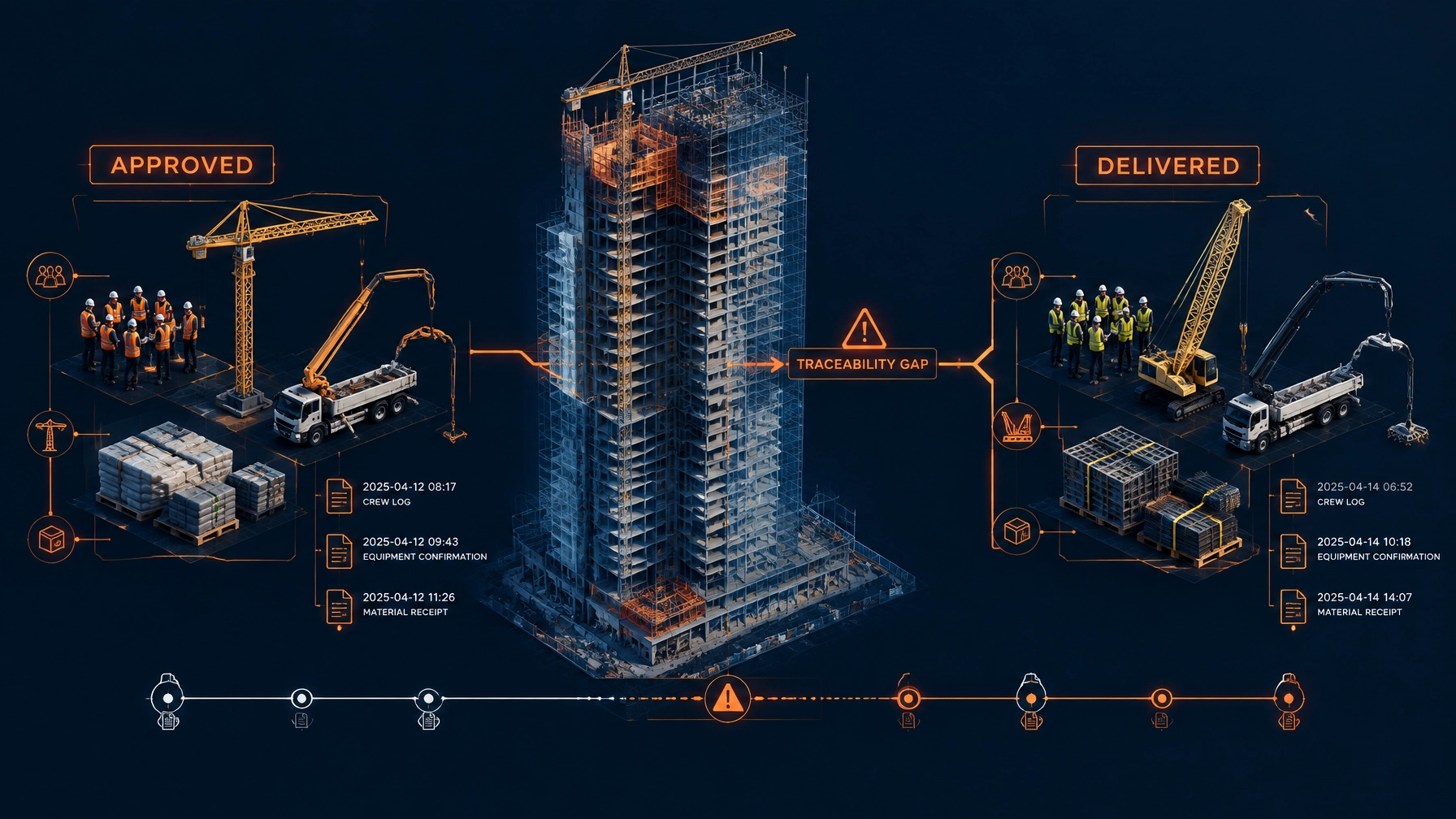
That flexibility can support delivery. It can also destroy the evidentiary link between what was approved and what was actually incorporated into the building.
For Australian builders, project managers, owner’s representatives, developers and construction lawyers working in Dubai and the wider UAE, the critical question is not simply:
Was the subcontractor approved?
Ask instead:
Which crew, plant and product performed the work, and can the project prove it?
This is the substitution problem.
A client may approve:
The approval is then treated as if it governs the remainder of the works.
In a fluid market, it may not.
The crew that produced the sample panel can be reassigned within days. The competent foreman can be moved to a more urgent project. A labour supplier can rotate personnel to balance headcount across multiple sites. A nominated machine may be unavailable, allocated elsewhere or replaced by a unit with a different capacity, age or attachment.
The product can change before it reaches the site.
A supplier may offer an alternative batch. A contractor may purchase what is locally available. A delivery may arrive with certificates prepared after the fact, describing a product or batch that does not correspond with the installed material.
The substitution may be technically justified. It may also be an uncontrolled commercial convenience.
The forensic distinction is simple:
A demonstration of competence is not evidence of continued competence by every replacement crew, machine or product.
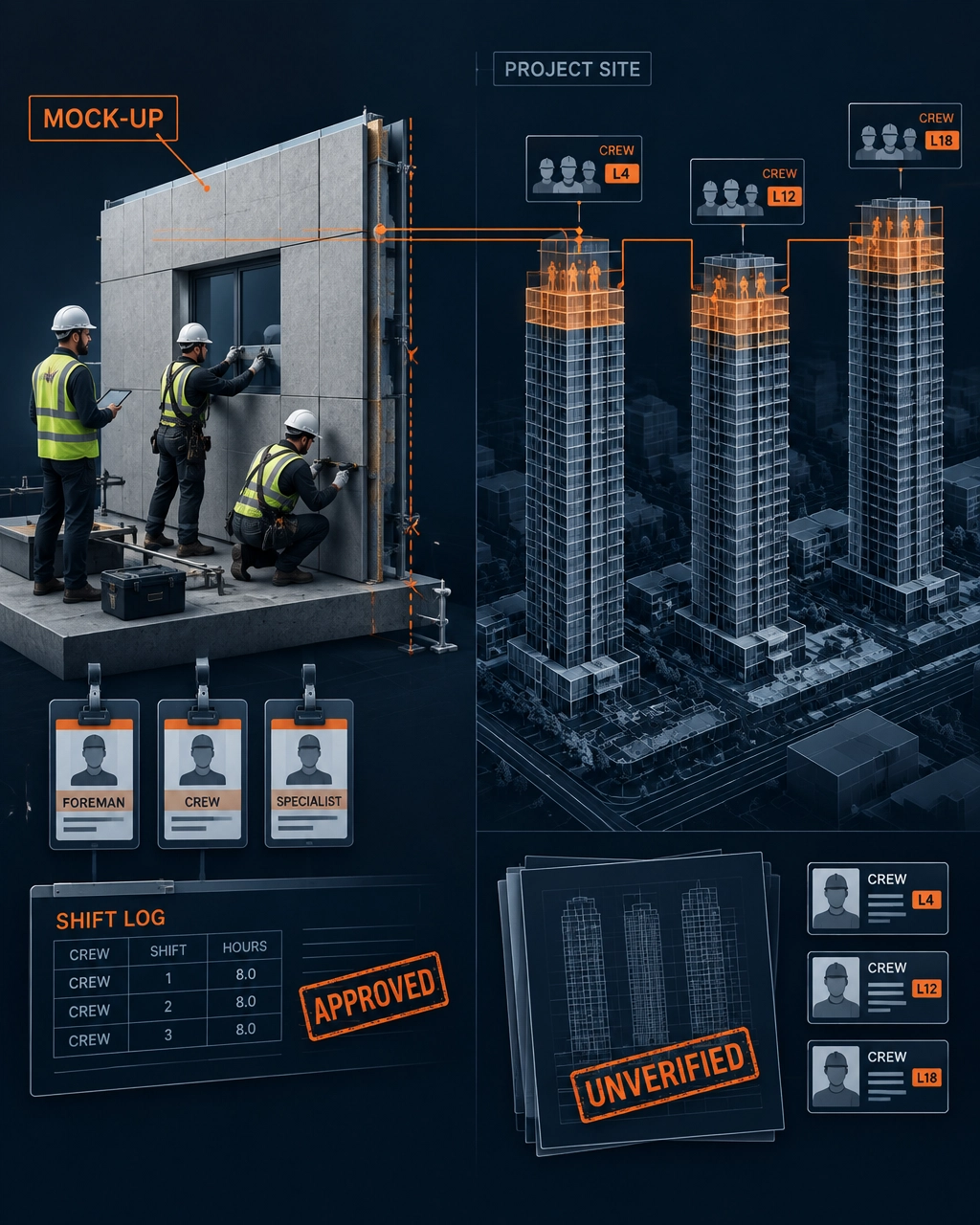
Treat people, plant and product as separate control risks. They can change independently, and each change can break the evidence chain.
The most common failure begins with an assumption that “the subcontractor” is a stable production unit.
It is not.
A subcontractor may be a management entity coordinating several labour gangs, specialist trades and labour-supply arrangements. The people who attend site on Monday may not be the people who return on Friday.
Record and verify:
Language differences increase the risk, but language is not the root cause. The root cause is uncontrolled communication.
A translated method statement does not prove that the crew understood the tolerances, sequencing, hold points or acceptance criteria. A toolbox talk attendance sheet does not prove technical comprehension. A supervisor’s signature does not prove that the supervisor was present when the work was executed.
Create a direct link between the crew, the activity and the completed element. If that link does not exist, a later defect investigation may establish only that the subcontractor was present somewhere on the project.
It may not establish who performed the defective work.
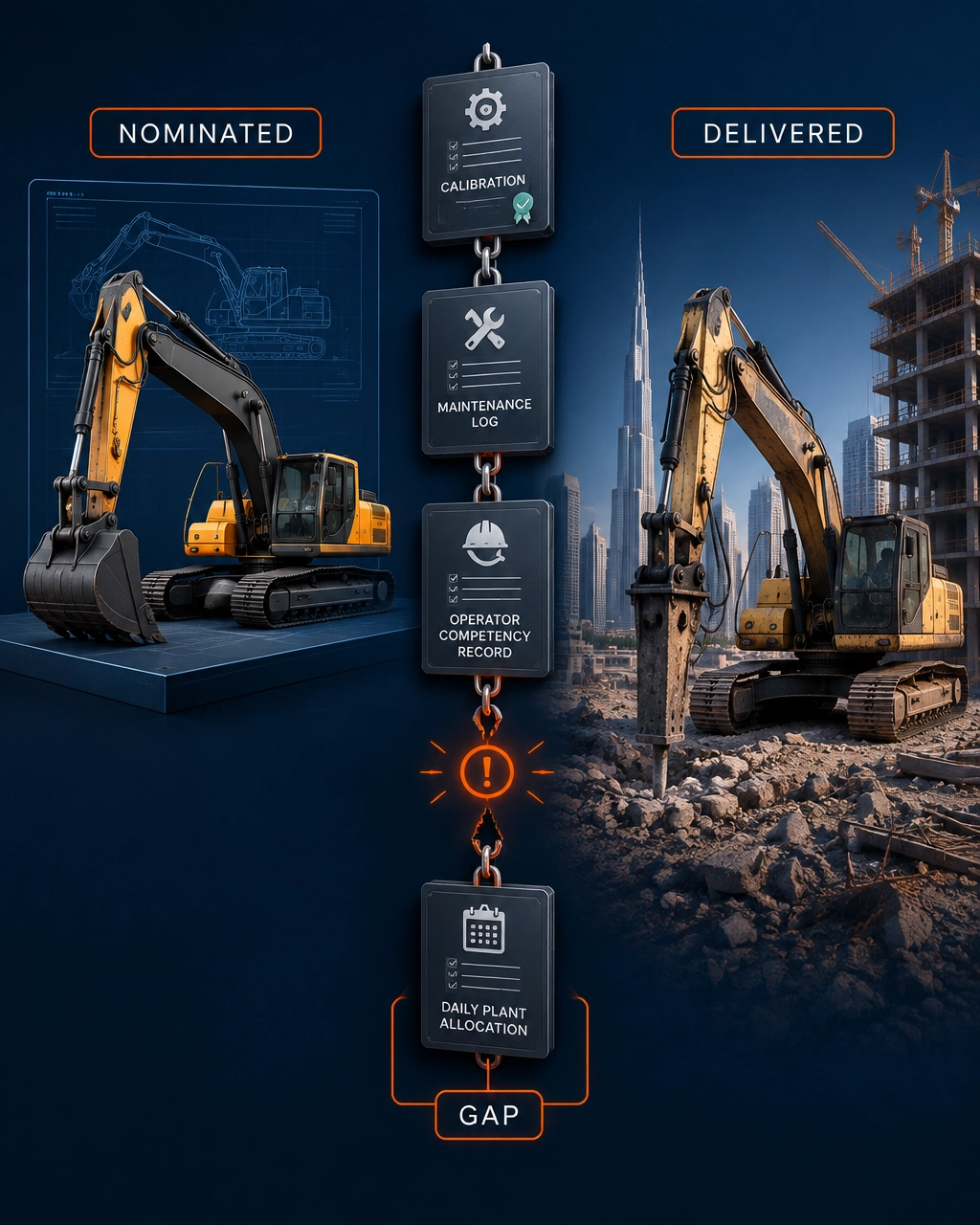
Plant substitution is often treated as a productivity issue. It is also a quality and compliance issue.
A machine’s capacity, reach, operating condition and attachment can affect the result. A different pump can change placement performance. A different lifting device can alter handling controls. A different compaction machine can change achieved density. A different testing device can produce a different level of confidence in the recorded result.
Track each critical plant item through:
Do not accept “same type” as “same performance”.
A machine listed in a method statement may be replaced by a different class, capacity or age. An attachment may be swapped without a revised risk review. Calibration documentation may remain in the original plant file rather than following the equipment actually used.
Product substitution can occur at supplier level, contractor level or delivery level.
The replacement may have an equivalent technical specification. That equivalence must be demonstrated, reviewed and accepted before installation. It must not be inferred from appearance, brand familiarity or a supplier’s verbal assurance.
Control:
Do not accept a certificate merely because it exists.
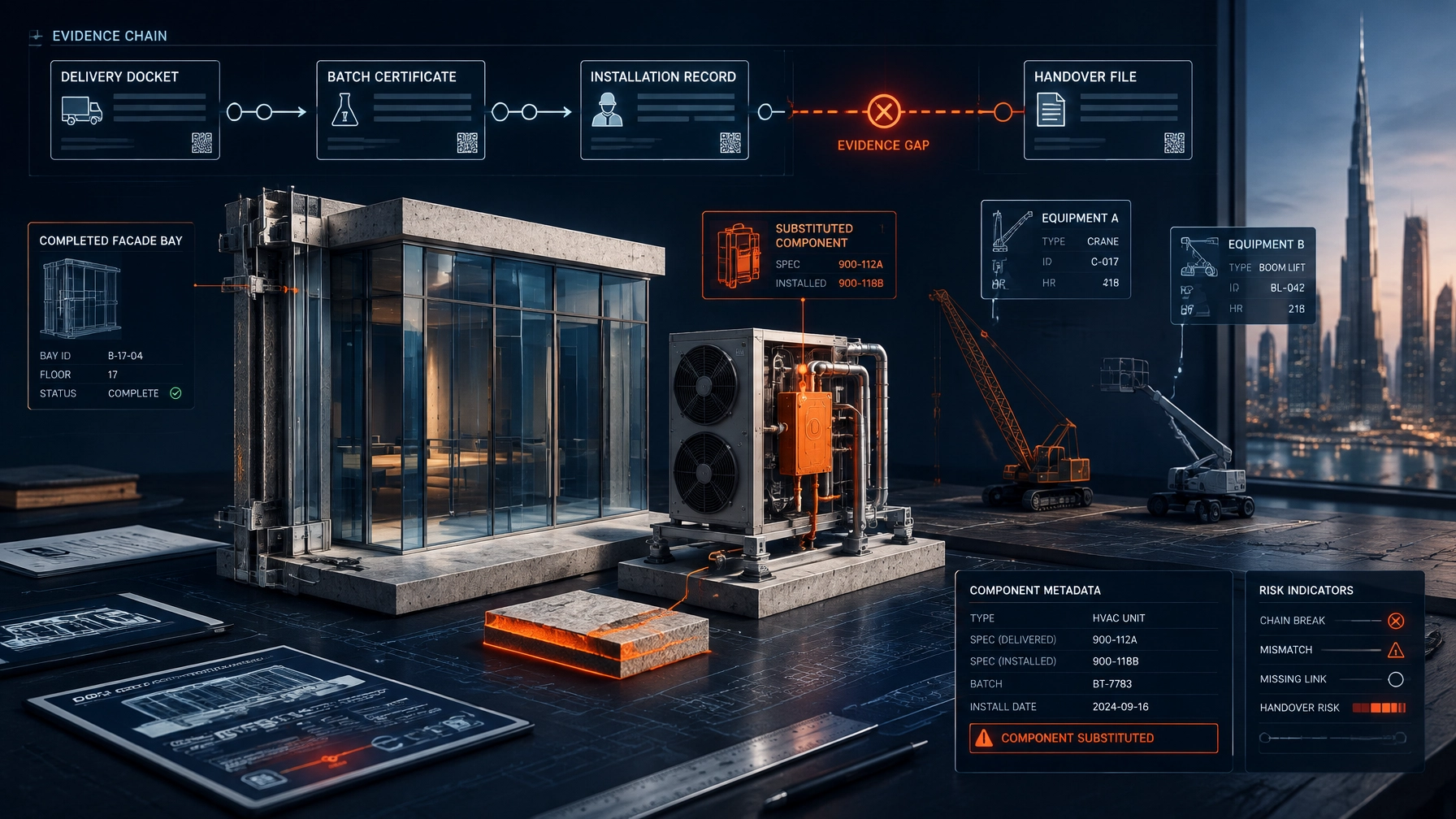
Test certificates are evidence only when they can be connected to the material delivered and the element installed. A certificate produced after installation, without a reliable batch link, may describe a compliant product that was never incorporated into the building.
The critical chain is:
Specification → approval → purchase → delivery → inspection → installation → testing → handover.
Break one link, and the value of the remaining documents may be substantially reduced.
Substitution is rarely concealed maliciously. It is often normalised through programme pressure and informal communication.
A foreman calls a project manager. A supplier confirms an alternative by telephone. A replacement crew starts work because the original crew is unavailable. A delivery docket is filed. The revised certificate arrives later.
The work progresses.
At handover, the project file may contain the approved product, the original method statement and the original mock-up approval. It may not contain a reliable record of the actual product, crew or plant used.
This is where disputes become expensive.
The contractor may argue that the substitute was equivalent. The client may argue that no substitution was authorised. The consultant may rely on a visual inspection. The lawyer may ask for contemporaneous records that were never created.
The issue is no longer only whether the work is defective. It becomes a question of proof:
ISO 9001 requires control of externally provided processes, products and services. It also provides a framework for identification, traceability, verification and control of nonconforming outputs.
Apply it at project level. Do not rely on corporate certification as proof that every delivered item was controlled. Require the project team to demonstrate:
Use ISO 19650-2 principles to give the word “approved” a single, controlled meaning within the project’s information environment.
Define status and suitability codes for:
Store the decision, not merely the final document. The project must show what changed, when it changed and who accepted the change.
For structural steelwork and welding, EN 1090-2 and ISO 3834 reinforce the importance of material, process and personnel traceability.
Maintain links between:
Do not assume that a competent fabrication company provides automatic traceability for every site activity.
ISO 45001 supports structured control of contractors and subcontractors, including competence, communication, operational planning and coordination.
Use the same logic for quality and safety. A replacement worker, operator or supervisor is a change in the risk profile. Record the change, communicate the controls and verify competence before work continues.
For broader contract administration and subcontracting controls, project teams can also consult the RICS Subcontracting guidance.
Close the gap by contract and by record.
Specify the approved crew, competent supervisor, critical plant and product as conditions of the works.
Do not write approval language as an aspiration. State what must remain unchanged unless the contractor obtains written acceptance.
Define substitution broadly. Include:
Require notice before the change occurs. State the information required for review and identify who has authority to approve it.
Extend the mock-up logic.
When the crew changes, require a competence review or repeat demonstration. When plant changes, verify capacity, configuration and calibration. When product changes, review technical equivalence, certification and compatibility.
Do not allow a single approved sample panel to become permanent evidence for every worker, machine and elevation.
Link every completed element to:
Use a controlled common data environment where possible. Make the evidence accessible to the construction consultant, Client Side Project Management team, owner’s representative and dispute consultant.
Conduct targeted audits during production, not only at handover.
Ask:
That is the practical role of a building consultancy: connect site reality with contractual, technical and evidentiary requirements before the gap becomes a claim.
Shoal Bay Projects provides construction advisory, construction compliance, construction risk management services, residential project management support, building dispute consultant input and home renovation consultant expertise for clients managing complex delivery environments.
Explore the Hive YouTube channel for further construction intelligence.
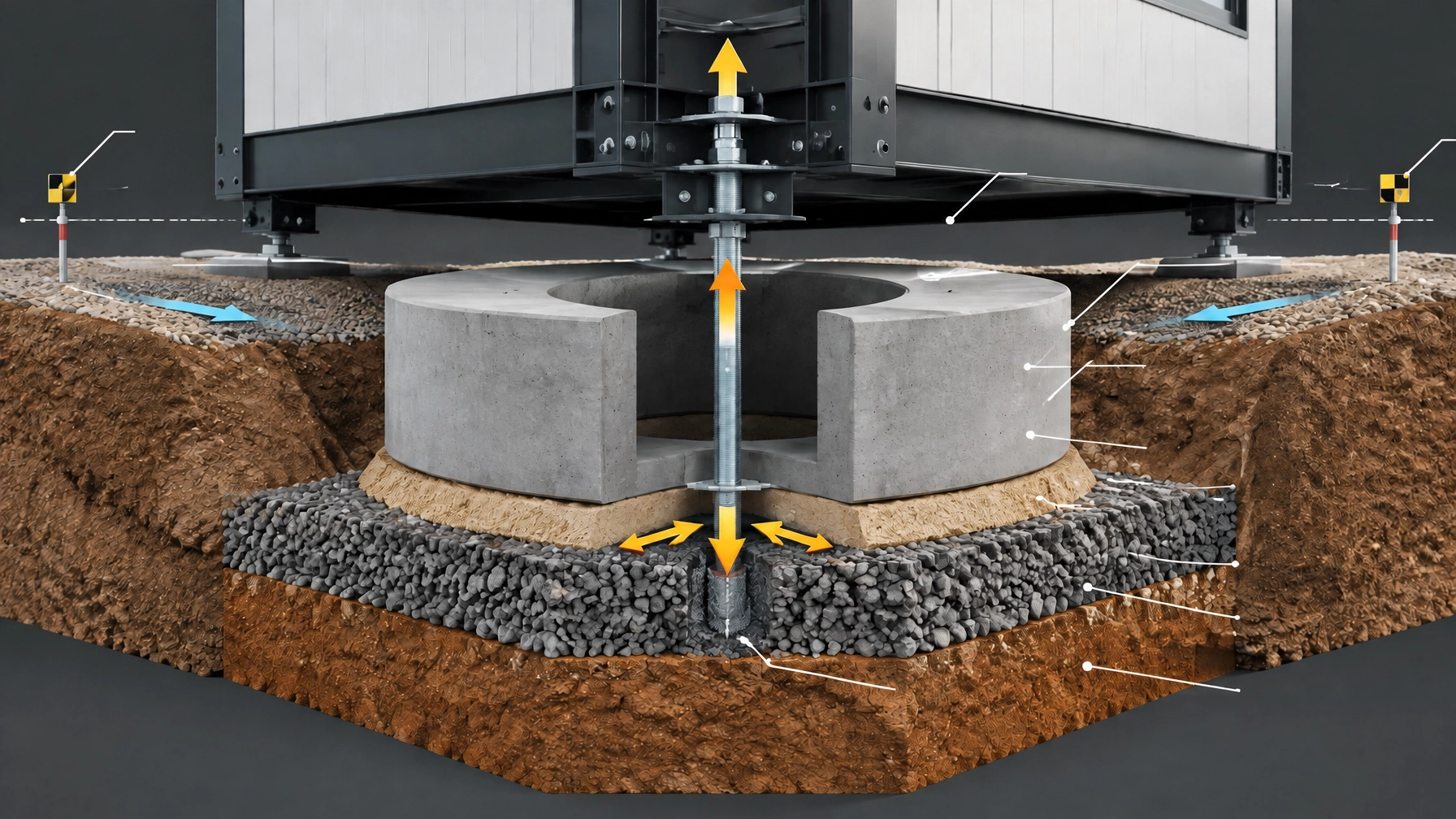
⚠️ The image in this post is used for illustration purposes only, designed to encourage thoughtful discussion. It is not intended to represent a prescriptive detail of any installation or construction method.
The Vault. The App. The Community. We're opening the doors to a select group of Foundation Members. Free, for a limited time. Foundation Membership includes full access to The Vault (our forensic intelligence archive) and early access to the Hive app.
Once the charter window closes, this tier is gone permanently. Foundation Members retain access for life. This is not a trial: it's a permanent invitation to the founding cohort.
Claim Your Foundation Membership →
Dubai projects move quickly, and that flexibility creates a specific forensic risk: the people, plant and materials approved at the beginning may not be the resources that complete the work.
Read the full article: The Substitution Problem: Why the Crew, Plant and Materials You Approved Are Rarely the Ones Delivered in Dubai
The central issue is not whether substitutions happen. They will. The issue is whether the project records them, assesses them and preserves the evidence.
⚠️ The image in this post is used for illustration purposes only, designed to encourage thoughtful discussion. It is not intended to represent a prescriptive detail of any installation or construction method.
The Vault. The App. The Community. We're opening the doors to a select group of Foundation Members. Free, for a limited time. Foundation Membership includes full access to The Vault (our forensic intelligence archive) and early access to the Hive app.
Once the charter window closes, this tier is gone permanently. Foundation Members retain access for life. This is not a trial: it's a permanent invitation to the founding cohort.