Part 5 of 5 in the Dubai Construction Advisory, Compliance & Forensic Investigation series.
Problem: Contractual authority without physical knowledge
An Australian client operating from Perth or Sydney can retain contractual authority over a Dubai project while gradually losing practical knowledge of what is being built.
The problem is not simply distance. It is the combination of:
- Geographic separation.
- Different working hours.
- Intermittent fly-in inspections.
- Multiple reporting layers.
- Language friction.
- Variable trade and plant competence.
- Commercial pressure to maintain progress.
- A project management function that may be appointed, influenced or incentivised by the delivery chain.
The client receives progress reports, photographs, dashboards, meeting minutes and payment recommendations. However, the information is usually produced by the parties whose performance is being reported on.
That creates a structural information asymmetry.
Photographs are selected. Progress percentages are estimated. Snag lists are filtered. Inspection records may confirm that an activity occurred without proving that it was performed correctly. A client who is not physically present cannot reliably distinguish a photographed defect from an unphotographed defect.
Absence of evidence is then presented as evidence of absence.
The time zone compounds the issue. An instruction issued in Perth at 09:00 does not arrive at the same operational moment in Dubai. The relevant work may already have commenced. A concrete pour may be proceeding. A plant item may already be mobilised. A substitution may already be installed.
When the client is unavailable, the site defaults to whoever is physically present.
Default is not governance.
A remote client therefore needs more than residential project management, a monthly report or a well-designed dashboard. The client needs a controlled system that converts site activity into independent, traceable and defensible evidence.
Forensic Analysis: Four failure vectors converge into one exposure
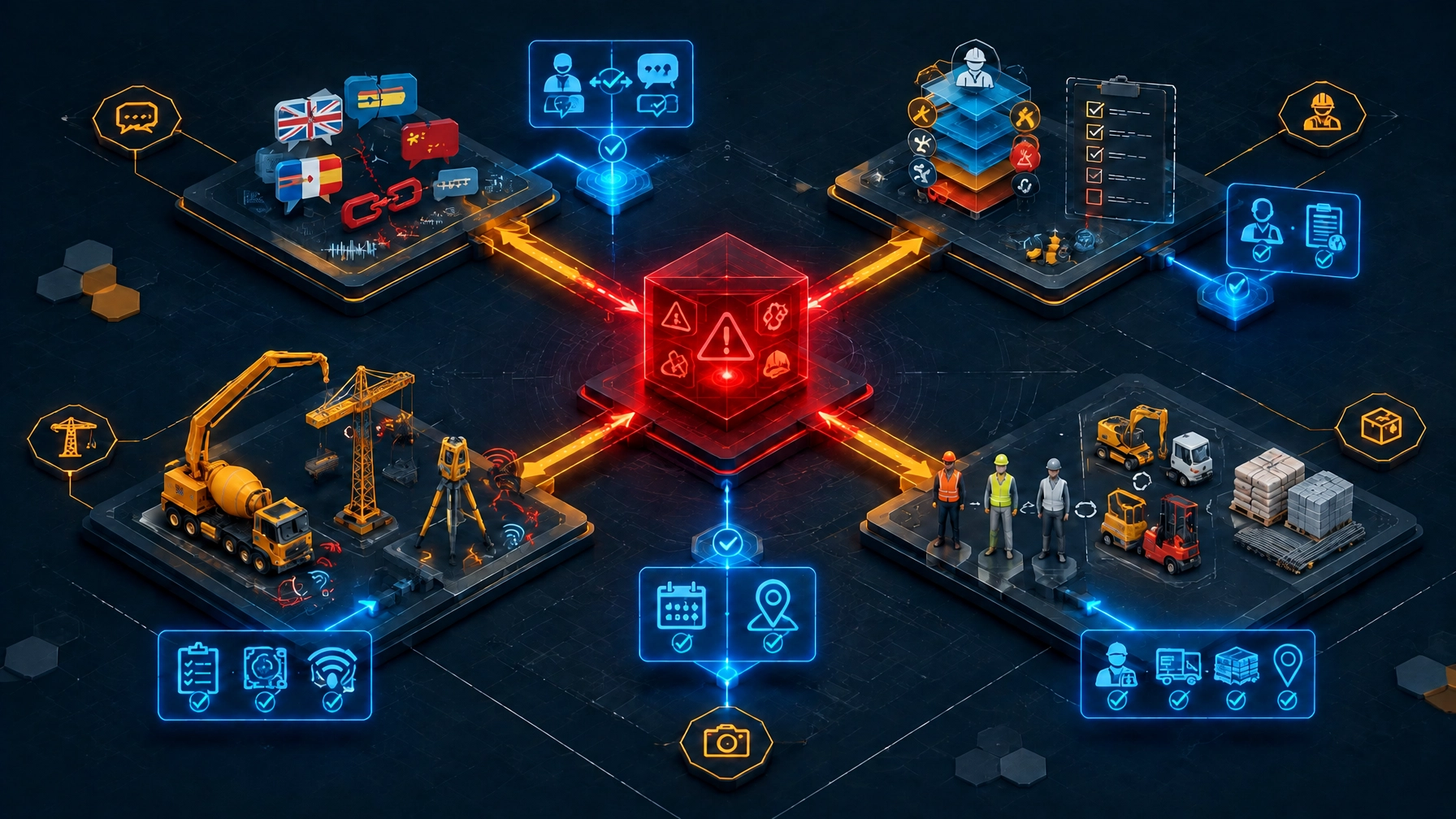
The four preceding themes in this Dubai series are not isolated problems. Under a remote governance model, they interact.
1. Instruction fidelity
A direction may be translated, paraphrased or acknowledged without being understood in the technical sense intended by the client.
The familiar “yes problem” is not necessarily deception. It may indicate politeness, hierarchy, uncertainty or a reluctance to expose a comprehension gap.
A verbal instruction can therefore appear accepted while producing no demonstrable record that:
- The correct person received it.
- The technical meaning was understood.
- The instruction was passed to the relevant crew.
- The instruction was incorporated into the method of work.
- The completed work was checked against it.
The instruction exists in the client’s mind and perhaps in an email chain. It does not necessarily exist in the physical work.
2. Competence
A report may identify a “steel fixer”, “surveyor”, “operator” or “finishing supervisor”. That title does not, by itself, establish competence for the task performed.
The forensic question is more precise:
Who performed the work, under whose supervision, using what documented competence, and against what verification criteria?
A multilingual workforce can include highly capable specialists, developing workers, transferred crews and personnel whose experience is difficult to verify remotely. The risk is not nationality. The risk is assuming that a role description is equivalent to demonstrated task competence.
Without independent verification, the client cannot see the difference between a competent crew completing a complex interface and an unfamiliar crew following an incomplete instruction.
3. Plant
A progress report can show that a crane, pump, excavator, survey instrument or lifting appliance was present on site. It does not necessarily prove that the correct machine class was used, that the equipment was in suitable condition, or that calibration and pre-start checks were current.
Plant competence has at least three components:
- Suitability for the intended task.
- Condition and operational reliability.
- Competence of the person controlling it.
A machine can be available without being suitable. A survey instrument can be used without reliable calibration. A plant operator can be experienced without being competent for the specific equipment or lift plan.
These distinctions disappear inside a generic progress percentage.
4. Substitution
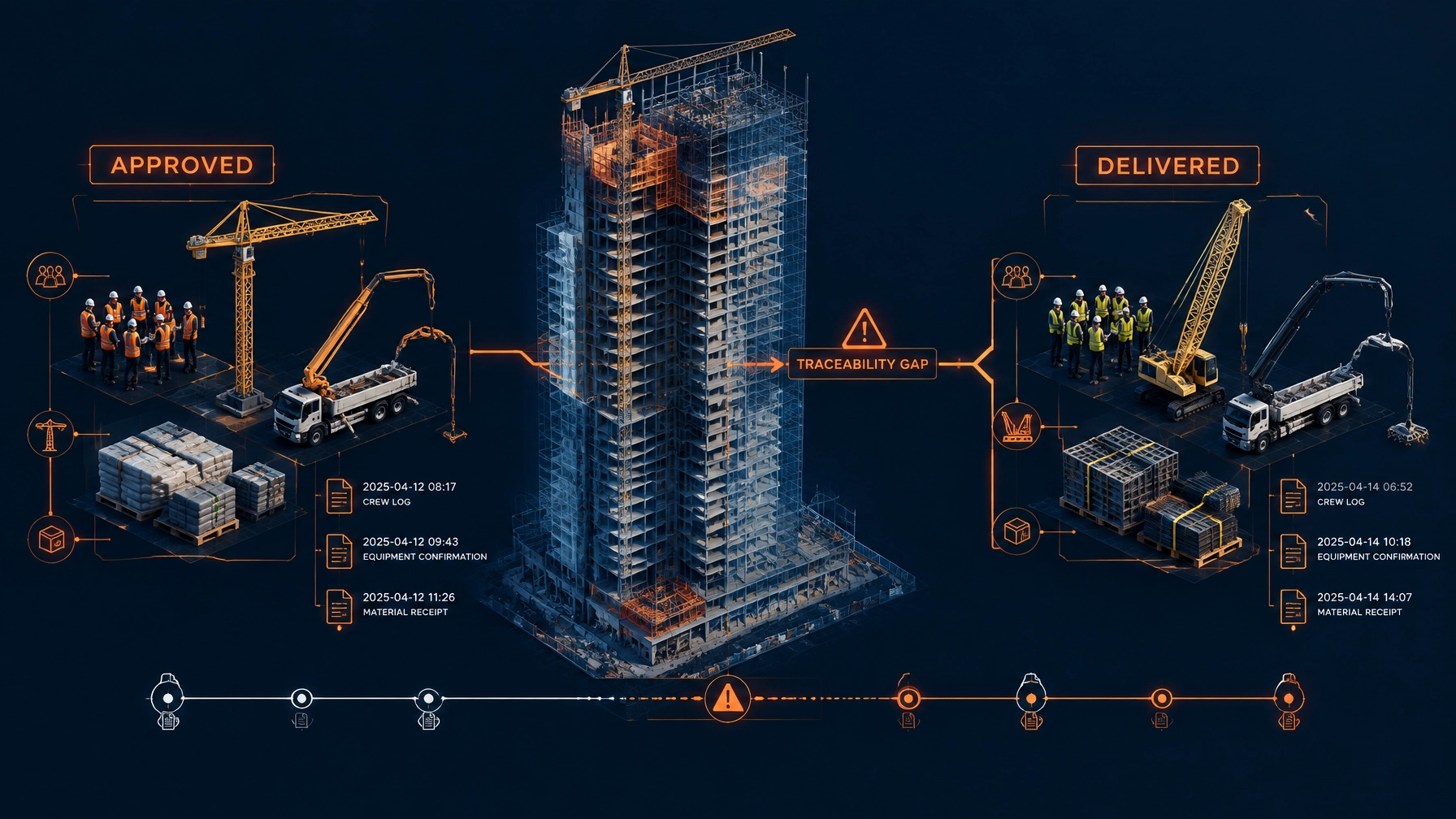
The crew, plant and product described in an approved submission are not necessarily the crew, plant and product that produce the completed work.
Substitution can occur through:
- Labour turnover.
- Subcontractor changes.
- Unavailable equipment.
- Procurement delays.
- Product shortages.
- Informal site decisions.
- A perceived need to protect programme.
Each substitution may appear operationally minor. Collectively, substitutions can sever the connection between approved intent and physical outcome.
The client then holds contractual authority but no independent knowledge of what was actually built.
Reporting is not verification
A monthly report is a narrative. Progressive independent verification is evidence.
A report describes what the project team says has occurred. Verification establishes whether the reported event, material, dimension, installation or test result conforms to the agreed requirement.
The distinction becomes critical eighteen months after handover, when a defect claim arrives and the question is no longer “what did the report say?”
The question is:
What can be proven about what was built, by whom, with what materials, using what plant, under which instruction, and at what point was it independently checked?
That is the remote governance gap.
Standard Reference: Build governance around controlled information and independent inspection
The required response is not more administration. It is a standards-informed governance model that controls information, risk, inspection and participation.
ISO 19650-2: information must have controlled meaning
ISO 19650-2 provides a framework for information management during the delivery phase of an asset.
For a remote client, information status and suitability codes must have one unambiguous meaning. Define:
- Which information is work in progress.
- Which information is shared for coordination.
- Which information is suitable for review.
- Which information is approved for construction or commercial use.
- Who may change information status.
- Which approvals require client-side authority.
Do not allow a dashboard, photograph or informal message to function as an approval merely because it appears in the project communication stream.
ISO 9001: preserve the evidence chain
ISO 9001 requires controlled documented information and effective monitoring and measurement.
Apply this principle to:
- Inspection and test records.
- Nonconformance reports.
- Material approvals.
- Crew and subcontractor records.
- Plant pre-start and calibration records.
- Dated photographic evidence.
- Dimensional surveys.
- Hold-point releases.
- Re-verification following substitutions.
Store the controlled evidence repository under client governance. Do not leave the only complete record inside the contractor’s reporting system.
ISO 31000: treat distance as a project risk
ISO 31000 provides principles and guidance for integrating risk management into governance and decision-making.
Classify remote verification as a defined project risk, not as an administrative inconvenience. Link risk controls to physical events:
- Before a pour.
- Before concealment.
- Before commissioning.
- Before a change in crew.
- Before a change in plant.
- Before a product substitution.
- Before practical completion.
ISO/IEC 17020: protect inspection independence
ISO/IEC 17020 addresses the competence, impartiality and consistent operation of inspection bodies.
The inspecting function must be independent enough to challenge the delivery chain. An inspector who is commercially dependent on the party being inspected may have limited ability to hold work, reject evidence or escalate nonconformance.
Document the inspection entity’s:
- Competence.
- Scope of authority.
- Independence.
- Conflict-of-interest position.
- Reporting route.
- Escalation rights.
ISO 45001: include the workforce in the control system
ISO 45001 requires consultation and participation in occupational health and safety management.
Remote governance must not become a top-down document exercise. Workers, supervisors and subcontractors need practical mechanisms to raise uncertainty, identify hazards and confirm that instructions are understood.
Capture toolbox briefings, method confirmations and worker feedback as controlled project information. Treat communication quality as a safety and quality control, not merely a translation issue.
Actionable Fix: Install a remote governance architecture
Implement the following controls before the project reaches high-risk construction stages.
1. Appoint a resident independent representative
Place a competent, independent representative in Dubai with authority to:
- Attend defined hold points.
- Inspect work before concealment.
- Challenge incomplete evidence.
- Stop or hold release where permitted.
- Record the actual crew, plant and product.
- Escalate issues directly to the client.
This is not another layer of administration. It is the physical verification function the remote client cannot perform from Australia.
2. Define hold points around physical events
Do not tie verification only to monthly reporting cycles.
Tie hold points to events such as:
- Reinforcement before concrete placement.
- Waterproofing before concealment.
- Plant mobilisation before critical operations.
- Product installation before covering.
- Commissioning before handover.
- Any change in crew, plant or product.
Release work only when the required evidence is complete and independently reviewed.

3. Create a client-controlled evidence repository
Use one controlled repository with defined permissions, naming conventions, revision history and status codes.
Require each key record to include:
- Date and time.
- Exact location.
- Activity or element inspected.
- Named crew or subcontractor.
- Plant or equipment used.
- Product identification.
- Dimensional or test evidence.
- Inspector identity.
- Outcome and follow-up action.
Make the record difficult to curate after the event. Preserve original files, metadata and revision history.
4. Trigger re-verification after every substitution
Re-verify whenever there is a change to:
- The workforce.
- The subcontractor.
- The plant.
- The product.
- The method.
- The supervisor.
- The approved information.
Do not assume that a replacement is equivalent because it has the same job title, appearance or commercial description.
5. Establish time-zone protocols
Set an instruction cut-off time for decisions that affect work scheduled for the next operating period.
Name an on-site decision authority and define written limits for that person’s authority. Require that urgent decisions be recorded with:
- The decision-maker.
- The reason for the decision.
- The affected work.
- The risk accepted.
- The required follow-up verification.
Create an escalation route that functions while the Australian client is asleep. Never make project control dependent on the client answering a message in real time.

6. Separate reporting from assurance
Require the project manager’s report to identify:
- What was reported.
- What was independently verified.
- What remains unverified.
- What evidence is missing.
- Which decisions were made under delegated authority.
- Which substitutions occurred.
- Which risks require client action.
Do not allow “complete”, “on track” or “no issues” to stand without a defined evidentiary basis.
Shoal Bay Projects operates as the forensic advisory bridge between remote client authority and physical construction reality. Through building consultancy services, construction compliance review, construction risk management services and Client Side Project Management support, the objective is not to create another report layer.
The objective is to convert distance into a defensible record.
For Australian builders, developers, owner’s representatives and construction lawyers working in Dubai and the wider UAE, that record is the asset. It is what allows the client to distinguish progress from performance, acceptance from conformity and confidence from proof.
Series conclusion
A Dubai project does not become governable because the client receives more information.
It becomes governable when critical information is independently verified, controlled by the client, linked to physical work and preserved in a form that can withstand later scrutiny.
That is the standard required when the client is 11,000 kilometres away.
Further reading and services
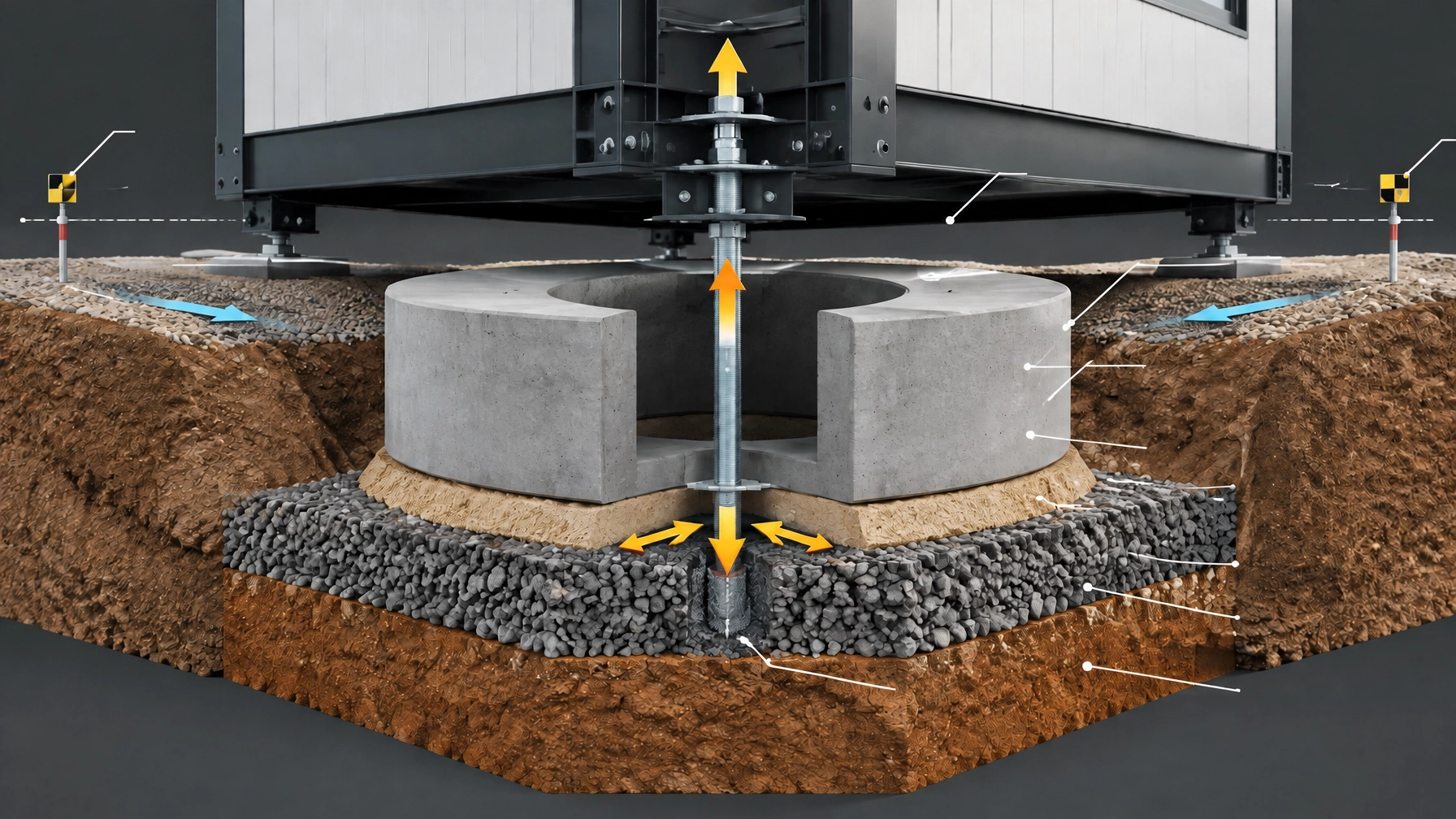
⚠️ The image in this post is used for illustration purposes only, designed to encourage thoughtful discussion. It is not intended to represent a prescriptive detail of any installation or construction method.
Claim Your Foundation Membership
The Vault. The App. The Community. We're opening the doors to a select group of Foundation Members. Free, for a limited time. Foundation Membership includes full access to The Vault (our forensic intelligence archive) and early access to the Hive app.
Once the charter window closes, this tier is gone permanently. Foundation Members retain access for life. This is not a trial: it's a permanent invitation to the founding cohort.
Claim Your Foundation Membership →
Circle-ready companion
The Remote Governance Gap: Why an Australian Client Cannot Verify Dubai Construction Quality at 11,000 Kilometres
The closing article in our five-part Dubai series examines the risk that sits behind every remote project dashboard: the client may have contractual authority, but no independent knowledge of what was actually built.
Read the full post: The Remote Governance Gap, Shoal Bay Projects blog
Key forensic takeaways
- A monthly report is a narrative. Progressive independent verification is evidence.
- Language, competence, plant and substitution risks converge when the client is not physically present.
- Remote governance requires a resident independent representative, client-controlled records, physical hold points and defined time-zone escalation protocols.
Image assets
⚠️ The image in this post is used for illustration purposes only, designed to encourage thoughtful discussion. It is not intended to represent a prescriptive detail of any installation or construction method.
Claim Your Foundation Membership
The Vault. The App. The Community. We're opening the doors to a select group of Foundation Members. Free, for a limited time. Foundation Membership includes full access to The Vault (our forensic intelligence archive) and early access to the Hive app.
Once the charter window closes, this tier is gone permanently. Foundation Members retain access for life. This is not a trial: it's a permanent invitation to the founding cohort.
Claim Your Foundation Membership →