Problem
High-end residential construction increasingly depends on interconnected building services: hydraulic systems, HVAC, electrical distribution, controls, fire detection, security, shading, home automation and specialist plant.
Yet these systems are often verified as separate packages.
The HVAC contractor completes start-up checks. The electrical contractor submits energisation records. The controls contractor confirms point-to-point communication. The fire specialist issues a test certificate. Each document may be technically accurate within its narrow scope.
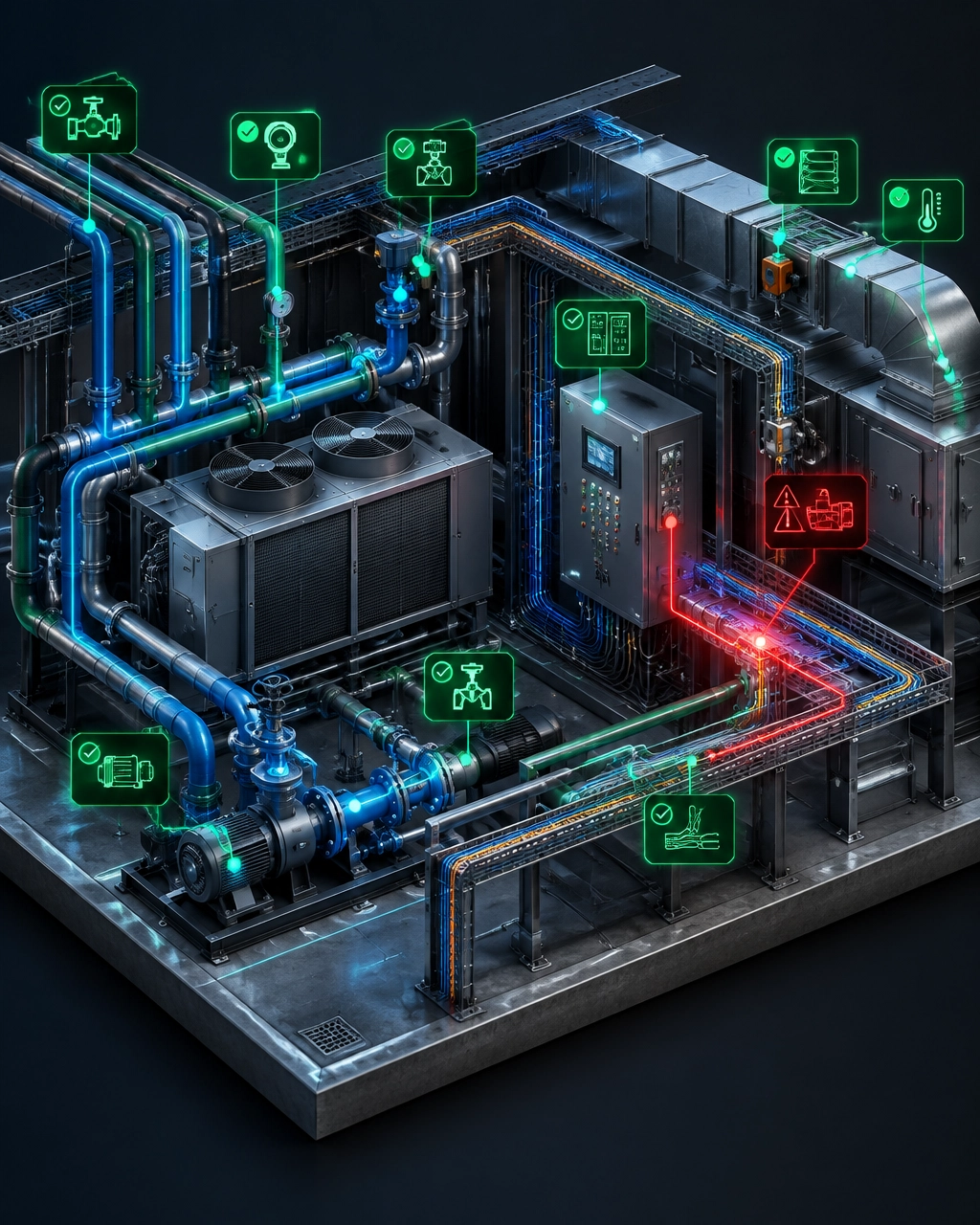
None of those records necessarily proves that the building performs as an integrated system.
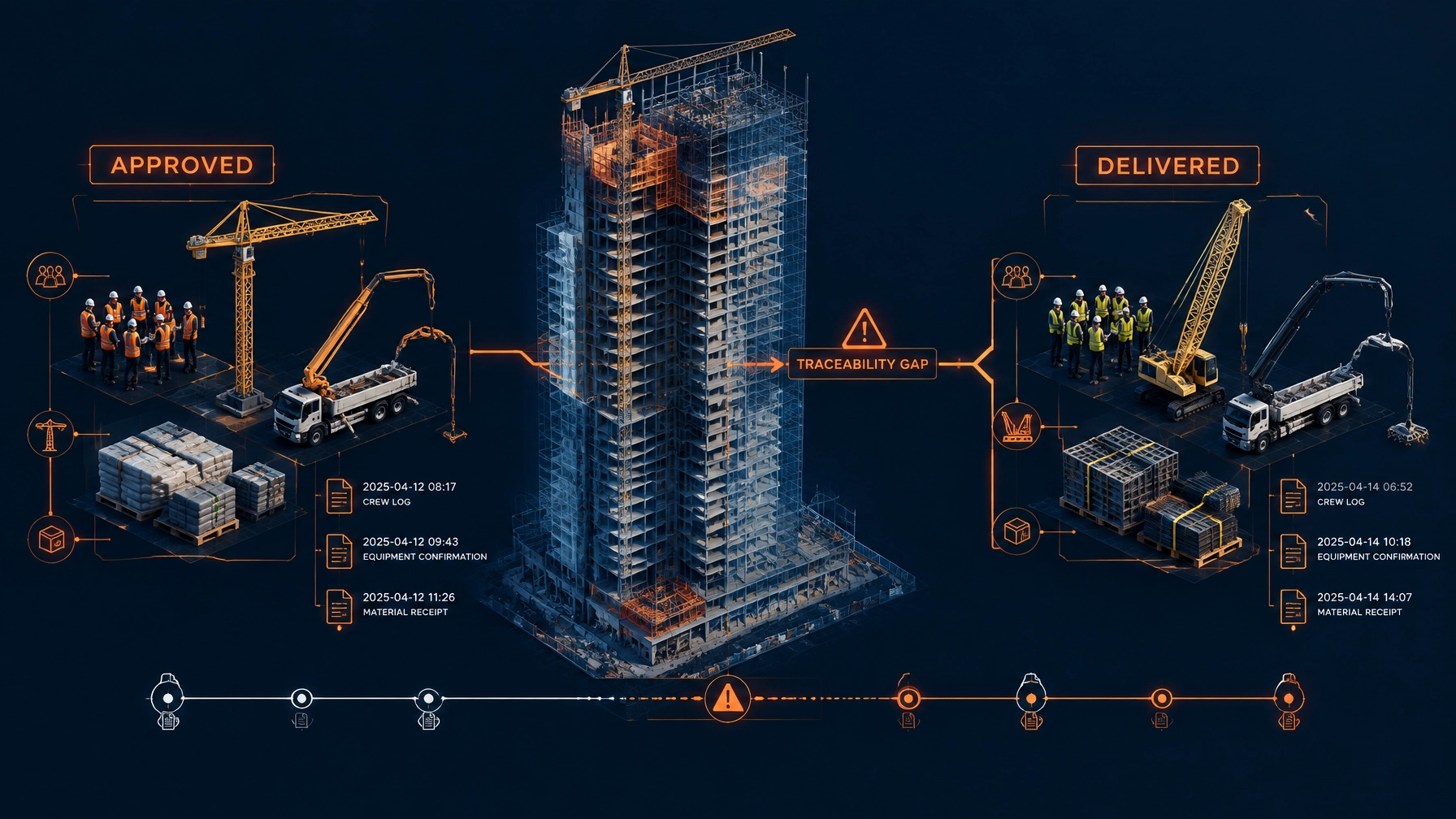
This is the commissioning gap: the unverified distance between installation completion and demonstrated operational performance.
The risk is amplified when commissioning is deferred until the final stages of construction. By then, ceilings are closed, access is restricted, specialist contractors have demobilised and the project team is focused on handover. Tests dependent on occupancy, seasonal load, control sequences or interaction between systems are postponed, qualified with assumptions or omitted altogether.
The building may be visually complete and contractually ready for possession while critical performance questions remain unanswered:
- Does the HVAC system respond correctly when occupancy, solar gain and external conditions change?
- Do fire and smoke control sequences interact correctly with ventilation and electrical isolation?
- Do controls commands produce the intended physical response at every terminal device?
- Can the owner operate the systems without overriding automated safeguards?
- Are hydraulic, electrical and mechanical systems stable when demand changes rapidly?
- Is there a documented evidence chain proving what was tested, under which conditions and with what result?
Without clear answers, the project carries a latent defect reservoir into occupation.
That reservoir may remain invisible for months. It then presents as unstable temperatures, excessive energy use, condensation, nuisance alarms, poor indoor air quality, water damage, equipment failure or unexplained system behaviour. The technical problem becomes a commercial dispute because the evidence needed to identify responsibility was never created.
Forensic Analysis
Installation completion is not performance verification
Installation records establish that equipment, cables, pipework, sensors and control devices were placed, connected or energised. They do not automatically establish that the assembled system performs its intended function.
A signed point test may confirm that a sensor reports a value to a controller. It may not confirm that:
- The sensor is located correctly.
- The controller interprets the signal correctly.
- The damper, valve or motor responds in the correct direction.
- The response occurs within the required time.
- The action remains stable under changing load.
- Other systems respond appropriately to the same event.
Treat isolated test sheets as component evidence: not integrated performance evidence.
A high-end home is a network of dependencies. A change in occupancy can affect ventilation demand, cooling load, electrical consumption and control logic. A fire event can require coordinated responses from fans, dampers, doors, alarms, lifts, access controls and power supplies. A hydraulic demand event can expose deficiencies in pressure control, pump sequencing, hot-water recovery or drainage performance.
The failure mode usually occurs at the interface.
The concealed interface is where disputes form
Contractors generally control their own scope. Oversight bodies, certifiers, inspectors and client representatives often review compliance through package-based inspections. This creates a structural blind spot.
The HVAC contractor may demonstrate that the air-handling unit starts. The controls contractor may demonstrate that the command is received. The electrical contractor may demonstrate that the circuit is energised. The fire contractor may demonstrate that an alarm signal is transmitted.
But who proves that the systems work together under the defined scenario?
If that responsibility is not allocated, each party can produce a technically defensible record while the building remains operationally defective.
This is the central forensic distinction:
A collection of compliant component records is not equivalent to a verified system outcome.
The gap between those two positions is where construction compliance becomes vulnerable. It is also where contractual interpretation becomes unstable. One party points to signed test sheets. Another points to occupant complaints or operational failure. The project lacks a contemporaneous record showing the expected sequence, test condition, measured result, exception, corrective action and retest.
That absence of evidence is itself a project risk.
Audit engagement models expose or hide the gap
The commissioning outcome depends heavily on who is engaged, when they are engaged and what authority they hold.
1. Trade-led verification
The installing contractor tests its own work. This model is efficient for basic installation checks but carries an inherent independence limitation. It may not examine interfaces outside the contractor’s package or challenge the original design assumptions.
Use trade-led testing as the first layer of evidence. Do not treat it as the complete commissioning process.
2. Inspection-led verification
An inspector or oversight body attends selected demonstrations and reviews submitted records. This can identify visible defects and missing documents, but a short inspection window may not reproduce variable operating conditions.
Inspection confirms what was observed. It does not prove what was never tested.
3. Independent commissioning authority
An independent commissioning authority establishes requirements, reviews design intent, coordinates testing, witnesses functional performance and tracks unresolved issues. This model is better suited to complex residences because it separates installation responsibility from performance verification.
The authority must be engaged early enough to influence design coordination, access provisions, controls architecture and test planning. Appointing a commissioning authority only days before handover converts a preventive process into a documentation exercise.
4. Post-occupancy or continuous verification
Some failures become visible only under real occupancy, seasonal load or changing operational patterns. Post-occupancy verification can identify drift, unstable sequences and operator-interface problems that a static handover test cannot reveal.
Treat post-occupancy review as a planned stage: not an admission that commissioning failed.
Deferred tests become latent defects
A deferred test is not automatically a defect. It becomes a defect-control failure when the deferral is not formally recorded, assigned, rescheduled and closed.
Maintain a controlled deferred-test register containing:
- The reason the test could not be completed.
- The affected system or interface.
- The required operating condition.
- The responsible party.
- The target completion date.
- The acceptance criteria.
- The evidence required for closure.
- The escalation route if the test fails.
Do not allow “to be tested after handover” to become an unowned administrative phrase.
When a test is deferred without a closure mechanism, the project loses more than a test result. It loses the opportunity to preserve site conditions, coordinate specialists and establish causation before occupation.
Standard Reference
The commissioning framework should be built around documented owner requirements, design intent, test procedures, measurable acceptance criteria and an auditable record of outcomes.
ASHRAE Guideline 0 establishes the logic of commissioning as a quality-focused process rather than a final inspection event. ASHRAE Standard 202 provides a framework for commissioning processes, documentation and verification.
Use the following international references as appropriate to the project scope:
- ASHRAE Standard 55 for thermal environmental conditions and occupant comfort criteria.
- ASHRAE Standard 62.2 for residential ventilation and indoor-air-quality provisions.
- ASHRAE Standard 135 for BACnet communication and controls interoperability.
- ISO 9001 for controlled processes, documented information, nonconformance management and continual improvement. See the ISO 9001 standard page.
- ISO 41001 for a structured facilities-management approach where operational performance and asset stewardship continue beyond handover.
- Relevant SMACNA guidance for duct construction, testing and air-system performance where applicable to the design.
- Relevant ASTM measurement and test methods where project requirements call for objective verification of air, moisture, thermal or material performance.
These references do not replace the project’s contractual requirements. They provide a disciplined method for converting expectations into testable outcomes.
A defensible commissioning record should connect:
- Owner’s Project Requirements.
- Basis of Design.
- Approved design and controls sequences.
- Equipment schedules and submittals.
- Installation inspection records.
- Pre-functional checklists.
- Functional performance tests.
- Integrated scenario tests.
- Defect and nonconformance records.
- Retest results.
- Operator training and handover documents.
- Post-occupancy verification where required.
The objective is not to produce more paperwork. The objective is to establish causation, responsibility and performance evidence before the building enters its most difficult forensic phase: occupation.
Actionable Fix
Define performance before procurement
Document the owner’s operational requirements before equipment selection. Set measurable expectations for comfort, ventilation, noise, response time, resilience, controls functionality, water performance and life-safety interaction.
If the outcome cannot be described, it cannot be verified.
Engage commissioning expertise during design
Bring the commissioning authority or senior construction consultant into design coordination. Review equipment selections, access provisions, sensor locations, control sequences, testing points and system interfaces before construction makes changes expensive.
This is where building consultancy services create value: they convert design intent into an executable verification strategy.
Write integrated tests into the contract
Specify system-level scenarios, not only package-level checklists. Include test conditions, instruments, tolerances, acceptance criteria, witness requirements and evidence formats.
Require the contractor to demonstrate both normal operation and defined abnormal conditions.
Control the evidence chain
Use a single commissioning register that links each requirement to its design response, installation evidence, test result, defect status and final closure.
Do not accept unsigned spreadsheets, screenshots without context or test sheets that identify no test condition. Record dates, equipment identifiers, instruments, calibration status, measured values, commands, responses and exceptions.
Separate completion from closure
Define substantial completion, practical completion and commissioning closure as distinct project gates where appropriate. Do not allow physical completion of a plant room to imply verified performance of the entire services system.
Plan for real operating conditions
Test under representative loads wherever possible. Review seasonal or occupancy-dependent tests before handover and define how they will be completed after occupation.
Use post-handover monitoring to confirm that actual operation remains aligned with the documented requirements.
Protect the dispute position
For developers, head contractors and clients, commissioning is also construction risk management services. For legal and dispute professionals, it is a source of contemporaneous technical evidence.
For those procuring residential project management or Client Side Project Management, require the project manager to track commissioning as a live risk register: not as a final document compilation task.
A residential building consultant should challenge the assumption that a clean handover folder means a functioning building. A construction advisory Australia search may identify local providers, but the underlying requirement is global: establish a clear bridge between installation, compliance and demonstrated performance.
Shoal Bay Projects operates at that bridge. Through construction compliance review, forensic assessment and strategic advisory, we help clients identify whether a project has achieved verified performance: or merely accumulated signed records.
Explore more forensic construction intelligence through The Hive YouTube channel.

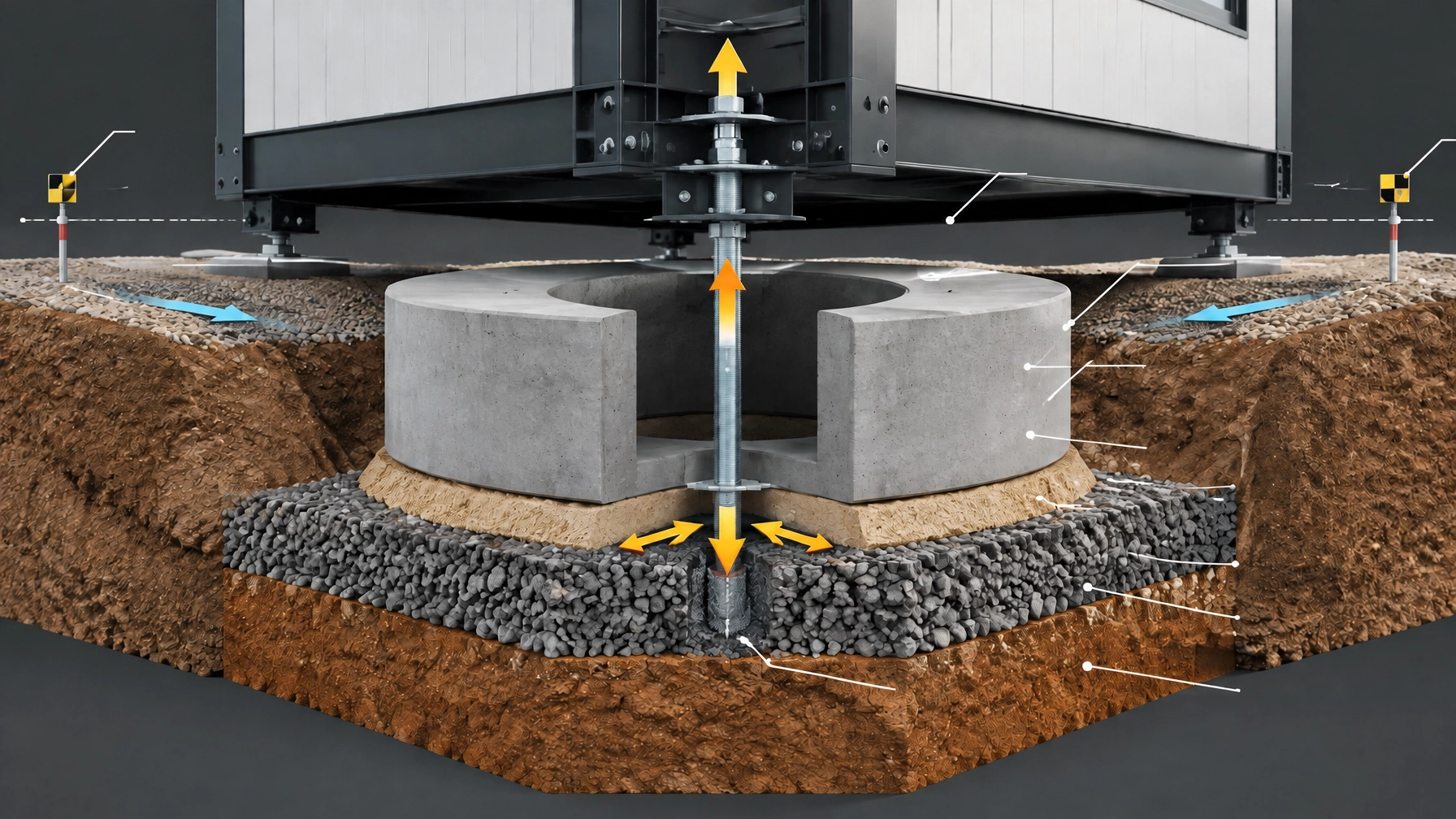
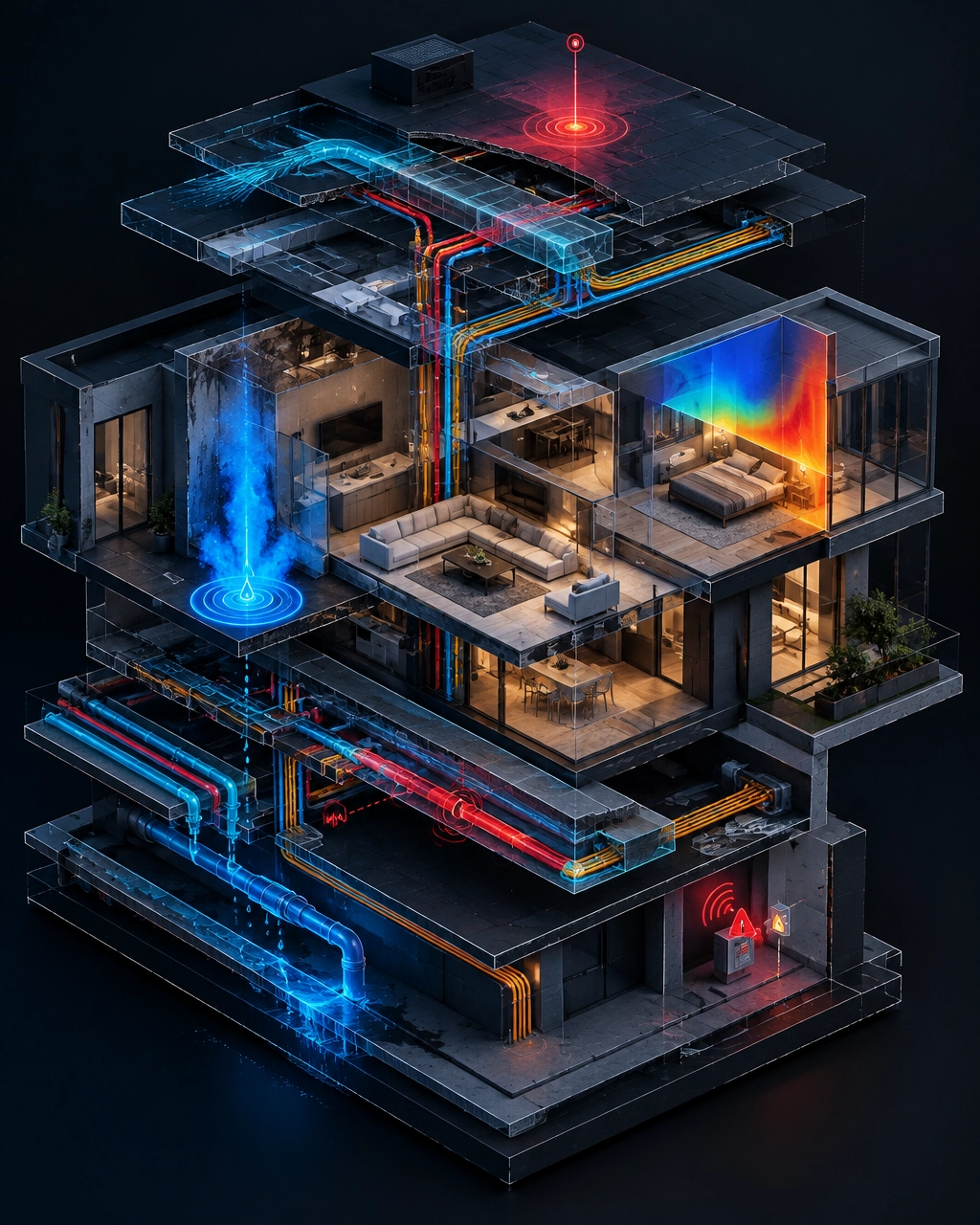
⚠️ The image in this post is used for illustration purposes only, designed to encourage thoughtful discussion. It is not intended to represent a prescriptive detail of any installation or construction method.
Circle-ready companion
Building services can be individually tested, signed off and still fail as an integrated system.
This article examines why deferred commissioning creates a latent defect reservoir in high-end residential projects: and why the most important evidence is often the evidence nobody has assigned responsibility to create.
Read the full article: The Commissioning Gap: Why Deferred Building Services Verification Becomes a Latent Defect Reservoir in High-End Residential Construction
Key forensic takeaways
- Point test sheets prove isolated component activity. They do not prove interoperable building performance.
- Deferred tests require an owner, acceptance criteria, a completion date and documented retesting.
- Independent commissioning must connect owner requirements, design intent, installation records, integrated testing and post-handover performance.
Image assets
⚠️ The image in this post is used for illustration purposes only, designed to encourage thoughtful discussion. It is not intended to represent a prescriptive detail of any installation or construction method.
Claim Your Foundation Membership
The Vault. The App. The Community. We're opening the doors to a select group of Foundation Members : free, for a limited time. Foundation Membership includes full access to The Vault (our forensic intelligence archive) and early access to the Hive app.
Once the charter window closes, this tier is gone permanently. Foundation Members retain access for life. This is not a trial ; it's a permanent invitation to the founding cohort.
Claim Your Foundation Membership →