Construction
Jul 2, 2026
The Simple Trick to Stopping Variation Disputes Before They Start
The Simple Trick to Stopping Variation Disputes Before They Start

The Simple Trick to Stopping Variation Disputes Before They Start
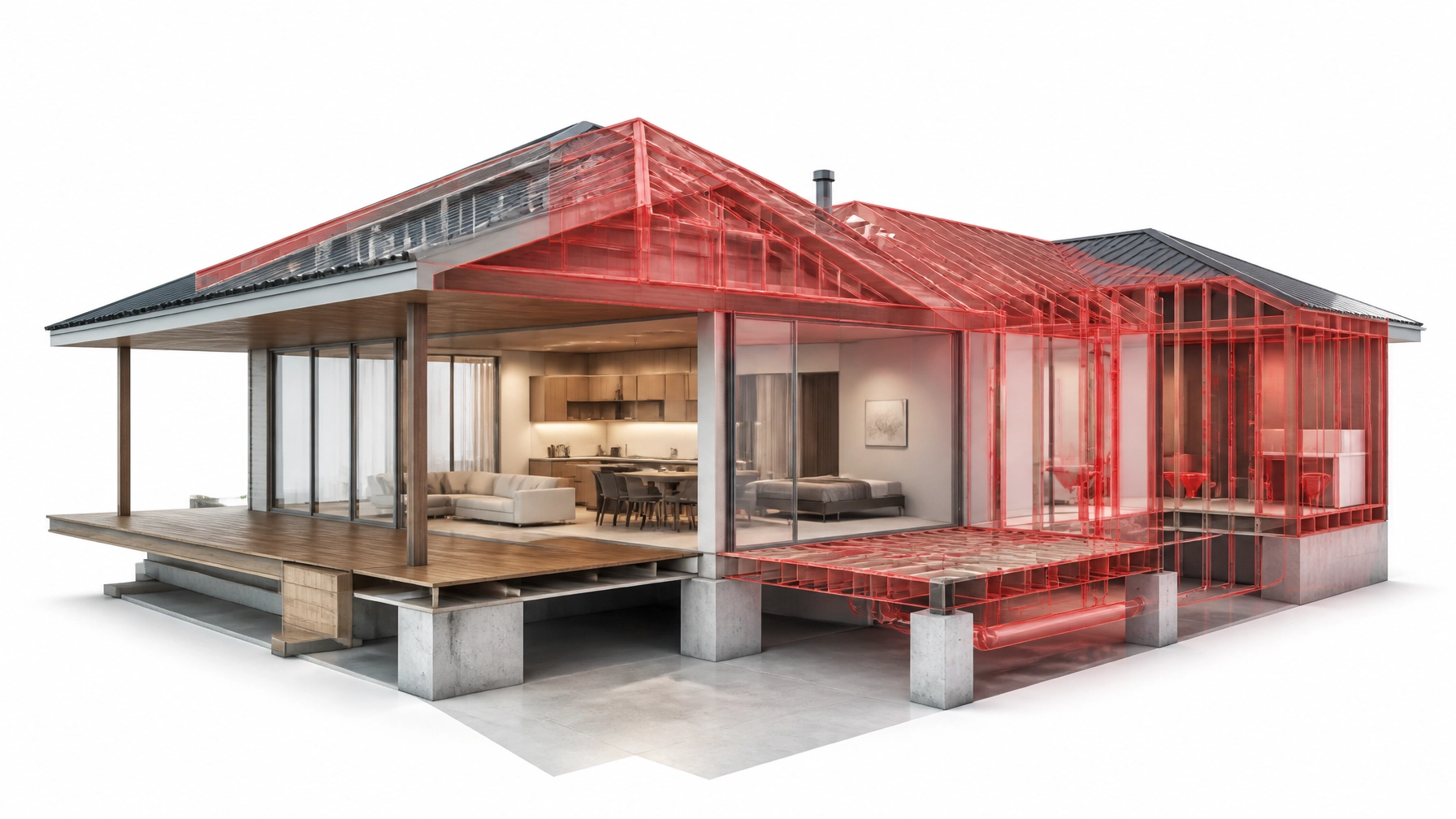
Ask any homeowner who has just finished a major renovation or a custom build about their biggest stressor, and they won't tell you about the paint colour or the tile selection. They’ll tell you about the "unexpected extras."
In the industry, we call these variations. To a builder, a variation is a legitimate adjustment to the contract price for work not originally included. To a homeowner, it often feels like a moving goalpost that threatens the financial viability of the entire project.
The reality? Most variation disputes in Australian residential construction don't start on-site during the build. They start months earlier, in the quiet of an office, buried within the vague language of a contract's "Scope of Works."
If you want to protect your project, your budget, and your sanity, there is one simple trick that works every time: The Pre-Contractual Independent Scope Review.
Most people sign a building contract after a cursory glance at the price and the completion date. They assume that if the plans show a kitchen, the "kitchen" is fully covered. But "the kitchen" is not a scope. "The supply and installation of 2-pack polyurethane cabinetry, 40mm Caesarstone benches, and integrated Miele appliances as per the 1:20 detail plan" is a scope.
The simple trick to stopping disputes before they start is to engage a building dispute consultant or an expert in construction risk management services to perform a "Scope Gap Analysis" before the ink is dry on the contract.

In the commercial world, contracts like AS 4000 (General conditions of contract) or AS 2124 provide a structured framework for managing variations. In the residential sector, we usually deal with HIA or Master Builders standard forms. While these are robust, they still rely on the "Scope of Works" being accurate.
Check your documentation. Does your contract include:
If your builder says, "Don't worry, we'll figure that out on-site," you are looking at a future variation claim. Specify everything. If it’s not on the plan or in the spec, it’s an extra.
A common mistake made by lead contractors (and misunderstood by homeowners) is the belief that once a task is subcontracted, the responsibility for its compliance and quality moves with it.
This is a dangerous assumption.
In Australia, particularly under evolving legislation like the Design and Building Practitioners Act (and the broader common law duty of care), the lead builder has Non-Delegable Duties. This means that even if a builder hires a specialist waterproof or structural steel fabricator, the builder remains personally and legally liable for the performance of that work to the owner.
Often, a builder will suggest a variation to "save money" by substituting a material or changing a design. They might say, "My plumber says we can do it this way instead."
Because the builder’s duty is non-delegable, they cannot hide behind the subcontractor's advice if that change leads to a defect. From a Client Side Project Management perspective, we advise that any variation involving a "system change" (like waterproofing or structural members) must be reviewed by the original consultant or an independent advisor to ensure it doesn't breach the builder's statutory warranties.
If you find yourself needing to make a change during the build, follow this protocol to prevent it from turning into a dispute:
Never allow variation work to start based on a verbal agreement or a text message. Australian building laws (such as the Home Building Contracts Act) typically require variations to be in writing, signed, and dated by both parties before the work commences.
A variation should not be a "simple dollar amount." Demand a calculation that shows:
Check the contract. Is this work truly a variation? Or was it "indispensably necessary" to achieve the original design? If the builder missed a beam that was clearly required to hold up the second floor shown on the plans, that is a builder's error, not an owner's variation.
For medium to high-end residential projects, the complexity is too high to manage on "trust" alone. Client Side Project Management isn't about being "anti-builder"; it's about providing the structured, compliance-focused oversight that ensures the project stays aligned with its contractual and performance requirements.
We operate at the advisory level, supporting informed decision-making. By having a Shoal Bay Projects consultant review your progress and your variation claims, you ensure that you are only paying for work that is actually a change, and that the quality of that work meets AS 4349 standards.

Construction shouldn't be a battle of "us vs. them." It should be a transparent process where everyone knows what they are building and what they are being paid. If you want to dive deeper into how to structure your next project for success, we invite you to explore our community hub.
Welcome to the Hive - Watch the Video Invitation
The simple trick isn't magic; it's discipline.
By engaging in construction risk management services early, you transform your building experience from a series of expensive surprises into a controlled, professional delivery of your vision.