Construction
Jul 2, 2026
The Simple Trick to Managing Variations and Avoiding Building Disputes
The Simple Trick to Managing Variations and Avoiding Building Disputes

The Simple Trick to Managing Variations and Avoiding Building Disputes
In the high-stakes world of residential construction, where the national target of 1.2 million new homes by 2029 is putting immense pressure on supply chains and schedules, there is one word that strikes more fear into the hearts of builders and homeowners than "asbestos": Variations.
If you’ve ever been involved in a project that ended up in a lawyer’s office, chances are the root cause was a variation that wasn't handled correctly. Variations are the primary catalyst for building disputes in Australia. They create "scope creep," balloon budgets, and stretch timelines until they snap.
But what if I told you there is a simple trick, a single mental model, that can virtually eliminate variation disputes before they even start?
Most people treat a variation like a change order or a casual "extra." That is a mistake. The simple trick used by professional construction consultants is to treat every single variation as a brand-new, standalone mini-contract.
If you wouldn't start a $1,000,000 build without a signed contract, why would you start a $15,000 kitchen upgrade within that build based on a verbal "yeah, go ahead" on a Tuesday morning?
By shifting your mindset to the "Mini-Contract" model, you enforce a level of documentation and discipline that makes disputes nearly impossible.

A variation is defined as any addition, omission, or alteration to the work described in the original contract documents. Disputes arise because the original "Scope of Work" is often the only thing clearly defined at the start.
Common causes of variation disputes include:
When these changes happen without a "mini-contract" approach, the builder does the work, the owner expects the original price, and the invoice at the end of the month becomes a declaration of war.
As a building dispute consultant, I see the same patterns daily. Under common Australian building law principles (and specific legislation like the Home Building Contracts Act), variations must be in writing.
While specific state regulations vary, the core principle remains: a contractor is generally not bound to perform a variation, and a principal is not bound to pay for one, unless there is a clear agreement on:
Australian Standards like the AS 4000-series (General Conditions of Contract) provide rigorous frameworks for variations, yet these are often neglected in residential projects in favour of more "casual" arrangements. This "casualty" is where the risk lives.
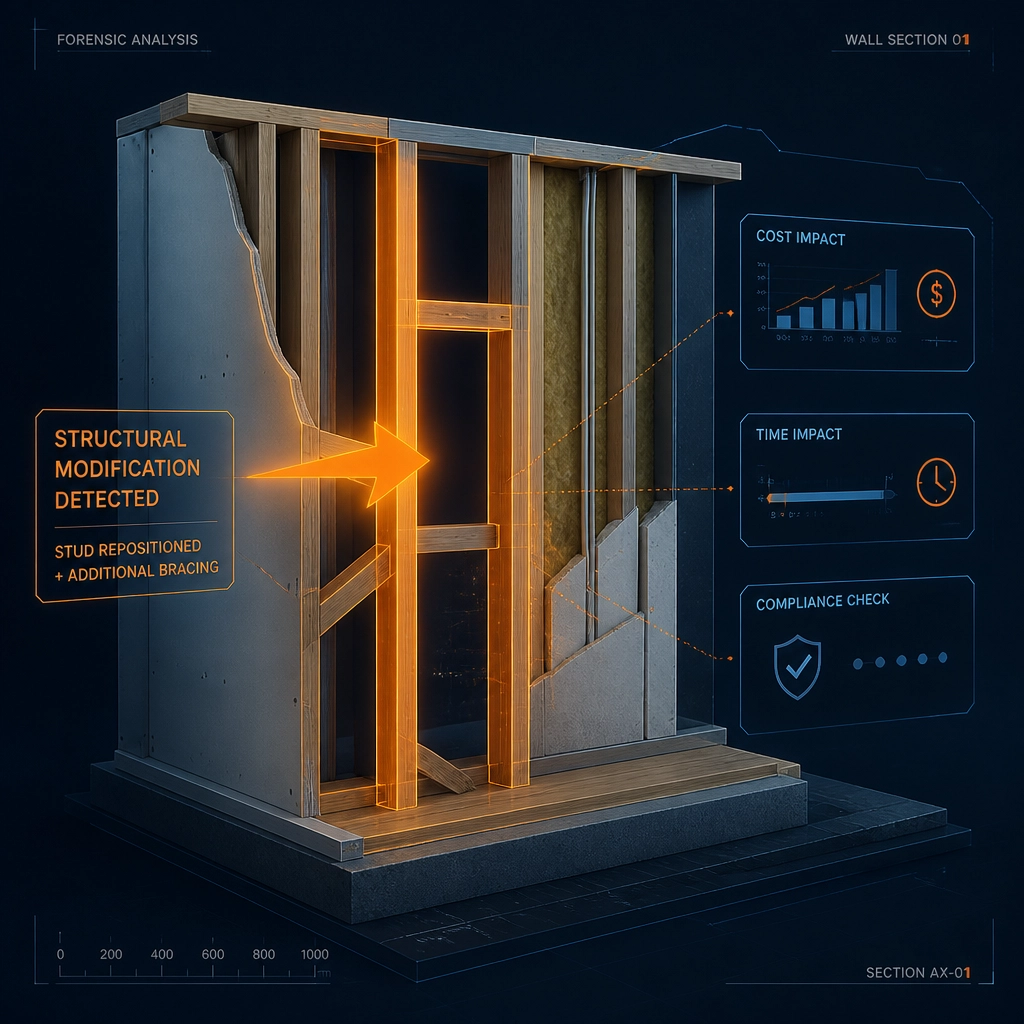
To stop disputes, you must implement a rigid protocol. Use these imperatives on every project to ensure compliance and clarity.
The moment a change is requested: whether by the owner or due to a site condition: document it. Take a photo, mark up the plan, and note the date. Do not wait until the end of the week.
Every "mini-contract" needs three things:
Never rely on an email thread. Issue a formal document titled Variation Quote #XX. This makes it clear that this is a formal legal step, not a casual chat.
This is the "Golden Rule" of construction consultation. No signature, no work. If a builder starts work before the variation is signed, they lose their leverage. If an owner allows work to start without a price, they lose their budget control.

Sometimes, what looks like a defect is actually a poorly managed variation. For example, if a client requests a "slight change" to the plumbing layout and the builder complies but doesn't adjust the surrounding waterproofing, you may end up with a leak.
Is that a defect? Yes. But it was caused by an undocumented variation. A construction consultant can look at the 3D forensic evidence of a failure and trace it back to the exact moment a project deviated from the signed plans.
When a builder says, "Don't worry, we'll sort the price out at the end," they are inviting an adjudication under the Security of Payment Act. Conversely, when an owner says, "Just get it done, I'm good for it," they are often shocked when the "actual costs" come in 40% higher than they imagined.
In the current climate, with the 1.2M home target driving a high-velocity environment, there is no room for "sorting it out later." Professionalism is your only shield against litigation.
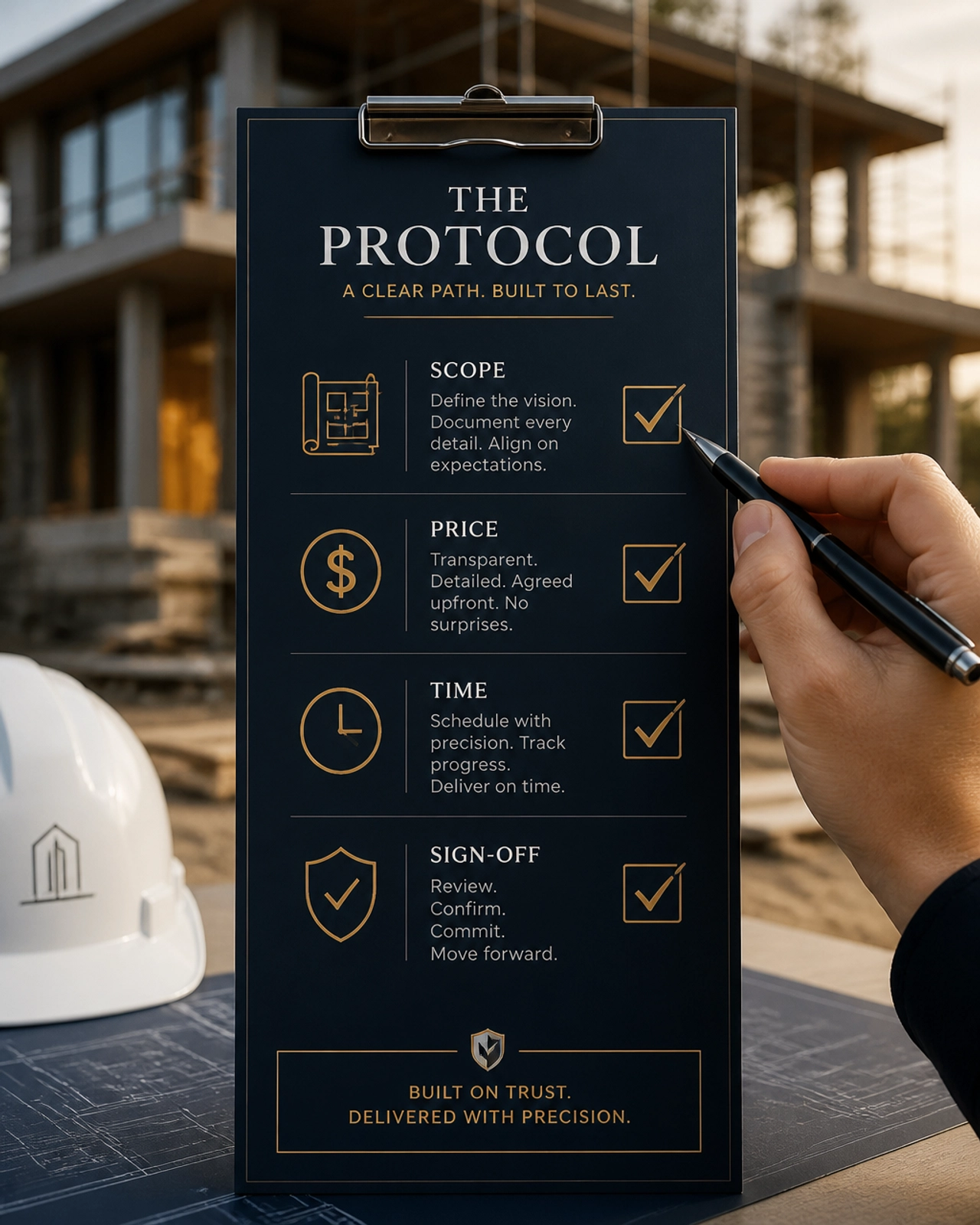
Check your current project against this list. If you are missing any of these, you are at risk of a building dispute.
Managing variations isn't about being "difficult" or "bureaucratic." It is about protecting the financial integrity of the project and the sanity of everyone involved. Whether you are a builder protecting your margin or a homeowner protecting your life savings, the "Mini-Contract" trick is the most powerful tool in your arsenal.
If you find yourself in the middle of a variation mess, or if you want to ensure your next project is structured for success, it’s time to seek expert advice.
Welcome to the Hive. At Shoal Bay Projects, we specialize in the "forensic" side of construction advisory. We help you interpret compliance, manage risks, and ensure that your project stays aligned with contractual and regulatory requirements.
Check out our community hub and explore The Vault for more deep dives into construction strategy: Welcome to the Hive
Document. Specify. Sign. That is how you build without the headaches.
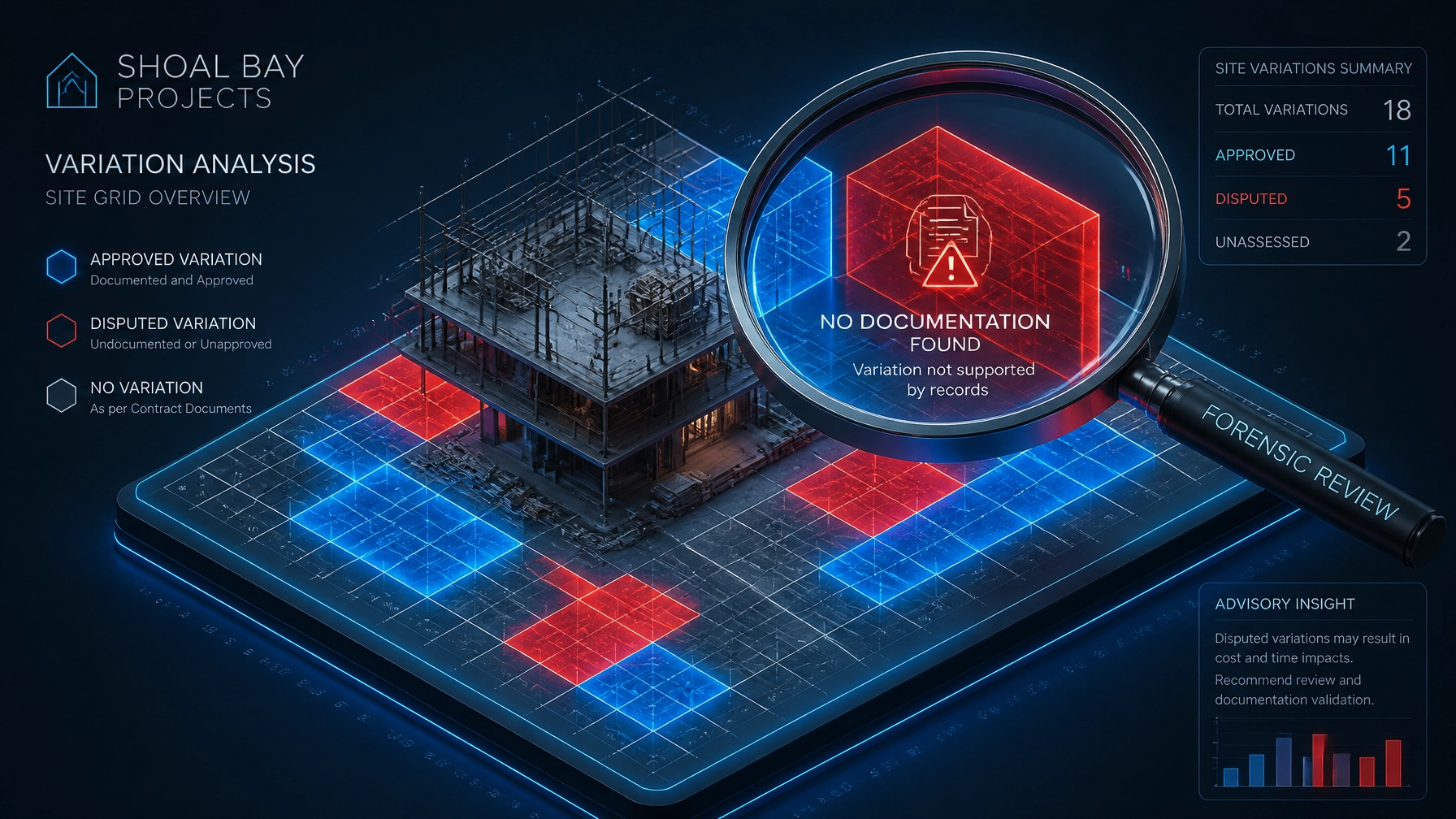
As Australia pushes toward its ambitious housing targets, the frequency of variations will only increase as builders navigate labor shortages and material substitutions. Staying disciplined with your documentation is no longer optional; it is a survival skill for the 2026 construction market.