Construction
Jul 2, 2026
The New NZ Meth Rules: Risk, Reality, and the 15 µg Threshold
The New NZ Meth Rules: Risk, Reality, and the 15 µg Threshold

The New NZ Meth Rules: Risk, Reality, and the 15 µg Threshold
For years, the conversation around methamphetamine contamination in New Zealand residential properties was defined by a single, highly conservative number: 1.5 µg/100 cm². It was a standard born from caution, but it often led to expensive, perhaps unnecessary, decontaminations that gutted perfectly habitable homes.
On April 16, 2026, the game officially changed.
The Residential Tenancies (Managing Methamphetamine Contamination) Regulations 2026 have introduced a more pragmatic: though technically demanding: framework. We’ve moved from a one-size-fits-all "trace" standard to a risk-stratified model. If you’re a landlord, a property manager, or a developer with a portfolio across the Tasman, the old rules of thumb are dead.
At Shoal Bay Projects, we look at building compliance through a forensic lens. Whether it’s structural integrity or chemical residue, the goal is the same: quantify the risk, document the reality, and manage the liability. Here is the breakdown of the 2026 regulations and what they mean for your risk management strategy.
The core of the 2026 regulations is the shift in "actionable" levels. We no longer treat 1.6 µg as a catastrophe in a rental context. Instead, the law now recognizes two distinct tiers of contamination:
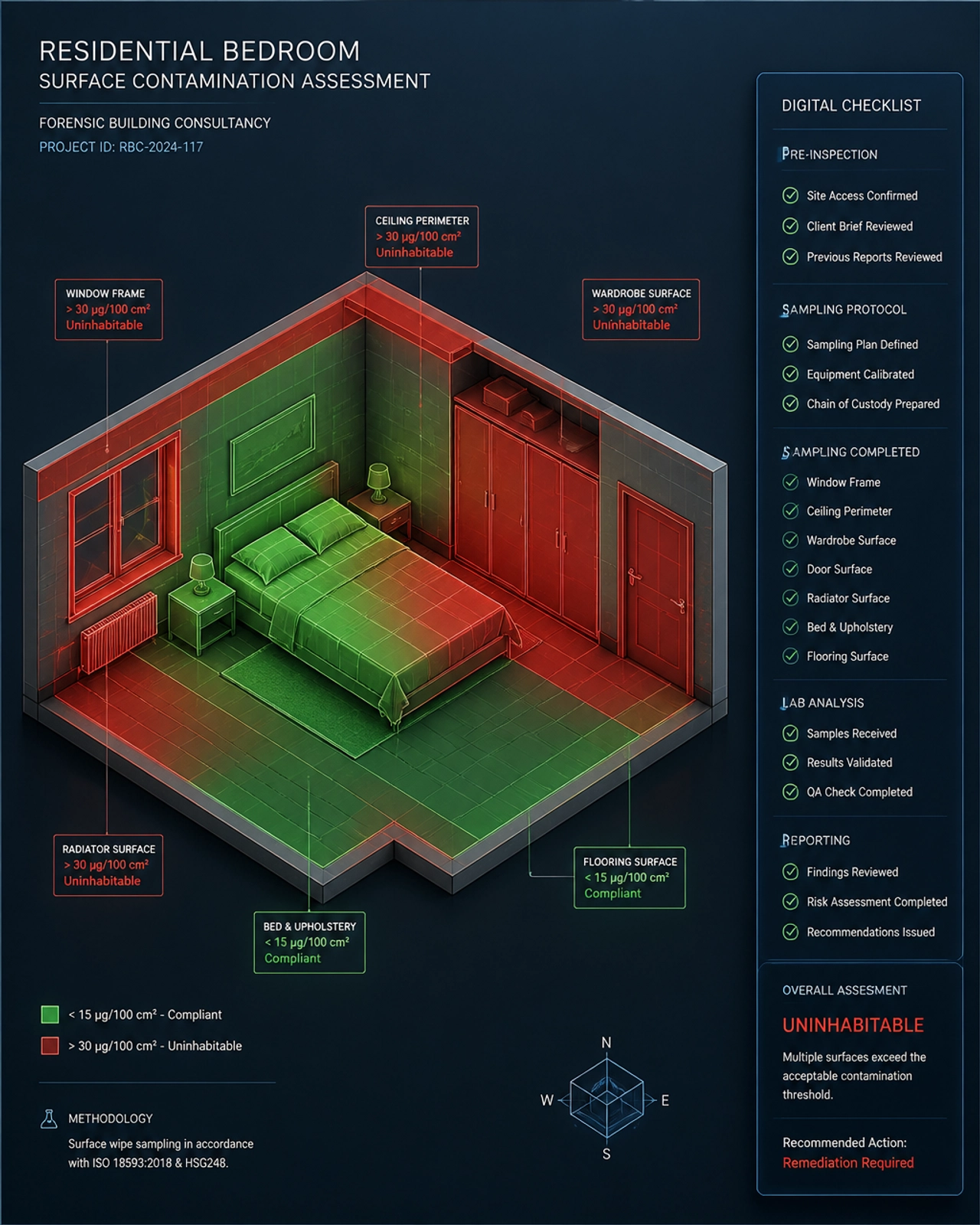
A property is now legally considered "contaminated" if any area tests above 15 µg/100 cm².
This is the "nuclear" level. If any part of the property: even a single room: tests above 30 µg/100 cm², the property is legally deemed uninhabitable.
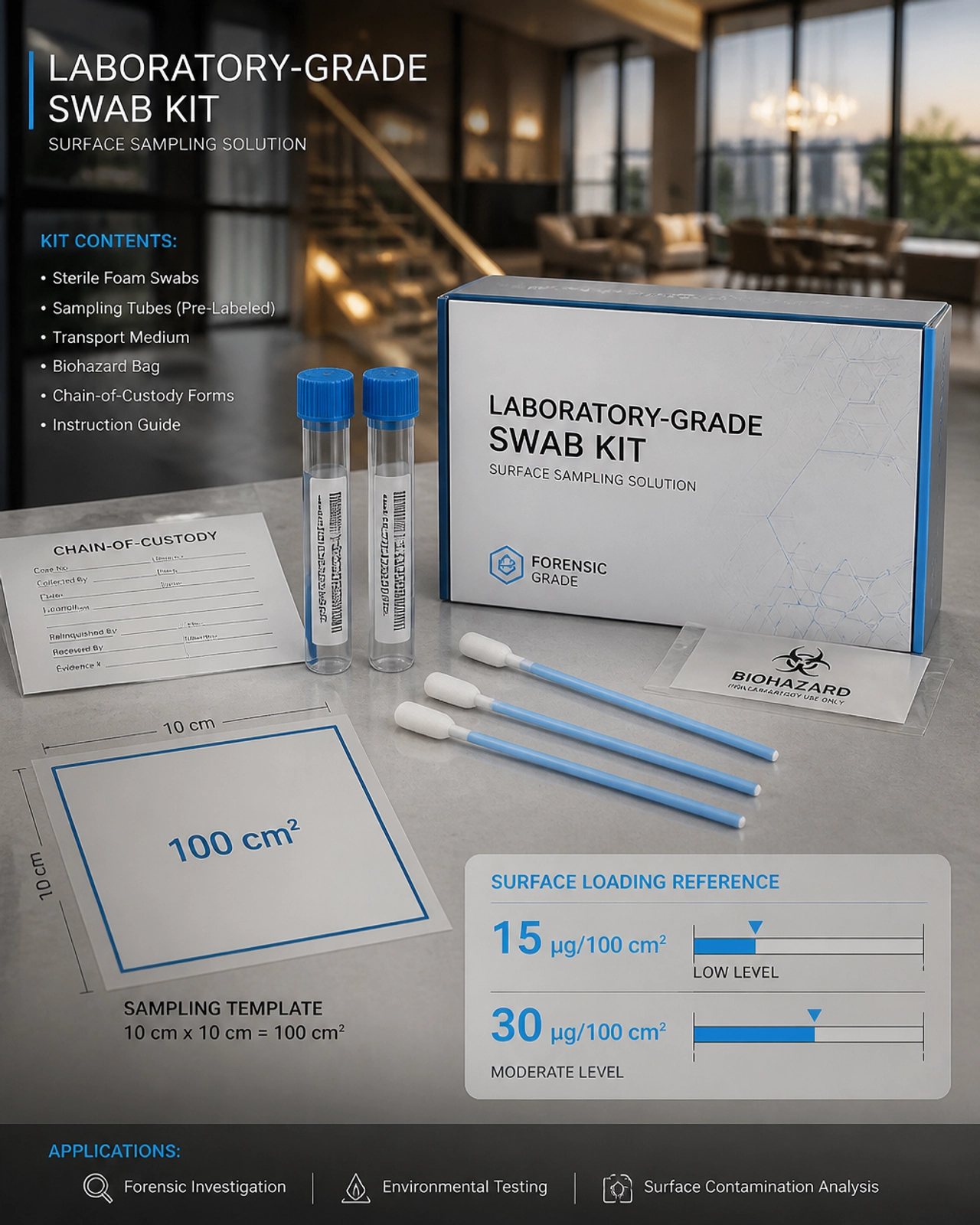
The 2026 regulations clarify who can test and how. This is where most landlords get tripped up. There are now two distinct phases of assessment:
This is the "first look." A screening assessment is designed to see if meth is present at all.
If you’re facing a potential breach of the 15 µg or 30 µg thresholds, you need a professional.
If you hit the 15 µg threshold, decontamination is mandatory. However, the 2026 regulations have tightened the screws on the "wild west" of the meth cleaning industry.
The most critical rule is Independence. The person or company doing the testing cannot be the same person or company doing the cleaning. This is a fundamental conflict-of-interest check. You need a third-party tester to verify the post-decontamination levels (clearance testing) to ensure the remediation company actually did their job.
All decontamination work must align with NZS 8510:2017, which covers the methods for cleaning surfaces, disposing of contaminated materials (like carpets or curtains), and managing the HVAC systems.
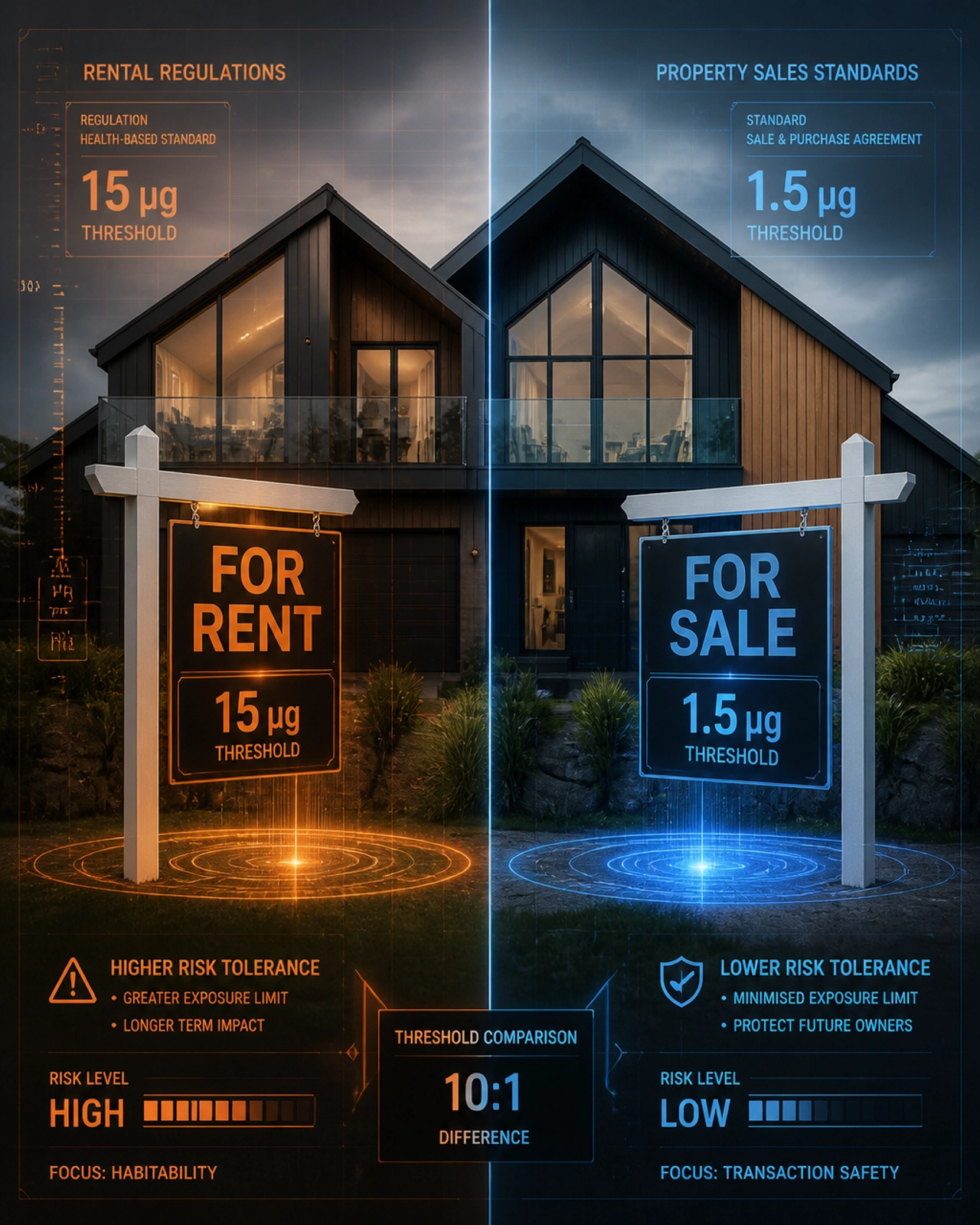
Here is the advisory "gotcha" that catches many off guard. The 15 µg threshold is a Rental Regulation. It is designed to manage the relationship between landlords and tenants under the Residential Tenancies Act.
It does not necessarily apply to property sales.
When a house is sold, the transaction is governed by the Sale and Purchase Agreement and general property law. Most buyers’ advocates, banks, and insurers still default to the highly conservative NZS 8510:2017 standard of 1.5 µg/100 cm².
Why? Because 1.5 µg is the "limit of detection" where we can confidently say a property has no history of meth use. For a buyer, 14 µg (which is legal for a rental) still indicates significant drug activity has occurred in the home. This "stigma" affects resale value and insurability.
At Shoal Bay Projects, we advocate for a "baseline" approach to construction and property management. You cannot manage what you haven't measured.
For landlords, the 2026 regulations make baseline testing between tenancies more important than ever. If you don't test at the start of a tenancy, you cannot prove that the 31 µg reading (the "uninhabitable" level) found two years later wasn't there when the tenant moved in.
Without a baseline, the landlord is often left holding the bill for decontamination and facing a sudden loss of rental income when the tenant walks away with 2 days' notice.
Navigating the intersection of construction compliance and regulatory shifts requires more than just reading the news: it requires a community of professionals who understand the ground-level reality of the industry.
If you're looking for a deeper dive into risk management, compliance documentation, and the strategic side of property advisory, we invite you to explore our community hub.
Check out the "Welcome to the Hive" video here to see how we’re changing the way building consultancy works.
The 2026 Meth Regulations are a step toward common sense, but they introduce new legal risks for those who aren't paying attention. Stay clinical, stay documented, and stay ahead of the threshold.