Construction
May 25, 2026
Speed vs. Strategy Part 2: The Compliance Trap – Why "Faster" Doesn’t Mean "Looser"
Speed vs. Strategy Part 2: The Compliance Trap – Why "Faster" Doesn’t Mean "Looser"

Speed vs. Strategy Part 2: The Compliance Trap – Why "Faster" Doesn’t Mean "Looser"
If you’ve been following the headlines in the Australian property sector lately, you’ve probably felt the collective rush of blood to the head.
We’re in the middle of a housing crisis, and the mandate from the top is clear: we need 1.2 million homes, and we need them yesterday.
To get there, state and federal governments have unleashed a wave of "national productivity reforms" designed to slice through the red tape like a hot knife through butter.
Welcome to Part 2 of our series.
Last time, we talked about the big picture of speed versus strategy.
Today, we’re diving into the "Compliance Trap."
Because in 2026, thinking that "Faster" means "Looser" is the quickest way to find yourself on the wrong side of a license suspension.
The dust is still settling on the 2026 Building Legislation Reforms, and if you haven't read the fine print yet, you really should.
This isn't just another layer of bureaucracy; it’s a fundamental shift in how Australia views accountability in construction.

The tension is real.
On one hand, you have governments pushing for density and speed.
On the other, you have regulatory building commissions with a set of brand-new teeth.
The 2026 reforms have handed regulators unprecedented powers to intervene, and they aren't afraid to use them.
We’ve moved past the era where a slap on the wrist and a small fine were the cost of doing business.
Regulatory building commissions now have the power to suspend licenses almost instantly if they suspect a systemic failure in compliance.
One of the biggest shifts involves the expansion of Decennial Liability Insurance (DLI) coverage.
The new reforms have tightened the screws on how DLI is applied and monitored.
If your project doesn't hit the compliance benchmarks from day one, getting that insurance coverage becomes an absolute nightmare.

This brings us to the most dangerous part of the compliance trap: the "Known Defects" scenario.
In the rush to hit these massive housing targets, there is a massive temptation to overlook minor issues in the name of progress.
But "Known Defects" are a strategic disaster.
Under the current 2026 legislative framework, if a defect is identified—even if it’s "minor" at the time—and it’s ignored to keep the project on schedule, the liability doesn’t just sit with the builder.
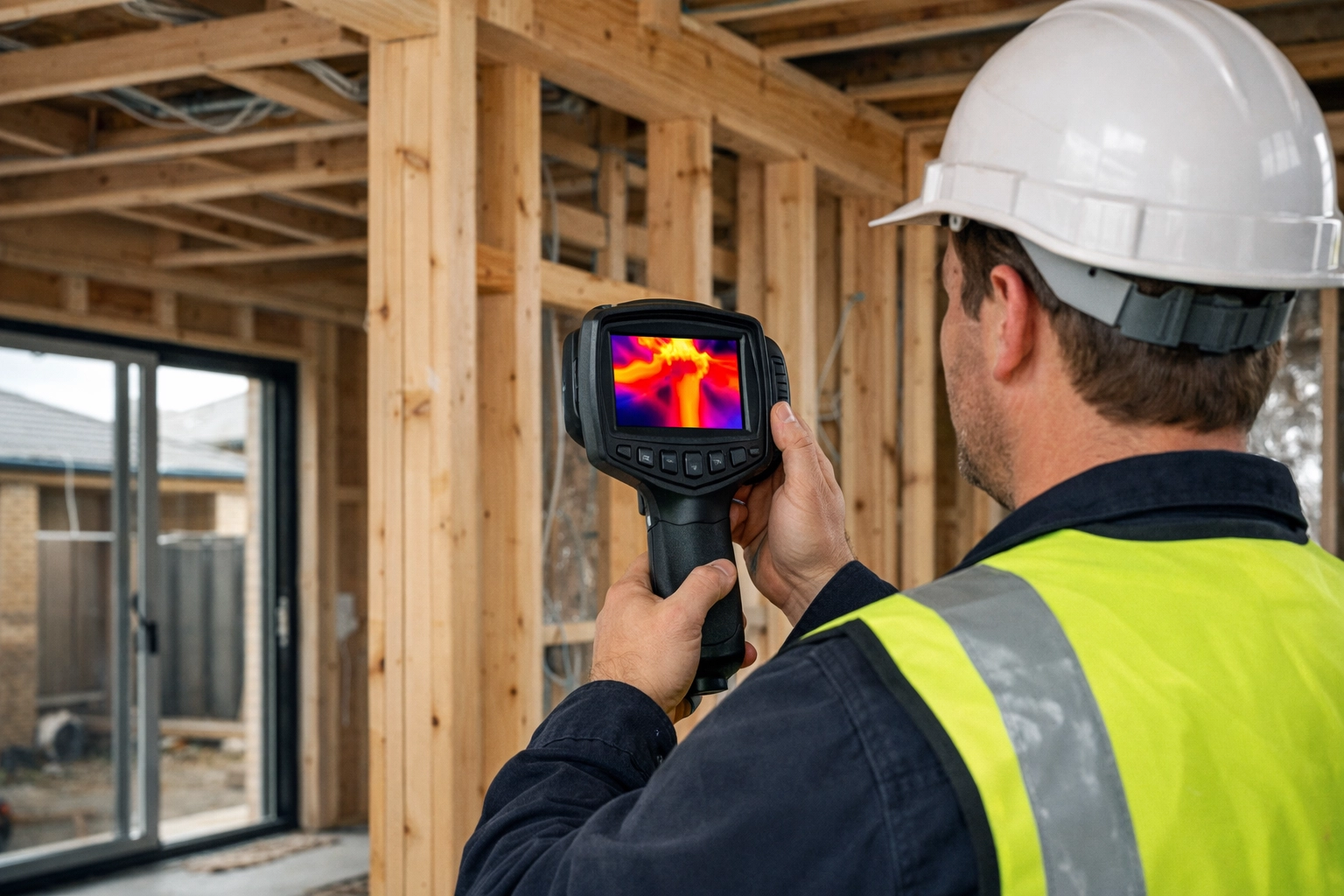
In 2026, compliance is the strategy.
If you want to take advantage of the streamlined planning pathways, your compliance game needs to be elite.
At Shoal Bay Projects, we’re seeing a clear divide in the market.
The winners are those who treat regulatory standards not as a hurdle, but as a competitive advantage.
This is where we sit.
As construction consultants, our job at Shoal Bay Projects is to act as the "circuit breaker."
We work with developers and builders to ensure that the "Speed" side of the equation doesn't break the "Strategy" side.