Construction
Jul 2, 2026
NCC 2026: The Director’s Strategic Risk Brief
NCC 2026: The Director’s Strategic Risk Brief

NCC 2026: The Director’s Strategic Risk Brief
For a long time, the National Construction Code (NCC) was a technical manual for site supervisors and building certifiers. If you were a Director or a Senior Project Manager in a Sydney-based firm, you likely viewed code updates through the lens of procurement: "How much more will the insulation cost?" or "Which subcontractor is handling the waterproofing certificate?"
Those days are over.
As we move into the NCC 2025 adoption phase: becoming effective in NSW from 1 May 2027: the conversation has shifted from the site office to the boardroom. NCC 2026 (as the industry is labeling the 2025-cycle implementation) isn't just a technical update; it is a fundamental reset of Professional Indemnity (PI) exposure and personal liability.
At Shoal Bay Projects, we are seeing a massive shift in how the NSW Building Commission and insurers view "compliance." It’s no longer about whether the work is "good enough." It’s about whether the forensic documentation matches the technical intent of a performance-based code.
Professional Indemnity insurance for builders and consultants has been under fire for years. NCC 2026 introduces more stringent requirements for condensation management, waterproofing, and energy efficiency that effectively raise the "standard of care" expected by courts.
If your design commences after the cut-over date, you are bound by the new benchmarks. Specifically, pay attention to the updated condensation management provisions in Volume 2. We are moving toward mandatory vented wall cavities and higher-spec vapour-permeable wraps (referencing AS 4200.1).
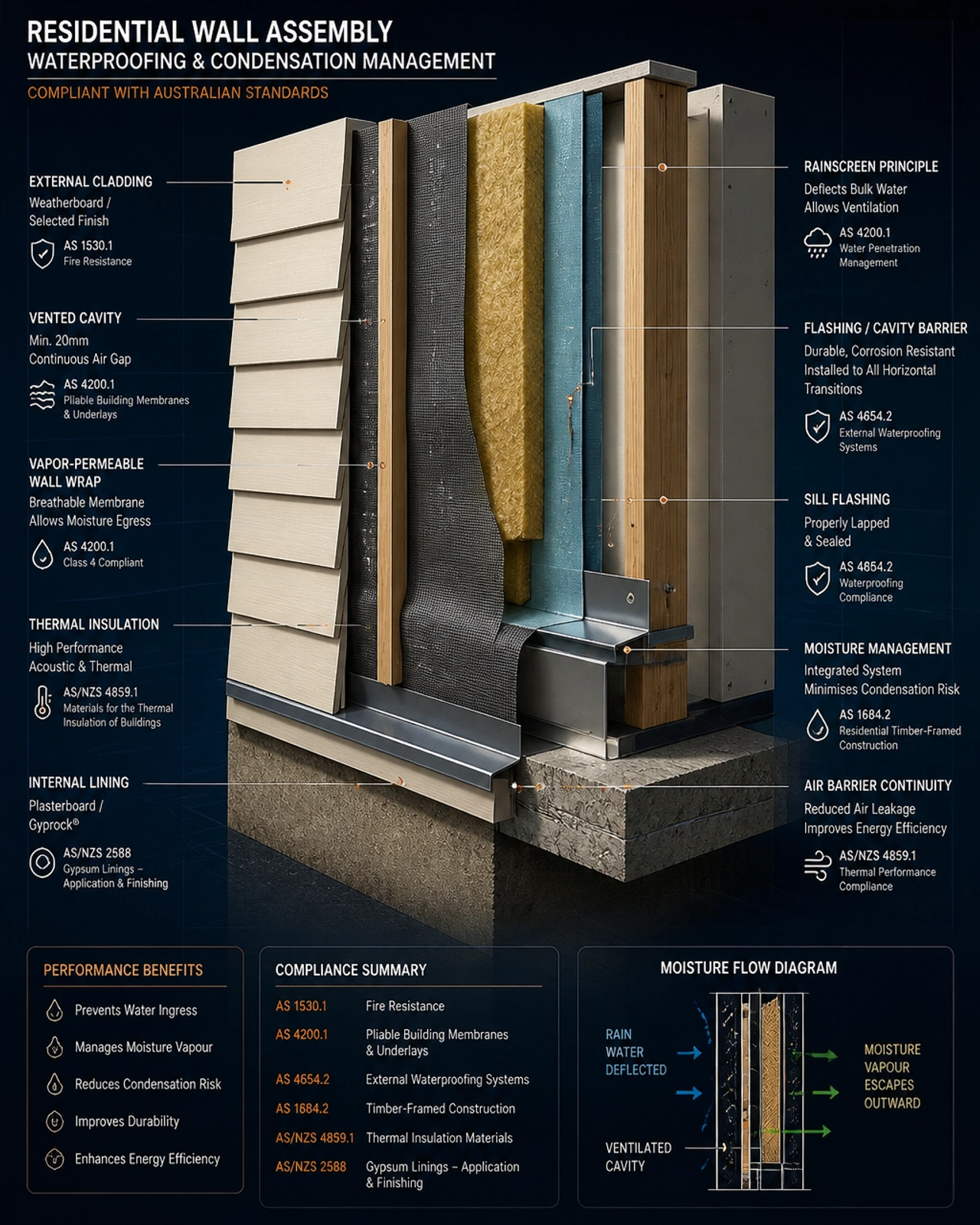
Many directors fall into the trap of applying "standard practice" to new projects. However, "standard practice" is often two code cycles behind. If a building is finished in 2028 but was designed under the NCC 2025/2026 framework, any failure in the facade or internal wet areas will be judged against these heightened standards.
Check your contracts. Ensure that your consultants are not just signing off on "Building Code compliance," but are specifically detailing their methodology for meeting the new Performance Requirements. If they can’t show the forensic data behind their Performance Solutions (as per NCC Part A2.2), your PI policy might not be the safety net you think it is.
In the past, a Director’s duty was focused on solvency and safety. Today, the definition of "due diligence" includes the technical integrity of the product you are delivering. You can no longer rely on a "trust the trade" model.
The modern Director’s duty requires a move to forensic verification.
Don't just ask if the waterproofing is done. Specify that you require a verification report that aligns with AS 4654.2 for external areas and AS 3740 for internal wet areas. Under the new code, the documentation requirements for Performance Solutions have been tightened. If your project relies on a departure from Deemed-to-Satisfy (DtS) provisions, the forensic trail must be bulletproof.

Implement these high-level controls:
In Sydney, the shadow of the NSW Building Commission is long. The regulator has made it clear: they are targeting senior management. They aren't just looking for bad bricks; they are looking for "systemic failure" in governance.
The Commission is increasingly using the 2026 standards as a yardstick for professional conduct. If a Director is found to have overseen a business model that systematically ignores NCC updates to save costs, the repercussions are no longer just financial: they are personal and reputational.
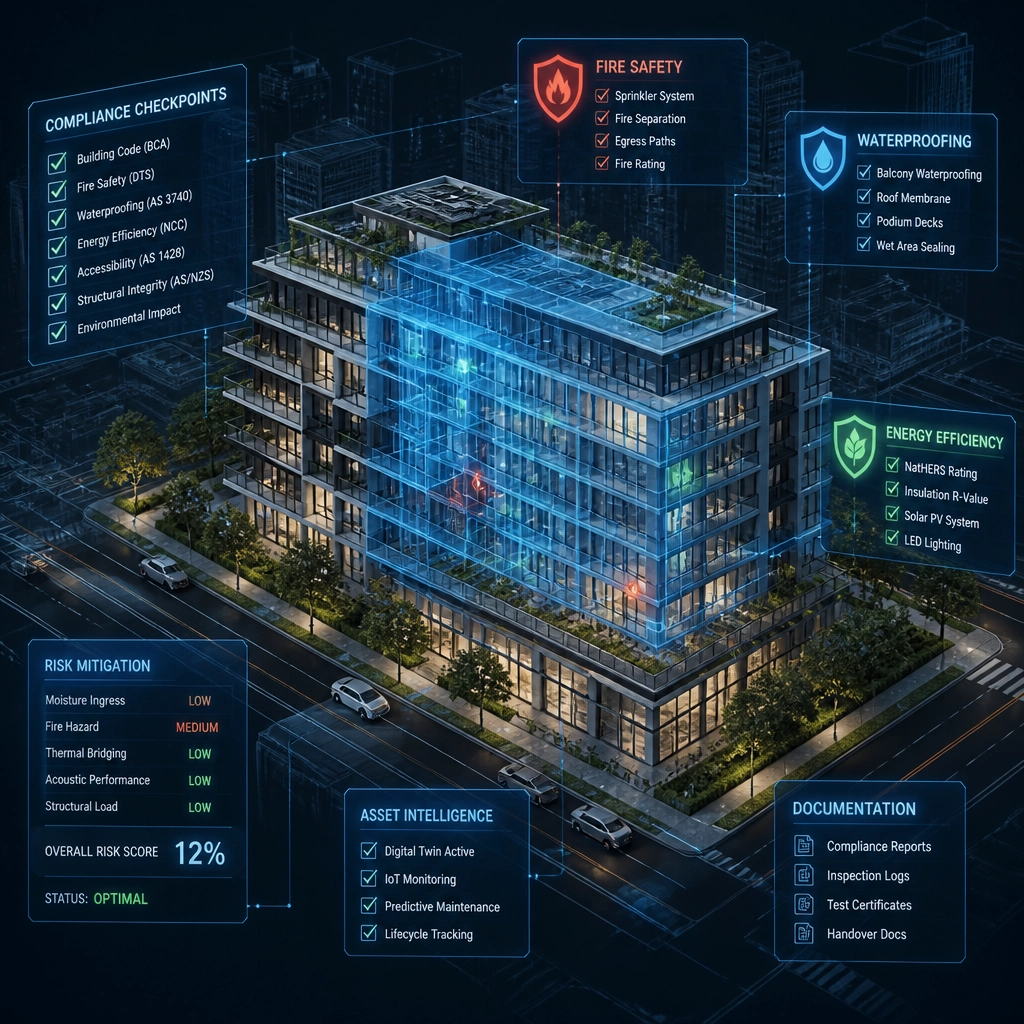
Non-compliance under the new code doesn't just mean a fine; it means an Occupation Certificate (OC) delay. In the current interest rate environment, a three-month delay at the end of a project while you argue with the Building Commission over condensation strategies can be enough to wipe out the project’s entire margin.
Strategic risk management means identifying these bottlenecks at the design stage, not when the Commission’s inspectors arrive on site.
At Shoal Bay Projects, we don't just "inspect" buildings; we provide strategic oversight for Directors who need to manage risk at scale. We act as your forensic eyes, ensuring that the gap between the "Director’s vision" and the "Site reality" is closed.
Implementing forensic oversight is a strategic tool. It allows you to:
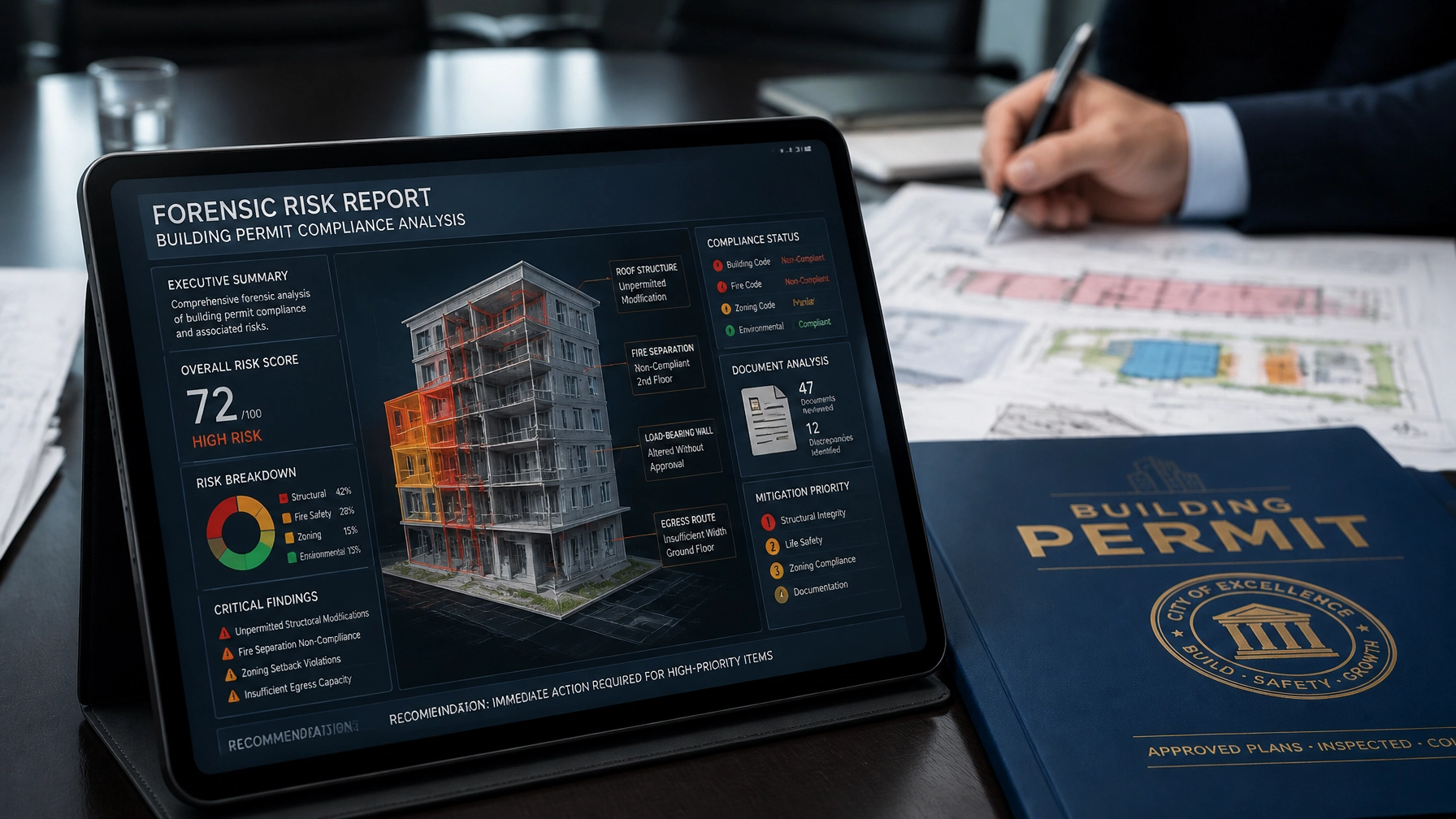
Managing these risks requires a community of informed leaders. We invite you to explore The Hive: our strategic hub for construction professionals who are serious about compliance and risk management. It’s where we break down the forensic details that matter to your bottom line.
Your Action Plan:
The transition to the new code is coming. The question for Sydney Directors is simple: Are you going to wait for the Building Commission to find your gaps, or are you going to close them yourself?