Construction
Jul 2, 2026
How to Avoid the Biggest Variation Pitfalls as Construction Costs Rise in 2026
How to Avoid the Biggest Variation Pitfalls as Construction Costs Rise in 2026

How to Avoid the Biggest Variation Pitfalls as Construction Costs Rise in 2026
Let’s be real: building a home in 2026 isn't the same game it was five years ago. We’ve moved past the "supply chain crisis" of the early 2020s, but we’ve landed in a new reality of high baseline labour costs, stricter compliance standards, and a baseline construction cost that is nearly 50% higher than pre-pandemic levels.
In this environment, a "standard" 200m² family home can easily swing by $50,000 or $100,000 based on variations alone. At Shoal Bay Projects, we see variations as the single biggest risk to project viability. They aren't just "extra costs", they are often the result of gaps in the planning phase that come back to haunt you when the slab is already poured.
If you are a homeowner or a builder looking to protect your margin and your sanity, you need to understand where the pitfalls lie. Here is how to navigate variation risk in the 2026 construction market.
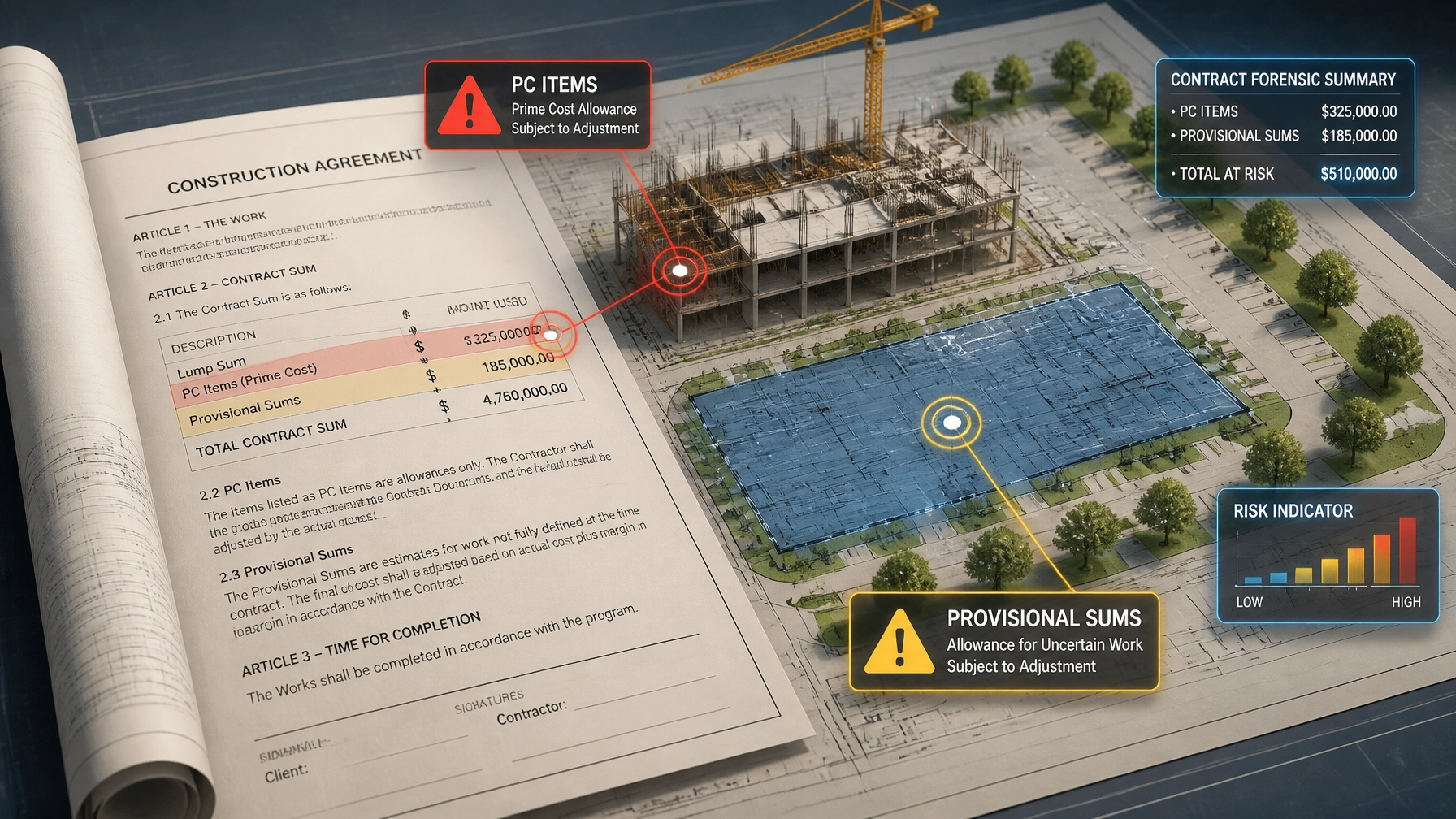
One of the most common ways a contract price looks attractive on paper is through the use of lowballed allowances. In 2026, where high-end finishes and specialized trades are in high demand, an unrealistic allowance is a guaranteed variation.
The Pitfall: In a rising cost market, a builder might put a $10,000 allowance for tiles, but the actual cost for the spec you want, including the labour to lay them, is now $18,000. That’s an $8,000 variation before you’ve even moved in.
The Strategy: Specify before you sign. Do not settle for "Standard Range" placeholders. Choose your exact fixtures and fittings during the design phase. If a Provisional Sum is necessary, ask for the "Build-Up" (the breakdown of how that number was reached) to ensure it reflects 2026 market rates, not 2022 ones.
If it isn't in the drawings and it isn't in the specification, it’s a variation. It’s that simple.
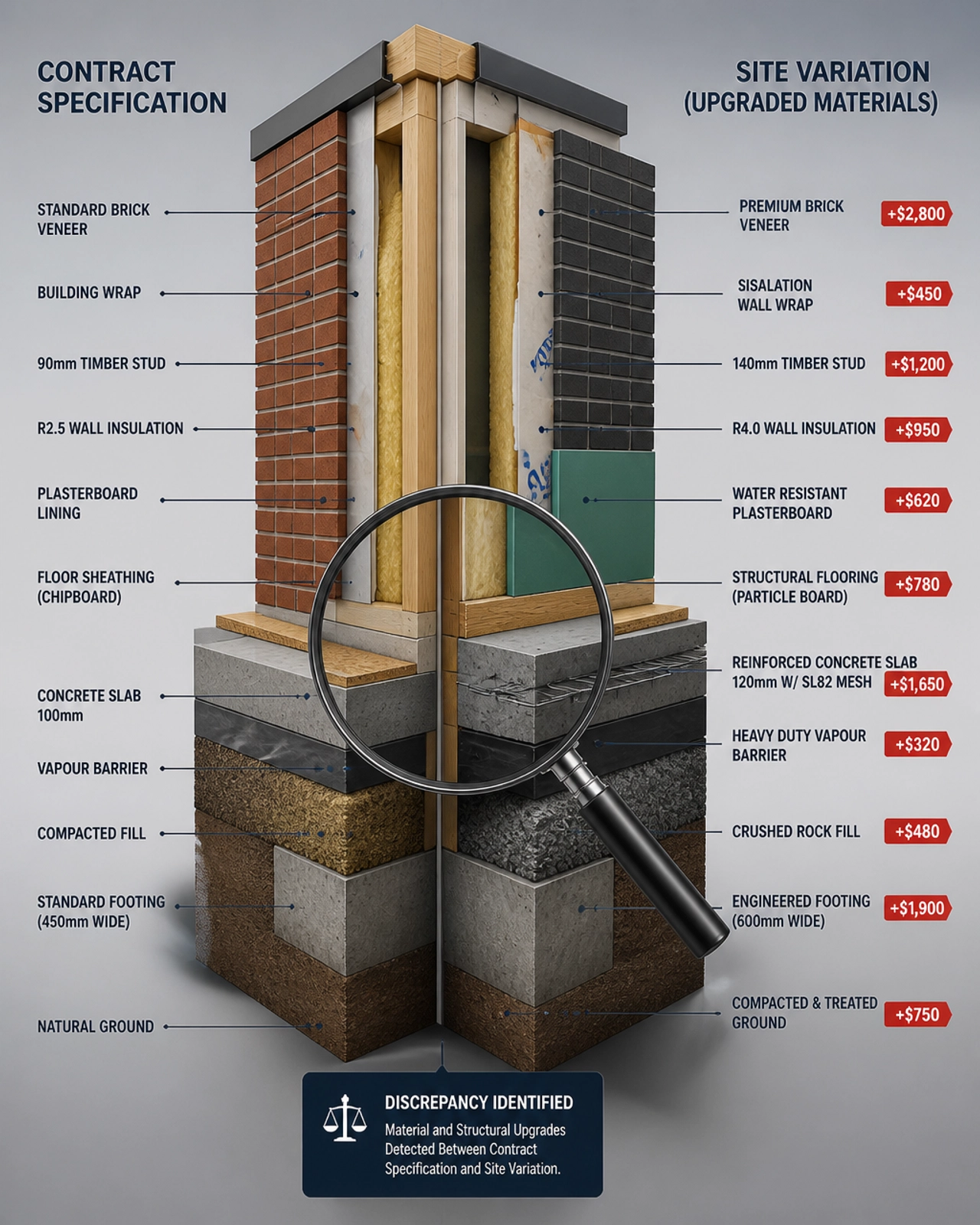
In the rush to get to site, many projects start with "80% complete" documentation. In 2026, that remaining 20% is where the disputes happen. Whether it’s the lack of a detailed electrical plan or an undefined external drainage requirement, these "omissions" are priced by builders as variations at a premium.
The Pitfall: Assuming that "standard industry practice" covers something like a retaining wall or a specific energy-efficient insulation upgrade. If the contract follows the principles of AS 4000 (General Conditions of Contract), the builder is generally entitled to a variation if they are required to carry out work not specifically described in the contract documents.
The Strategy: Audit your documentation. Engage an independent consultant to perform a gap analysis. Check that the engineering drawings match the architectural plans. Every hour spent on a desk review saves ten hours of site disputes.
"Preliminaries" are the costs of running the site, supervision, scaffolding hire, temporary fencing, and site toilets. In 2026, these costs have skyrocketed due to labour shortages and compliance requirements.
The Pitfall: When a variation occurs, it often extends the project timeline. A simple change to a kitchen layout might only cost $2,000 in materials, but if it delays the subsequent trades by two weeks, you might be hit with "Delay Damages" or increased preliminary costs.
The Strategy: Always ask: "How does this variation affect the critical path?" If a variation is approved, ensure the "Extension of Time" (EOT) and the associated costs for that time are documented immediately. Don't wait until the end of the project to find out you owe an extra month of site supervision fees.
In the heat of a site meeting, it’s easy to say, "Yeah, just move that wall 300mm to the left."
In 2026, with builders facing tight margins and high overheads, "favours" are a thing of the past. That verbal instruction is a variation, and without a paper trail, you lose control over the cost.
The Pitfall: Verbal variations lead to "He Said, She Said" disputes at the final progress claim. The builder remembers a difficult structural change; the homeowner remembers a casual suggestion.
The Strategy: Document everything. If an instruction is given on-site, follow it up with an email that same day. Better yet, use a formal Variation Order (VO) process. Specify the work, the cost change (or a commitment to price it within 48 hours), and the impact on the timeline.
We are seeing more "Cost Plus" elements or "Rise and Fall" clauses appearing in residential contracts again. While fixed-price contracts are still the standard, many builders are adding specific escalation clauses for volatile materials like structural steel or specialized glazing.
The Pitfall: Signing an escalation clause without a "Cap" or a clear mechanism for verification. You shouldn't be paying more just because the builder says prices went up; you should be paying more only if they provide evidence of the increase (e.g., supplier invoices or independent indices).
The Strategy: If your contract includes escalation, define the "Base Date" and the "Evidence Requirement." Demand transparency. A fair builder will have no problem showing the price movement to justify a variation.
The best way to manage variations is to prevent them. At Shoal Bay Projects, we focus on Structured Advisory. We don't just look at the build; we look at the alignment of the contract, the drawings, and the site reality.
Managing construction costs in 2026 requires more than just a good budget; it requires forensic attention to detail. By identifying these pitfalls early, you can keep your project on track and avoid the financial "death by a thousand cuts" that variations often represent.
Construction is complex, but you don't have to navigate it alone. We invite you to explore The Hive, our community hub designed to give you the tools, insights, and advisory support you need to succeed in the modern Australian building landscape.
Explore the Vault, join the conversation, and let's build something better, together.