Construction
Jul 2, 2026
Construction Cashflow: Why the 'Payment Schedule' is Your Most Important Document
Construction Cashflow: Why the 'Payment Schedule' is Your Most Important Document

Construction Cashflow: Why the 'Payment Schedule' is Your Most Important Document
In the construction industry, we like to think the most important tools are the ones that move dirt or pour concrete. We’re wrong. The most powerful tool in your arsenal doesn't weigh five tonnes or require a diesel mechanic; it’s a humble piece of paper (or a very specific PDF) called the Payment Schedule.
If you are a builder or developer operating under the Building and Construction Industry (Security of Payment) Act 2021 (SOPA), ignoring a payment claim is the administrative equivalent of leaving your site gates open and the keys in the excavator. It is a slow-motion car crash that ends with a statutory debt you cannot defend.
At Shoal Bay Projects, we see the aftermath of "I’ll get to that invoice next week" far too often. Let’s perform a forensic breakdown of why the Payment Schedule is your only line of defence against a cashflow catastrophe.
For years, the Construction Contracts Act 2004 was the law of the land. It was a relatively polite piece of legislation. It allowed for "rapid adjudication," but the barriers to entry were higher for claimants, and the consequences of a missed deadline were often manageable.
Enter the 2021 Act. This isn't an update; it’s a total reimagining of risk. The new Act is designed to keep cash moving down the chain, and it does so by penalising the "Respondent" (the person paying) for any hint of administrative lethargy.
Under the 2021 Act:
A Payment Schedule is your formal response to a Payment Claim. To be valid, it must be forensic in its detail. You cannot simply write "Disputed" on a Post-it note and call it a day.
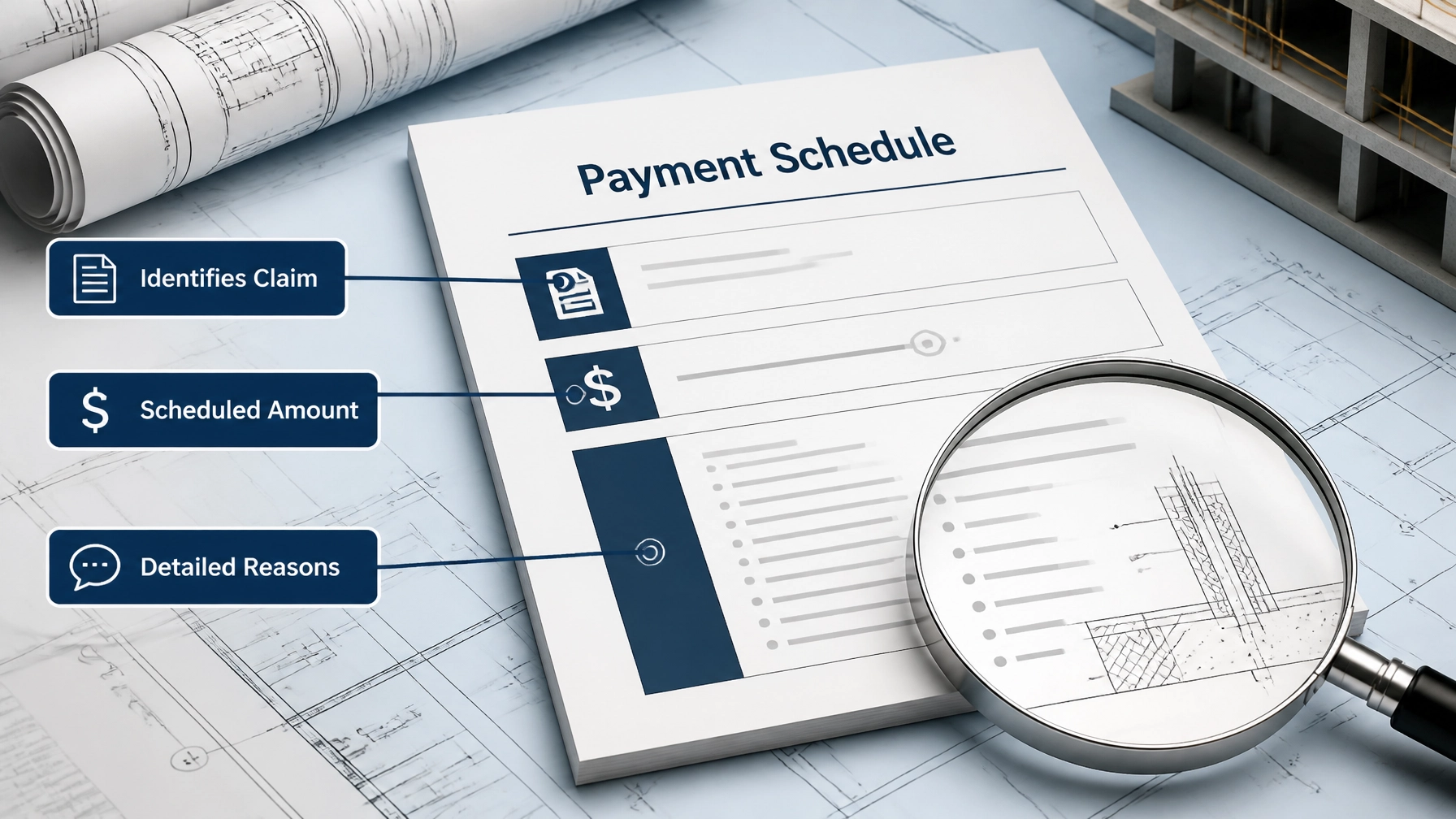
Specify exactly which claim you are responding to. Use dates, reference numbers, and project titles. Ambiguity is the claimant’s best friend.
This is the amount you intend to pay. It can be $0. But it must be clearly stated. If you intend to pay $40,000 of a $100,000 claim, that $40,000 is your scheduled amount.
If the scheduled amount is less than the claimed amount, you must explain why. This is where most builders fail. You must cite:
Crucial Warning: If you don't include a reason in your Payment Schedule, you are generally forbidden from raising it later during the adjudication process. If you forget to mention a $20,000 defect now, you can't bring it up when the adjudicator is deciding your fate.
We’ve audited hundreds of payment disputes. Here are the recurring mistakes that lead to builders losing their shirts:
Many builders assume the 15-day clock starts when they open the email. It doesn't. The clock often starts on "actual receipt." If that claim hits your inbox at 11:59 PM on a Friday, your countdown has already begun.
Builders often think, "I'm going to pay $90,000 of the $100,000 claim anyway, so I don't need a formal schedule." Wrong. If you pay $90,000 without a schedule, the remaining $10,000 becomes a statutory debt that the subcontractor can recover via adjudication or the courts with almost zero chance of you stopping them.
Using terms like "Subject to assessment" or "Under review" is effectively the same as saying nothing. An adjudicator will look at those phrases, deem them "insufficient reasons," and award the full amount to the claimant. Be specific. Be forensic. Be brutal with your evidence.
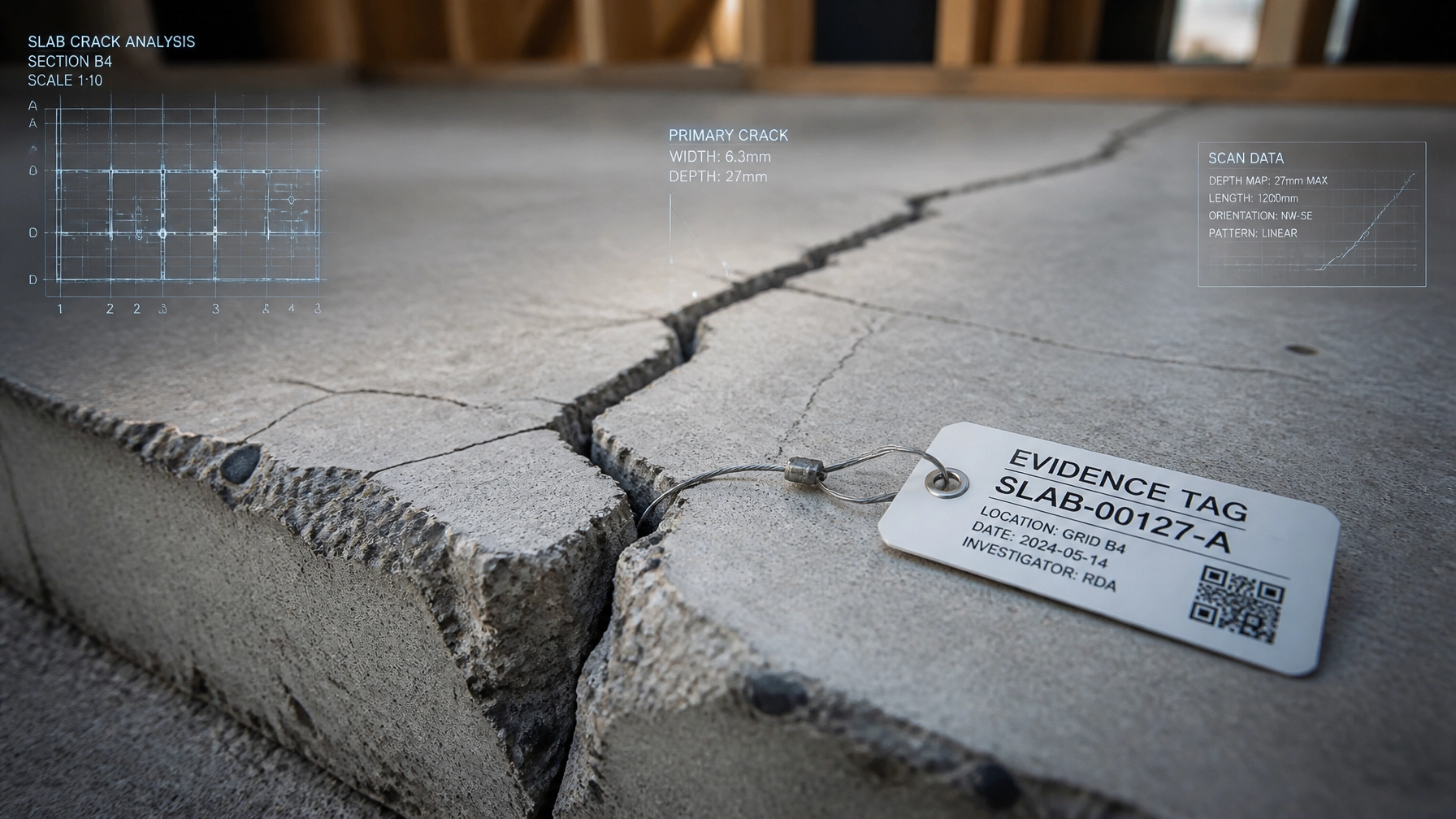
If a dispute arises, the claimant will likely head to adjudication. This is a "fast and dirty" resolution process. Once they lodge an application, you have a mere 10 business days to lodge a response.
If you didn't issue a Payment Schedule earlier, your response options are almost non-existent. However, if you did issue a detailed, forensic schedule, your adjudication response is simply the expanded version of that document.
Adjudication is won or lost in the quality of the paperwork. The adjudicator isn't coming to the site to look at the crooked wall; they are looking at the photos and the standards you cited in your schedule.
Navigating the minefield of the 2021 Act requires more than just a good lawyer; it requires a structured approach to project compliance and risk management. We’ve built a community for exactly this purpose.
Explore our community hub, The Hive, for more technical deep dives, compliance templates, and strategic advisory.
In the 2026 construction landscape, your administrative competence is just as important as your building skill. A missed Payment Schedule is an unforced error that can bankrupt a project before the roof tiles are even on.
Don't guess. Don't delay. If a claim lands on your desk, treat it with the same urgency as a burst water main. Respond within 15 days, provide forensic reasons, and protect your cashflow.
If you’re unsure how to draft a response that will stand up in adjudication, reach out. We specialize in the forensic interpretation of construction compliance so you can focus on the build.