Construction
Jul 2, 2026
5 Compliance Myths Costing Builders Thousands
5 Compliance Myths Costing Builders Thousands

5 Compliance Myths Costing Builders Thousands
In the current Australian residential landscape, compliance isn't just a checkbox; it’s the frontline of financial survival. With the rollout of NCC 2022 and the looming updates for 2025, the margin for error has evaporated. Builders who operate on "how we’ve always done it" are finding themselves exposed to catastrophic litigation and back-charges.
At Shoal Bay Projects, we see the wreckage of these assumptions every week. High-end builds are being stalled, and profits are being bled dry by five specific myths that have become systemic in the industry.
Stop guessing. Start documenting. Here is the technical reality of compliance warfare in 2026.
This is the fastest way to lose a dispute. Many builders believe that if a client signs off on a specific finish or a reduced specification in a signed contract, that agreement supersedes the NCC.
The Reality: The NCC is a legally binding, minimum technical standard. It is given power through State and Territory Building Acts. You cannot "contract out" of the NCC. If your contract specifies a bathroom detail that does not meet AS 3740:2021 (Waterproofing of domestic wet areas), you are non-compliant from day one. In a dispute, the court will look at the Code first, your contract second.
Action: Audit your standard contracts against NCC 2022 Volume Two. Ensure your specifications meet the Performance Requirements, regardless of what the client thinks they want.
For years, many builders installed flat floors in laundries and bathrooms, relying on the floor waste only for "emergency" overflow. Under NCC 2022, that era is dead.
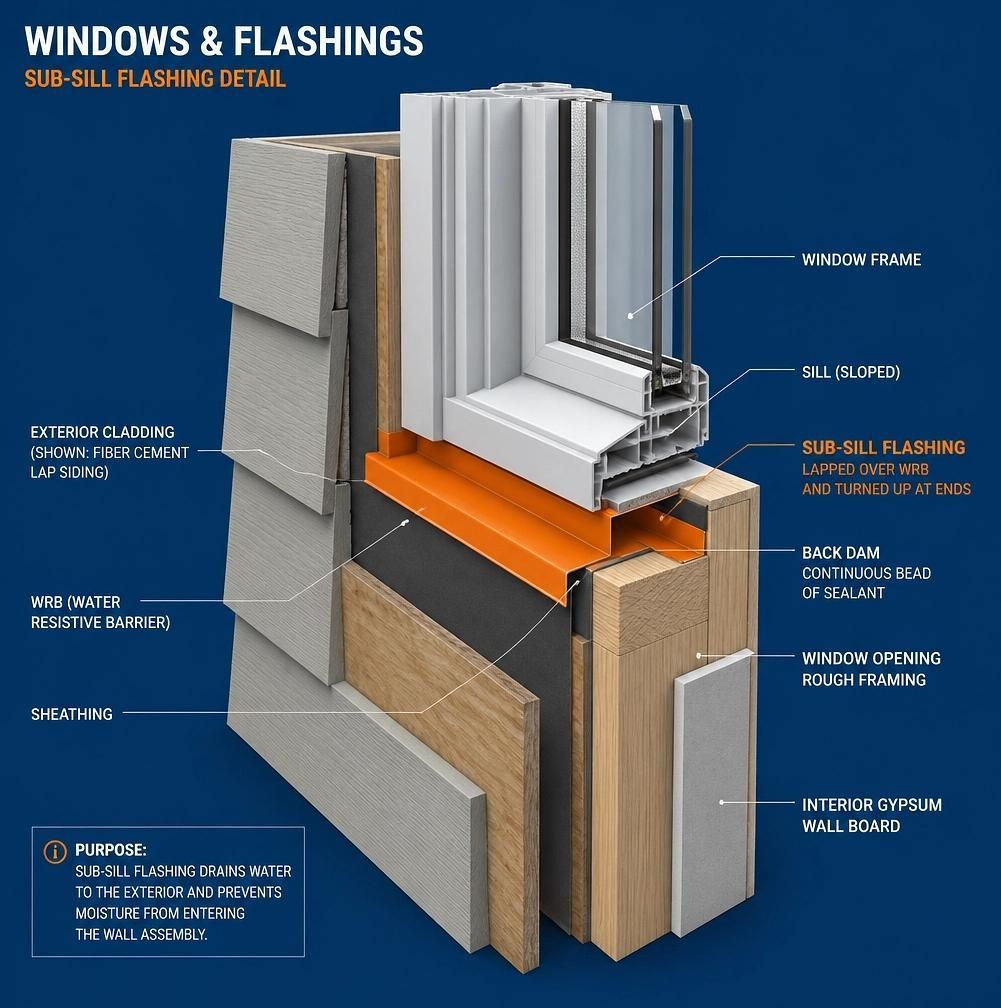
The Reality: If you have a floor waste installed, the floor must have a fall to that waste. The DTS (Deemed-to-Satisfy) provisions now mandate a minimum gradient (typically 1:80 for the general floor area and 1:60 for shower areas). A flat floor with a central waste is now a documented defect that can trigger a full tear-out of the wet area.
Action: Check your screed levels before the tiler starts. Do not leave "falls" to the tiler’s discretion. Specify the gradient on your wet area details and verify it with a digital level before the membrane is applied.
When a design doesn't meet the DTS requirements, builders often reach for a "Performance Solution" thinking it’s a simple workaround to bypass the rules.

The Reality: A Performance Solution is only valid if it is supported by robust, professional engineering or a certified expert’s assessment before the work begins. If you try to retro-fit a Performance Solution to justify a defect found during a forensic audit, it will likely fail. Without a rigorous Evidence of Suitability as per NCC Part A5, your "solution" is just a liability waiting to explode.
Action: Engage a consultant to vet any Performance Solution early. Document the "Pathway to Compliance" before the first brick is laid.
The "Inter-Trade Warfare" often begins here. Builders assume that if the slab is poured or the flooring is laid, the following trade is responsible for ensuring the surface is fit for purpose.

The Reality: Under AS 3958.1, the builder is responsible for providing a substrate that meets the required tolerances for flatness and moisture content. If you hand over a slab with more than a 3mm deviation over 3 meters to a tiler, and the tiles later drummy or crack, the liability often circles back to the builder for poor substrate preparation.
Action: Perform a forensic check on all substrates. Use a 3-meter straight edge. Check moisture levels in concrete slabs (using AS 1884 standards as a guide for resilient flooring) before allowing subsequent trades to load the surface.
Many builders treat a Building Surveyor’s or Private Certifier’s "pass" as a shield against future claims.

The Reality: Inspections are point-in-time samples. They do not cover every junction, every screw, or every millimetre of membrane. A passed inspection does not absolve the builder of the statutory warranty to provide a product that is fit for purpose and compliant with the NCC. We regularly perform forensic audits on "certified" buildings and find high-value defects in waterproofing, fire-stopping, and structural ties.
Action: Implement your own internal 36-Point Forensic Checklist. Don't wait for the certifier to find the problem: find it yourself during the "GateKeeper’s Audit."

Compliance is a moving target. If you are a director of a residential building company, you are personally exposed to the risks of these myths. You need a structured, compliance-focused advisory partner to guide you through the risk management of modern construction.
Welcome to the Hive. If you want to dive deeper into the technical warfare of construction compliance, watch our introductory brief here:
Welcome to the Hive - Watch Now
Join our professional community to access exclusive compliance resources, technical deep-dives, and industry alerts:
Access The Vault & Circle Community
Need an immediate forensic audit or compliance advisory?
Stop the bleed. Call Shoal Bay Projects today.
Phone: 0412 123 456 (Mock number - insert real contact here)