Construction
Jul 8, 2026
What Concrete Cancer Actually Is: Carbonation vs Chloride Corrosion
What Concrete Cancer Actually Is: Carbonation vs Chloride Corrosion

What Concrete Cancer Actually Is: Carbonation vs Chloride Corrosion
For homeowners and builders in Perth, a small rust stain on a concrete soffit or a hairline crack along a slab edge is often dismissed as a cosmetic nuisance. In the forensic reality of Western Australian construction, these are the early symptoms of a progressive structural failure commonly: and accurately: termed "Concrete Cancer."
At Shoal Bay Projects, we approach these issues not as maintenance tasks, but as chemical and structural breaches. Understanding the distinction between carbonation and chloride-induced corrosion is the difference between a minor localized repair and a full-scale structural remediation.
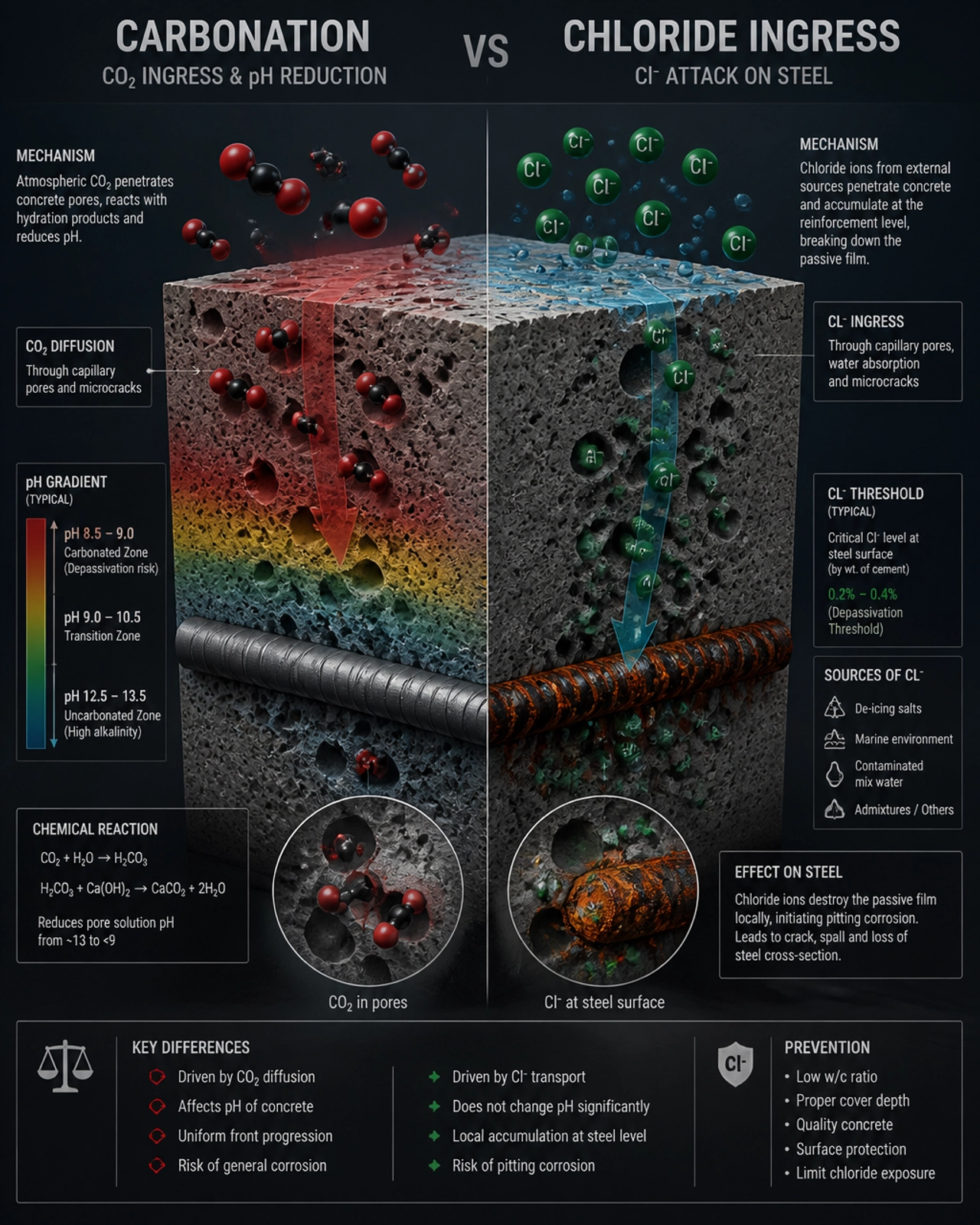
Concrete is naturally a highly alkaline environment, with a pH typically between 12.5 and 13.5. This alkalinity creates a "passive" oxide film around the steel reinforcement, effectively shielding it from oxidation. Concrete cancer occurs when this passivity is destroyed.
Carbonation occurs when atmospheric carbon dioxide (CO2) penetrates the concrete pores and reacts with calcium hydroxide to form calcium carbonate. This process slowly lowers the pH of the concrete.
Once the "carbonation front" reaches the depth of the steel, the pH drops below 9.0. The protective passive layer dissolves, and in the presence of moisture and oxygen, the steel begins to corrode uniformly. In Perth’s older residential stock: particularly those built with lower-strength concrete or insufficient cover: carbonation is a primary driver of long-term decay.
For Perth’s coastal corridor, chloride attack is the more aggressive antagonist. Chloride ions from sea spray and salt-laden winds penetrate the concrete matrix. Unlike carbonation, chlorides do not need to lower the bulk pH of the concrete to initiate damage.
Once chlorides reach a specific threshold at the bar surface, they "punch through" the passive film, creating localized "pitting" corrosion. This is far more dangerous than uniform rust; it can result in a significant loss of steel cross-section in a very short period, often with little warning on the surface.
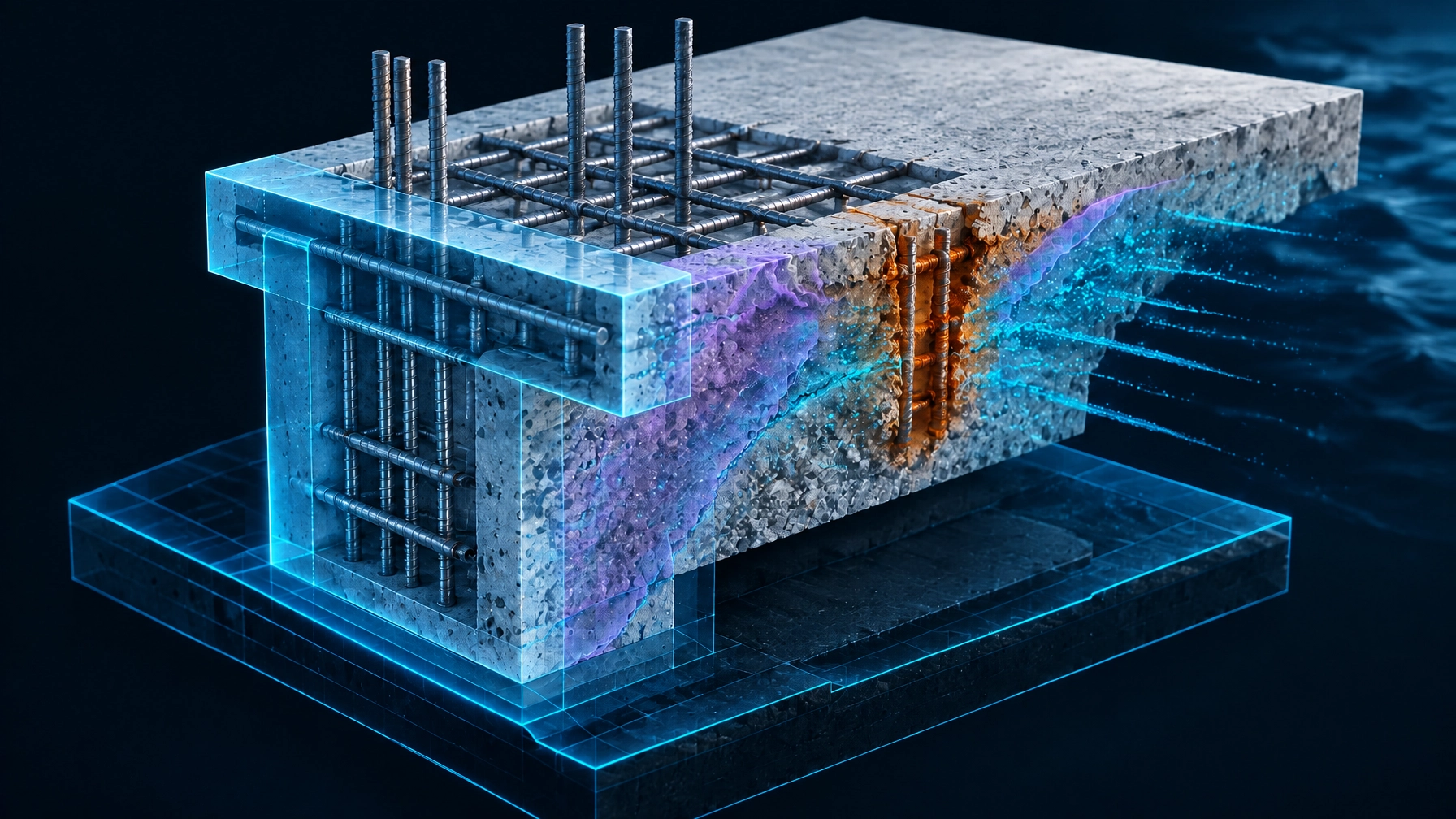
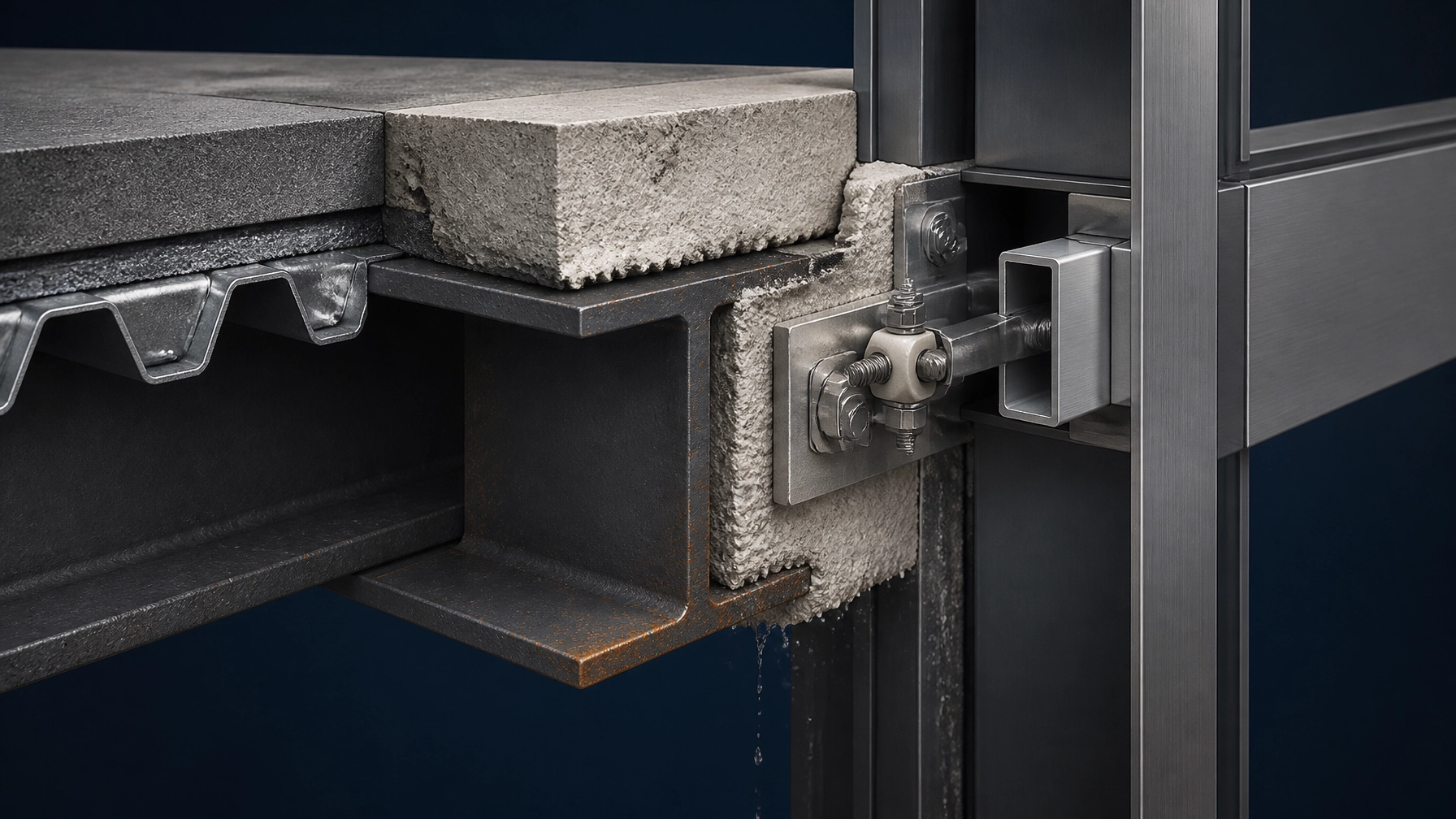
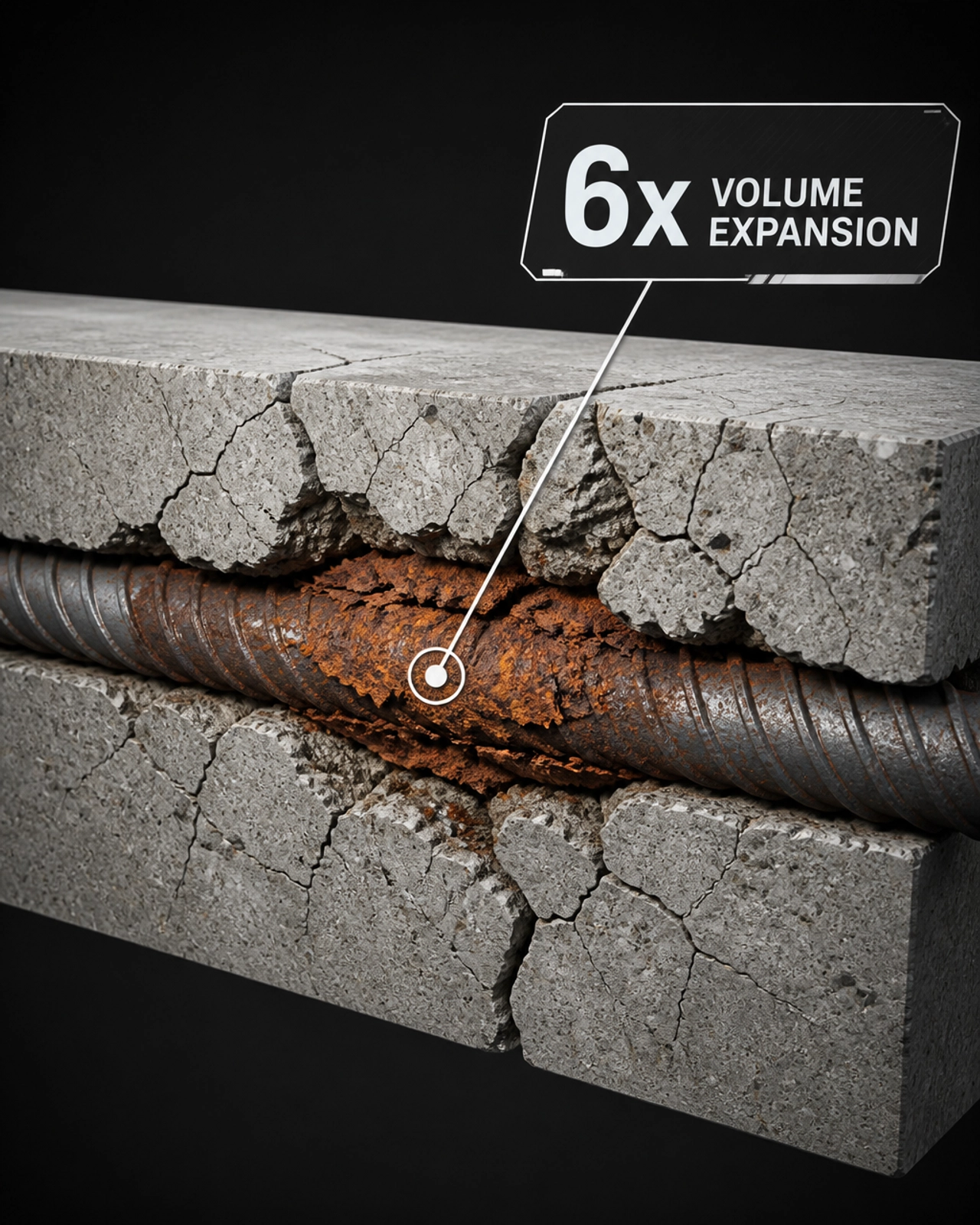
The "cancer" designation is appropriate because the process is both hidden and expansive. When steel oxidizes, the resulting rust occupies up to six times the volume of the original steel.
This massive internal expansion exerts "bursting" pressures (tensile stress) that concrete: which is strong in compression but weak in tension: cannot withstand. This leads to:
To prevent these failures, the NCC 2022 mandates specific durability provisions that point directly to AS 3600 (Concrete Structures).
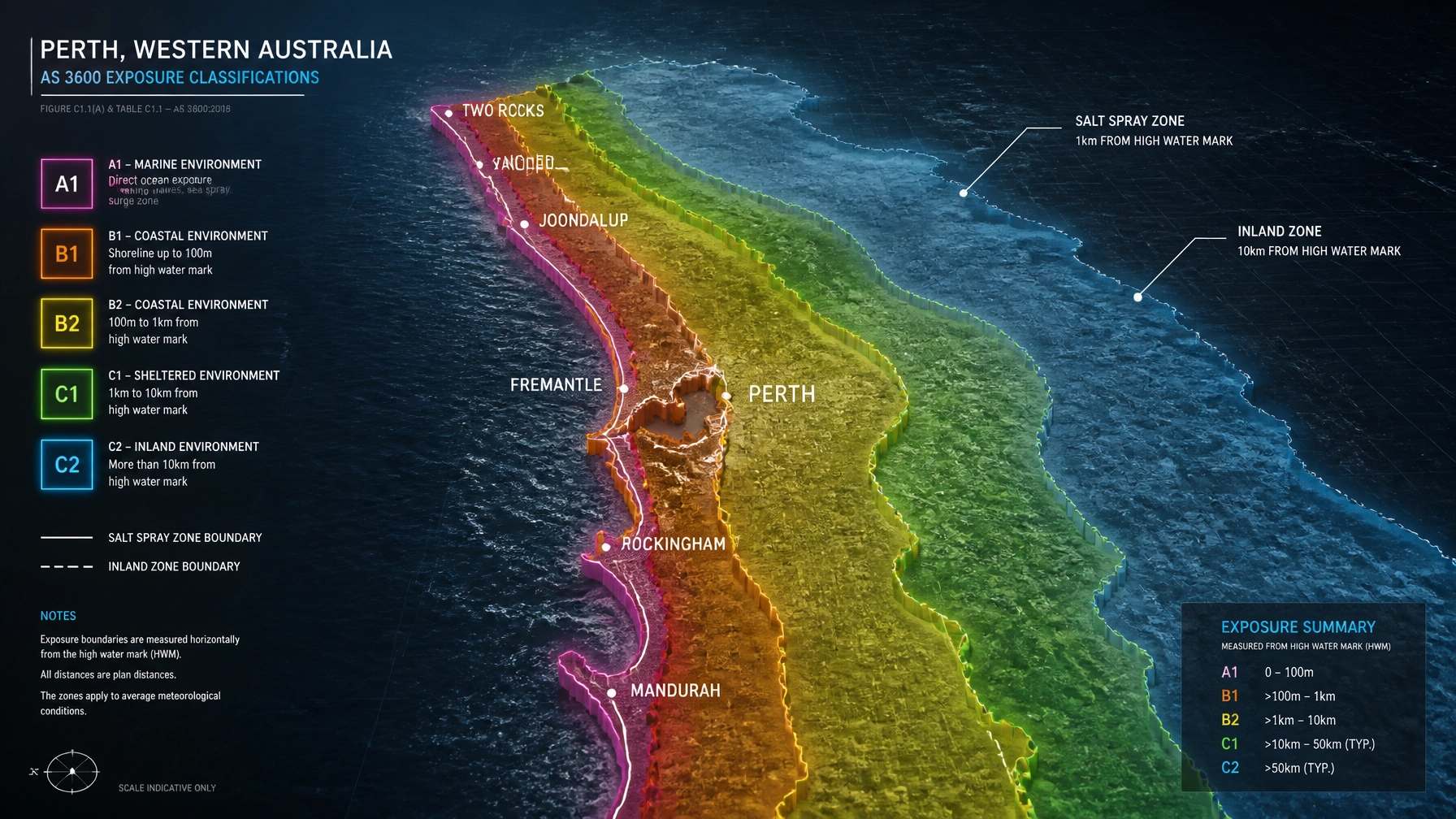
In Perth, your location relative to the coast dictates your exposure classification. A project in Joondalup may sit in a B1 (moderate) zone, while a build in Cottesloe or Scarborough is likely B2, C1, or C2 (marine/severe).
The industry standard for managing these repairs is the EN 1504 framework and HB 84. However, the most cost-effective solution is preventing the onset during the planning and construction phase.
Shoal Bay Projects acts as the forensic bridge between the design intent and site execution. We identify the "friction points": such as insufficient cover during a pour or the wrong concrete mix specified for a coastal site: before they become a twenty-year liability.
If you are seeing rust staining or spalling, the time for "patching" has passed. You require a forensic assessment to determine the depth of carbonation and chloride levels.
Welcome to the Hive. We invite you to explore our community hub and technical resources to ensure your next project is built for a 50-year design life, not a 5-year decay cycle.
⚠️ The images in this post are used for illustration purposes only, designed to encourage thoughtful discussion. It is not intended to represent a prescriptive detail of any installation or construction method.