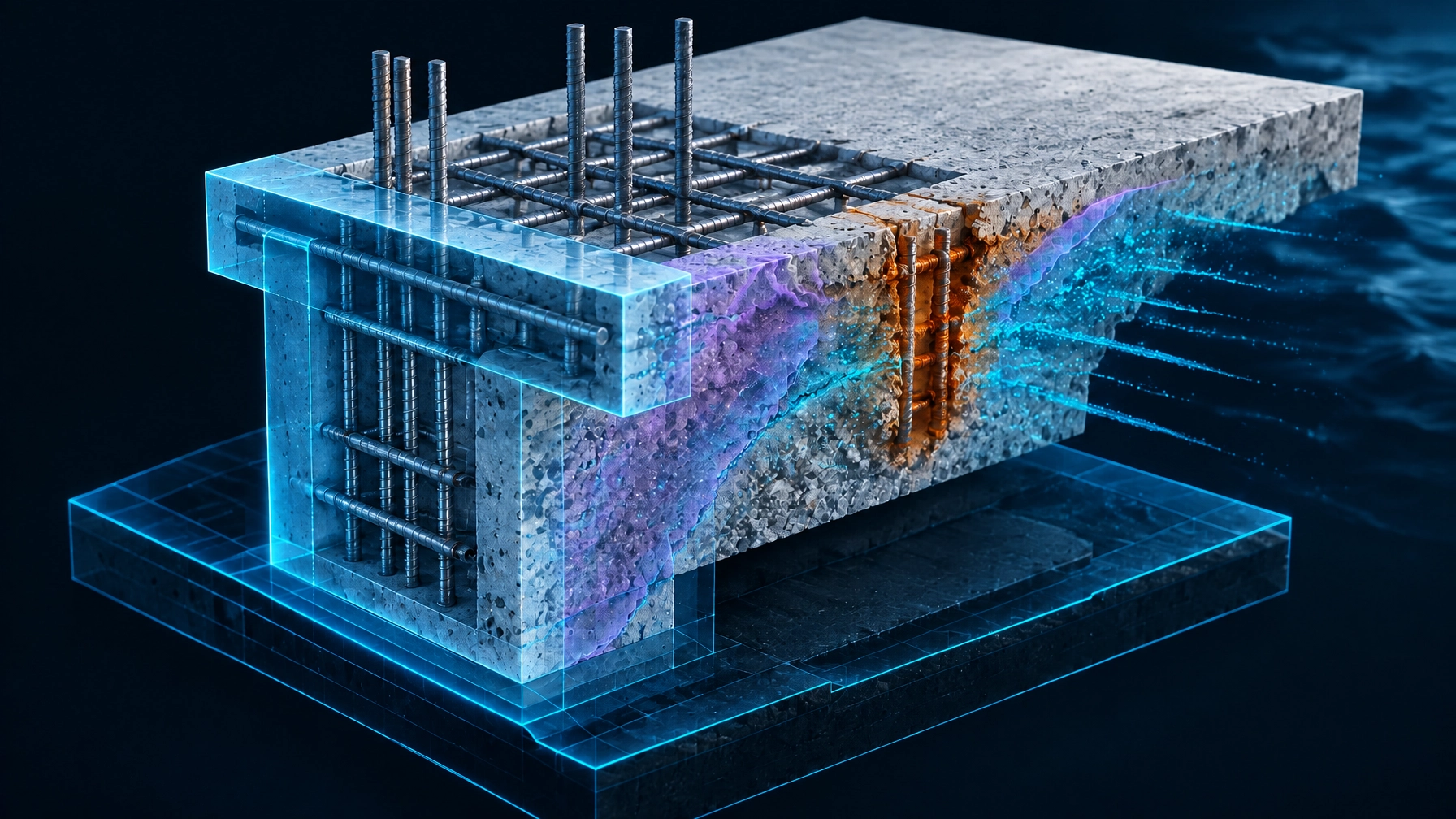
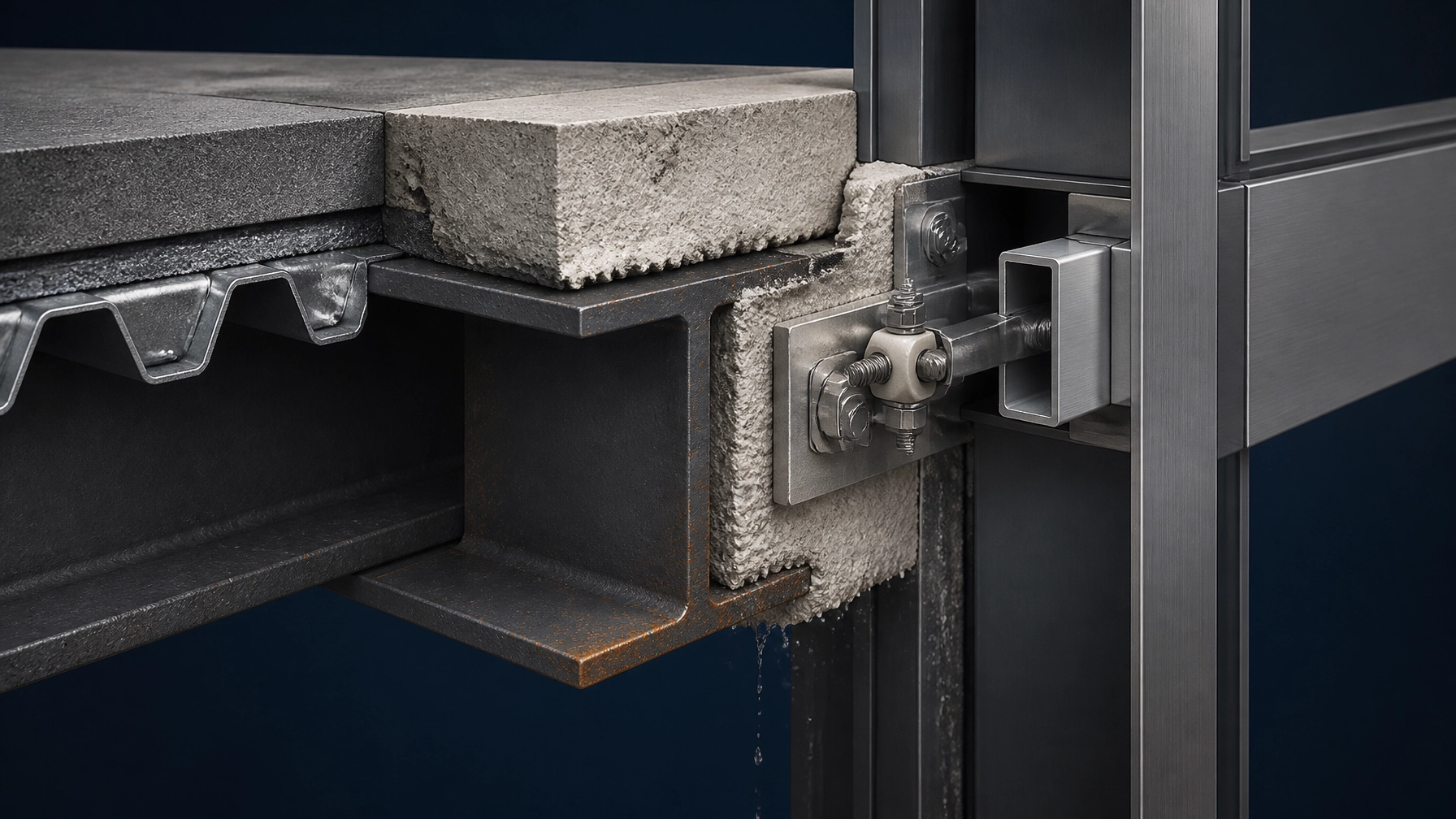
When an adhered stone facade begins to shed panels 24 months post-completion, the initial forensic focus almost universally targets material defects. Samples of the limestone are sent for petrographic analysis; the mortar chemistry is scrutinized for polymer loading; the freeze-thaw resistance of the assembly is questioned. Yet, forensic investigations consistently redirect the root cause away from material chemistry and back toward fundamental execution variables: substrate geometry and open-time mismanagement.
In the transition from residential-scale masonry to commercial-scale adhered facades, the margin for error disappears. On high-rise and mid-rise structures, the physics of the bond line are subjected to thermal and structural stresses that thin-set systems can only survive if installed under clinical conditions. Most failures are not authored in the laboratory, but in the gap between a compliant material specification and a defensible installation record.
The Problem: The Latency of the "Skinned" Bond
Delamination is rarely a sudden event; it is the culmination of a latent failure condition established during the first hour of installation. On a typical commercial facade, panels exceeding 15 pounds per square foot (psf) or 36 inches in any dimension push the bond demand to the absolute limit of what thin-set systems can deliver.
The failure sequence often begins with the "skinned" mortar. Rated open times on technical data sheets: often 20 to 30 minutes: reflect laboratory environments of 70°F and 50% humidity. In the field, direct sun and wind on a west-facing substrate can collapse that window to under 10 minutes. When a crew spreads mortar across four or five panel positions to gain efficiency, the mortar surface begins to dehydrate and form a non-tacky polymer film. By the time the last panel is set, the bond is compromised at the moment of contact. The panel sits flat and sounds solid to a tap test, but the mechanical "wetting" of the stone back face never occurred.
Forensic Analysis: The Substrate Tolerance Mismatch
One of the most predictable drivers of facade failure is the structural mismatch between framing standards and finish requirements.
Steel-stud backup walls are frequently built to ASTM C754 tolerances. While compliant for structural framing, these tolerances are materially looser than the substrate flatness limits required for adhered stone. ANSI A108.02 specifies a maximum variation of 1/8 inch in 10 feet and 1/16 inch in 24 inches for large-format applications.
When a stone crew encounters a substrate that is out-of-plane but technically "in spec" for the framing contractor, they face a choice: stop the project for remediation or use the thin-set mortar as a leveling bed. On commercial schedules, the latter is common. Increasing the mortar thickness beyond its design range: often reaching 1/2 inch or 3/4 inch in low spots: introduces uneven shrinkage and differential stresses. As the building undergoes thermal cycling, the excessive mortar thickness acts as a lever, concentrating stress at the bond line and propagating micro-cracks that eventually lead to full-field delamination.
Standard Reference: Why Back-Buttering and Voids Matter
The TCNA Handbook and MIA+BSI Dimension Stone Design Manual are explicit: high-performance bond requires 95% mortar contact coverage for exterior applications. Achieving this coverage on large-format panels is physically impossible without mandatory back-buttering.
Skipping this step leaves the sawn or honed back face of the stone "starved." A void in the mortar bed is not just a region of zero bond; it is a pressurized cavity. Water vapor traps in these voids, and under repeated thermal cycling, the void perimeter acts as a hinge. The panel flexes at the boundary of the unbonded zone, fatiguing the surrounding adhesive until the entire panel releases. Forensic pull tests on failed facades frequently reveal a "hollow center" pattern where the perimeter was bonded but the center: the area hardest to embed manually: remained dry.

Actionable Fix: The Forensic Specification Checklist
To prevent delamination claims, the specification must transition from a material list to a procedural mandate. A defensible installation requires five specific forensic anchors:
- Pre-Installation Flatness Inspection: Assign responsibility for a 10-foot straightedge audit before the stone crew mobilizes. Substrates failing ANSI A108.02 must be remediated with a dedicated leveling coat, not "absorbed" into the thin-set bed.
- Mandatory Extended Open-Time Mortar: Move away from standard ANSI A118.4 mortars. Specify ANSI A118.15 products which provide higher polymer loading and significantly longer working windows in high-heat or windy conditions.
- Mandatory Back-Buttering: Require a thin layer of mortar to be keyed into the back of every panel. This ensures the stone-to-mortar interface is "active" at the moment of embedment.

- Open-Time Adjustment Protocols: Define maximum spread limits in minutes, not square footage. In temperatures exceeding 90°F, crews must reduce spread areas to ensure panels are set within 5-10 minutes of mortar application.
- Mandatory Pull Testing: Require destructive pull tests at the start of the project and at regular intervals (e.g., every 500 sq ft). Document the force measurement and verify 95% coverage on every pulled panel.
The gap between a building that stands and a building that fails is rarely the chemistry of the bucket; it is the management of the clock and the straightedge.
Claim Your Foundation Membership
The Vault. The App. The Community. We're opening the doors to a select group of Foundation Members — free, for a limited time. Foundation Membership includes full access to The Vault (our forensic intelligence archive) and early access to the Hive app.
Once the charter window closes, this tier is gone permanently. Foundation Members retain access for life. This is not a trial — it's a permanent invitation to the founding cohort.
[Claim Your Foundation Membership →]
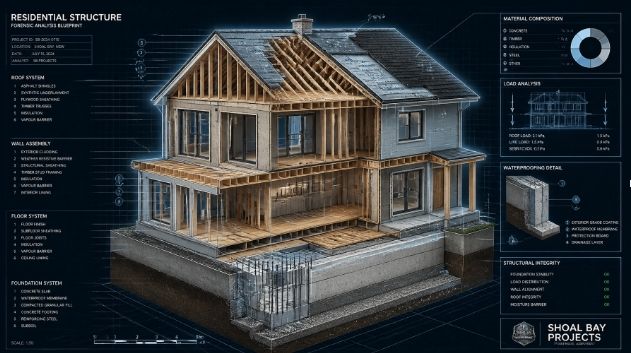
⚠️ The image in this post is used for illustration purposes only, designed to encourage thoughtful discussion. It is not intended to represent a prescriptive detail of any installation or construction method.
Circle-Ready Version
Senior Forensic Advisory: The Truth About Adhered Stone Failures
When stone panels start falling, everyone blames the mortar. Our latest forensic deep-dive proves that the chemistry is rarely the culprit. Instead, we look at the "hidden" failures of substrate flatness and the mismanagement of mortar open time on the line.
Key Forensic Takeaways:
- The Tolerance Trap: Why framing built to ASTM C754 is often a failure waiting to happen for stone adhering to ANSI A108.02.
- The 10-Minute Window: How direct sun turns a 30-minute mortar into a non-bonding "skin" that produces latent delamination.
- The Physics of Voids: Why a 95% coverage requirement isn't a suggestion; it’s the only way to survive thermal cycling.
Read the full forensic breakdown here: Thin-Set Mortar Failures in Adhered Stone Facades: Why Substrate Flatness and Open Time Matter More Than Chemistry
Claim Your Foundation Membership
The Vault. The App. The Community. We're opening the doors to a select group of Foundation Members — free, for a limited time. Foundation Membership includes full access to The Vault (our forensic intelligence archive) and early access to the Hive app.
Once the charter window closes, this tier is gone permanently. Foundation Members retain access for life. This is not a trial — it's a permanent invitation to the founding cohort.
[Claim Your Foundation Membership →]
Featuring unique technical 3D forensic imagery.