Construction
May 25, 2026
The Vault: AS 3660.1 Termite Management & Detection (2026 Update)
The Vault: AS 3660.1 Termite Management & Detection (2026 Update)

The Vault: AS 3660.1 Termite Management & Detection (2026 Update)
When we talk about "The Vault" here at Shoal Bay Projects, we aren’t just talking about a secure place for documents or data. We are talking about the structural integrity of your most significant investment: your home. In the Australian construction landscape, there is perhaps no greater hidden threat than the subterranean termite. They work in the dark, they travel through the soil, and they can compromise a timber-framed structure before you even know they’ve moved in.
That is why AS 3660.1-2014 (Termite management, Part 1: New building work) remains the gold standard and a critical document in 2026. It is the rulebook for creating a "vault" around your building. However, there is a common misconception that a termite management system is a magical shield that kills termites on contact. In reality, the standard is about something far more clever: The Art of Making the Invisible, Visible.
Before we dive into the technical details of how we secure the perimeter, I invite you to join our growing community of builders and homeowners at our new digital home: shoalbay-projectshive.com.au. You can also get a feel for what we’re building by checking out our Welcome to the Hive YouTube intro.
AS 3660.1 doesn’t promise that termites will never try to enter your home. Instead, it mandates that they cannot enter the "termite-susceptible" parts of the building without leaving a trace.
Think of it like a high-end security system. A vault isn't just thick walls; it’s sensors that trigger an alarm the moment someone tries to drill through. In a house built to AS 3660.1, the "alarm" is a visible mud lead (a shelter tube) that termites are forced to build over a physical barrier or an inspection zone.
If the system is designed correctly, a termite cannot tunnel silently from the soil into your wall studs. They hit a barrier, they realize they can’t go through it, and they try to go around it. When they go around it, they have to come out into the open, where an inspector or a savvy homeowner can see them.
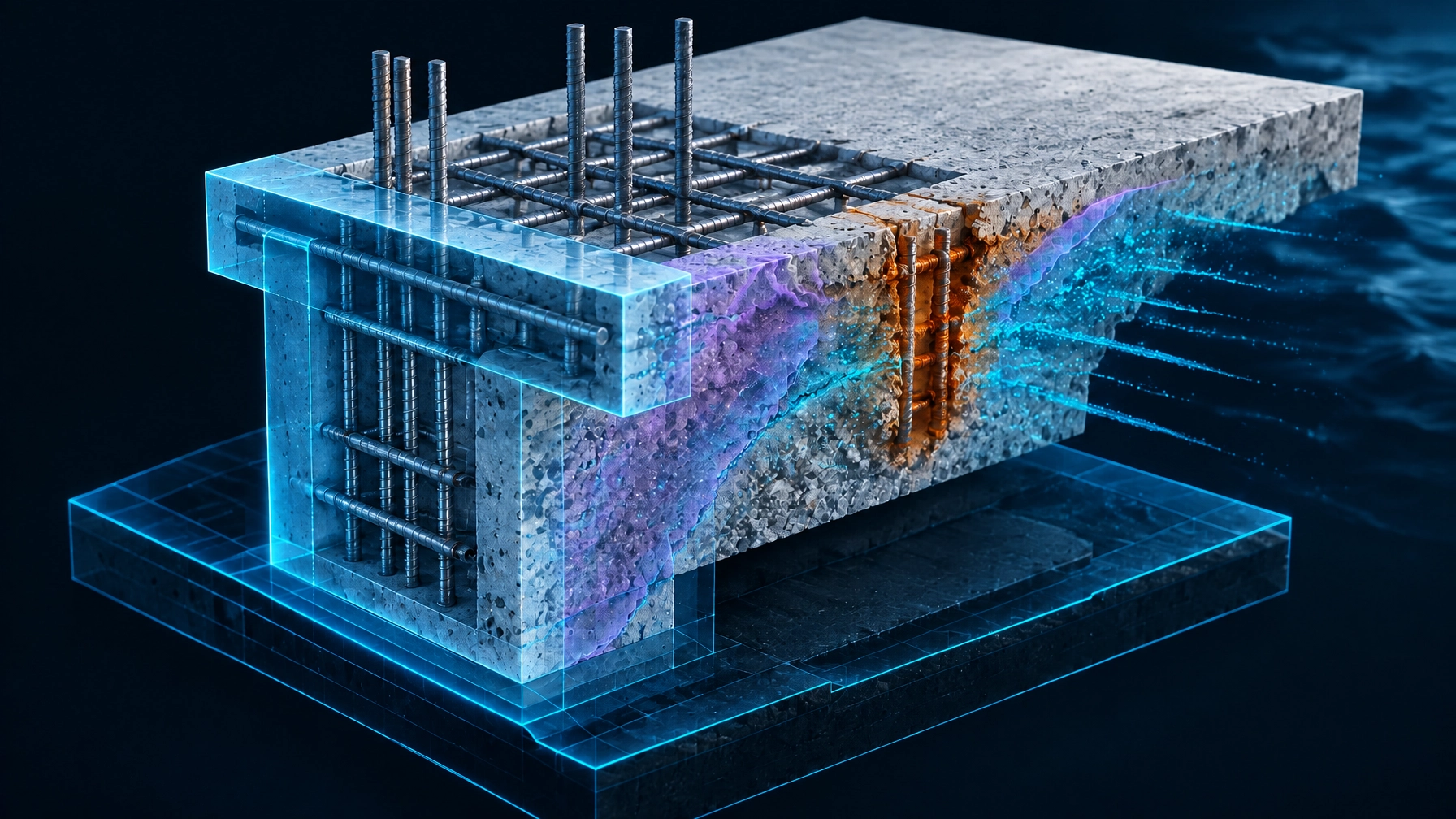
The "Vault" starts at the very foundation. In modern Australian construction, the concrete slab itself is often used as a primary component of the termite management system.
The slab isn't just a floor; it's a barrier. However, for a slab to be considered a compliant barrier under AS 3660.1, it must be designed and constructed in accordance with AS 2870 (Residential slabs and footings). It must be free of cracks that would allow termite entry: usually defined as anything over 1mm.
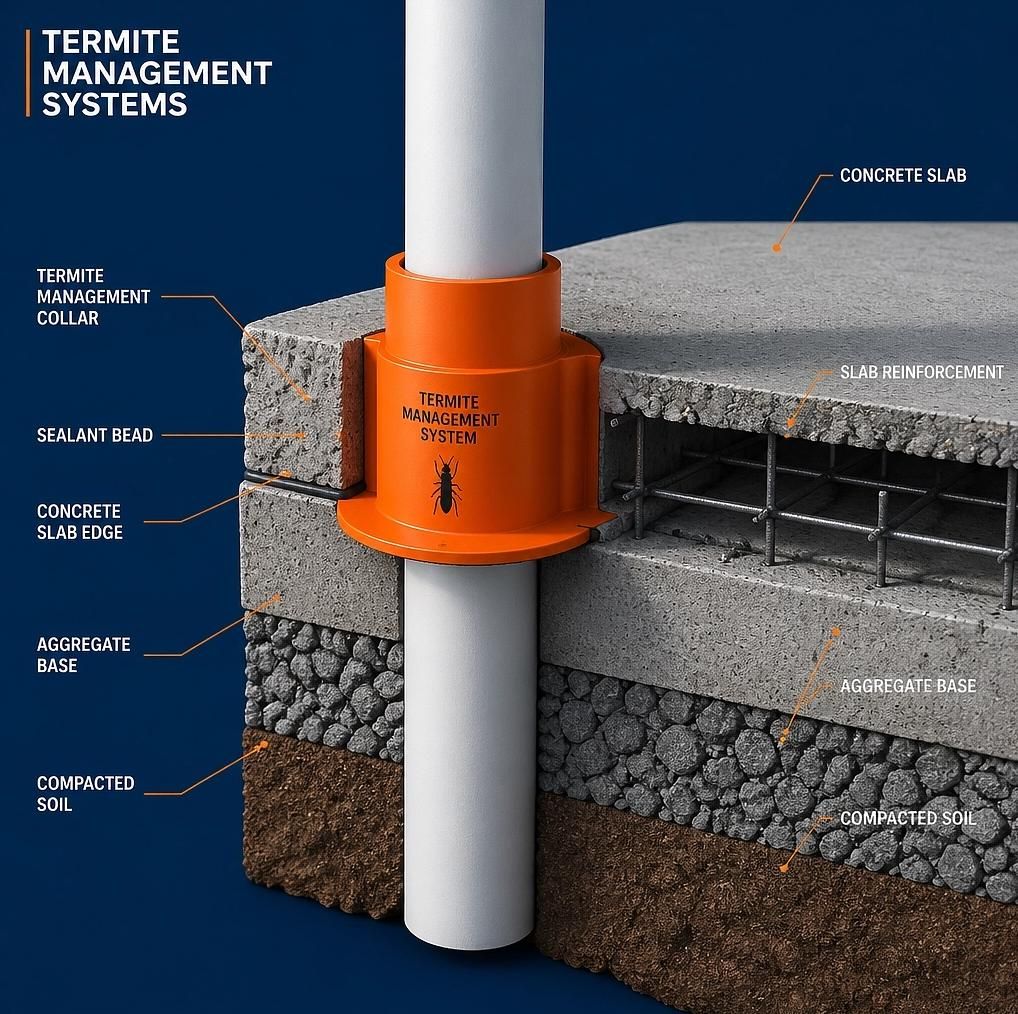
But the slab alone isn't enough. The most vulnerable parts of any new build are the "penetrations": the spots where pipes for your kitchen, bathroom, and laundry pierce through the concrete.
Termites love the small gaps between a PVC pipe and the concrete slab. As the ground settles and the concrete cures, tiny fissures can appear. AS 3660.1 requires these penetrations to be protected.
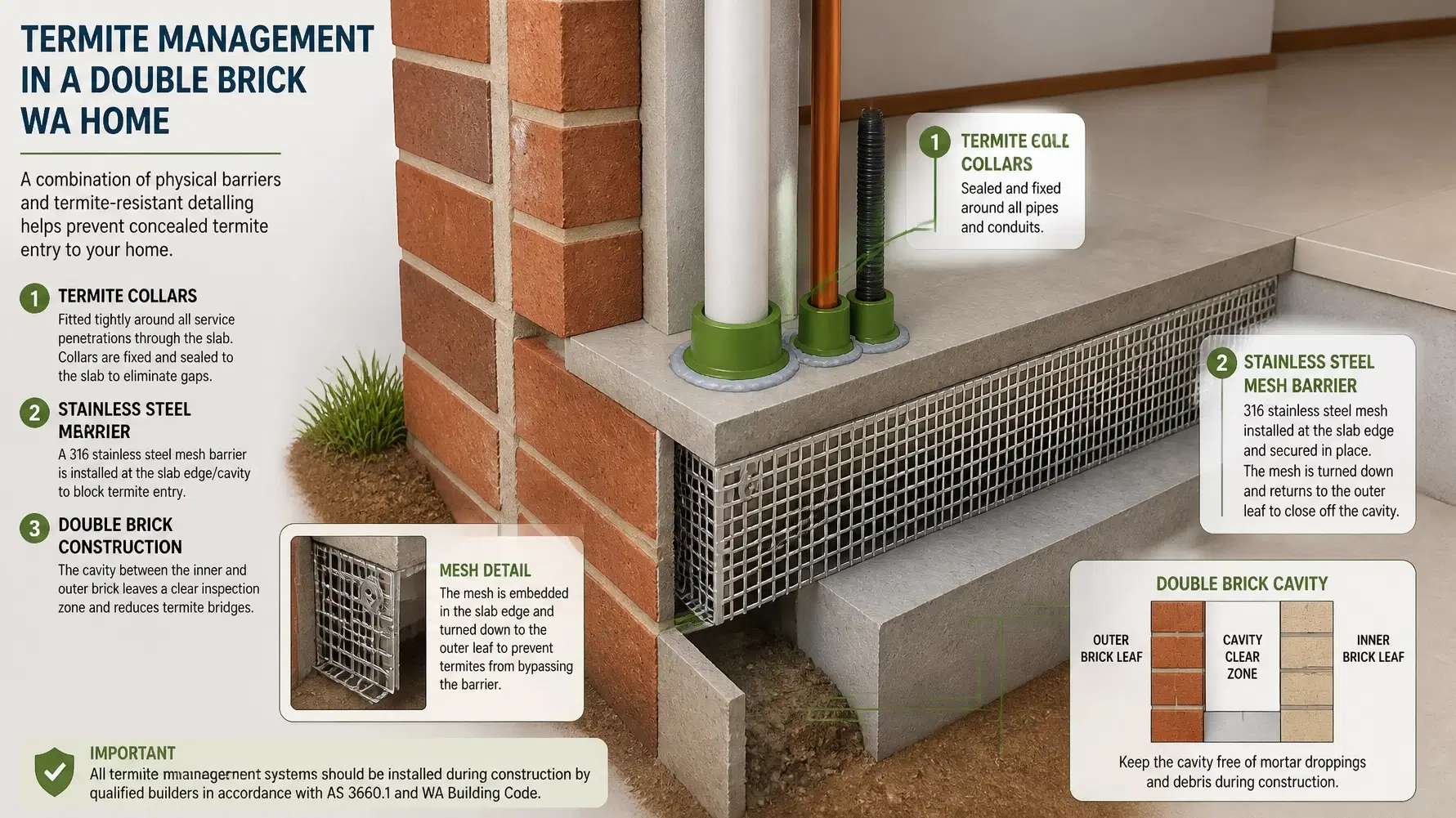
The most common method is the installation of a termite collar. This is a physical barrier, often made of a specialized plastic or stainless steel mesh, that is cast into the slab or fixed around the pipe. The collar creates a "stop" that termites cannot bypass. If they try to move up the outside of the pipe, they hit the collar. Their only choice is to move outward and reveal themselves, or stop altogether.
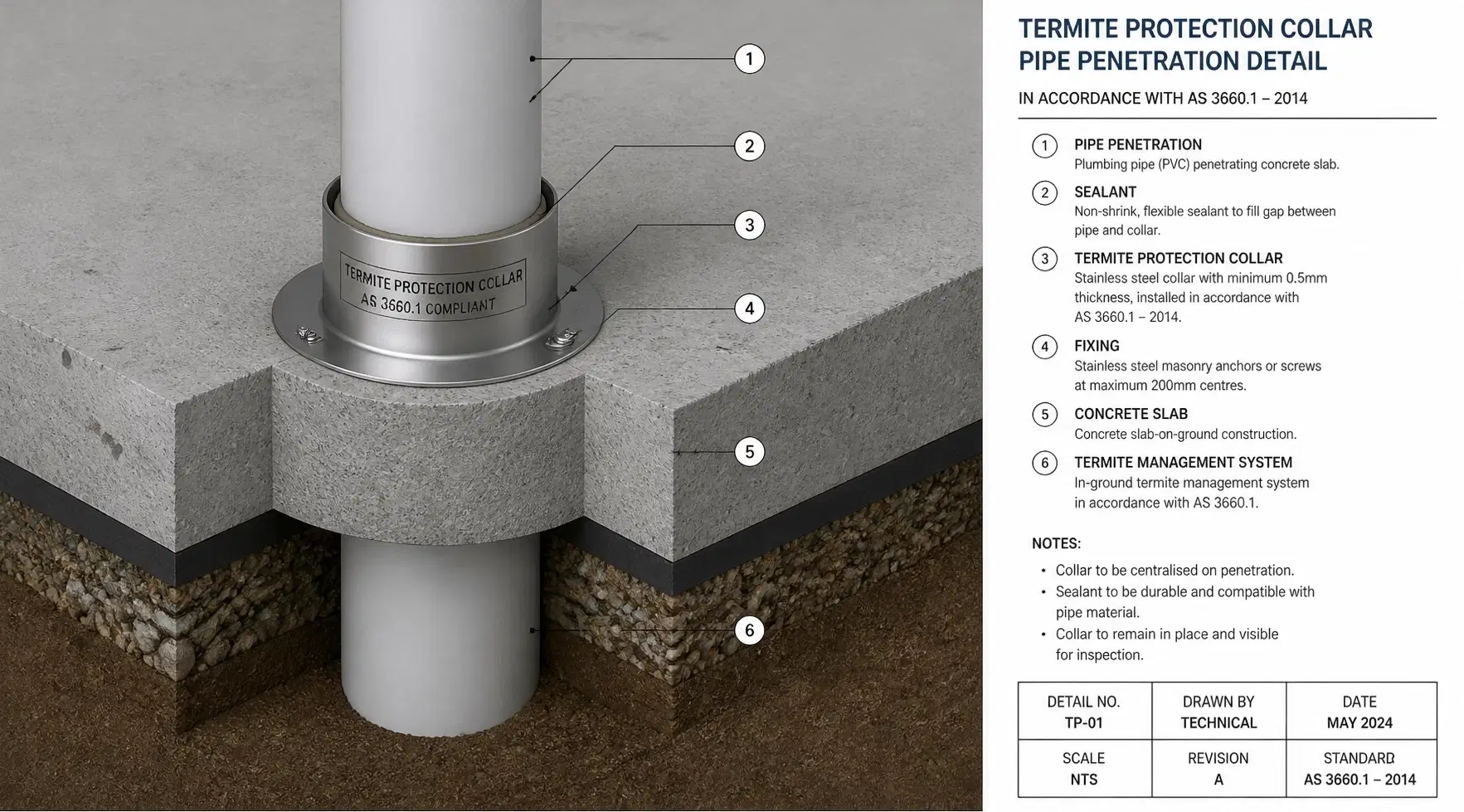
Check your construction drawings for these details. If the collar isn't specified or installed correctly, your vault has a hole in the floor.
The industry generally splits termite management into two camps: Physical and Chemical.
These are "install and forget" systems (mostly). They include:
This involves applying a termiticide to the soil around the footings. Modern standards often require this to be done via a reticulation system. This is a network of perforated pipes under the slab or around the perimeter that allows the chemical to be "recharged" every few years without digging up your landscaping.
In many parts of Australia, double brick construction remains a common standard. This presents a unique challenge for termite management because the cavity between the two leaves of brickwork is a perfect "highway" for termites to reach the roof timber.
Compliance in double brick homes requires a combination of measures. We use stainless steel mesh or sheet barriers embedded into the mortar joints, effectively "closing the gate" of the cavity. We also ensure that the weep holes (the gaps left in brickwork for drainage) are monitored and kept clear of garden beds or mulch.
You can have a perfectly installed AS 3660.1 system, but it can be "bridged" or "breached" easily by post-construction activity. This is the most common cause of termite ingress in relatively new Australian homes.
When a system is bridged, you’ve essentially given the termites a "ladder" to climb over your vault walls. This is where the "Invisible becomes Visible" principle fails: not because the system didn't work, but because it was covered up.
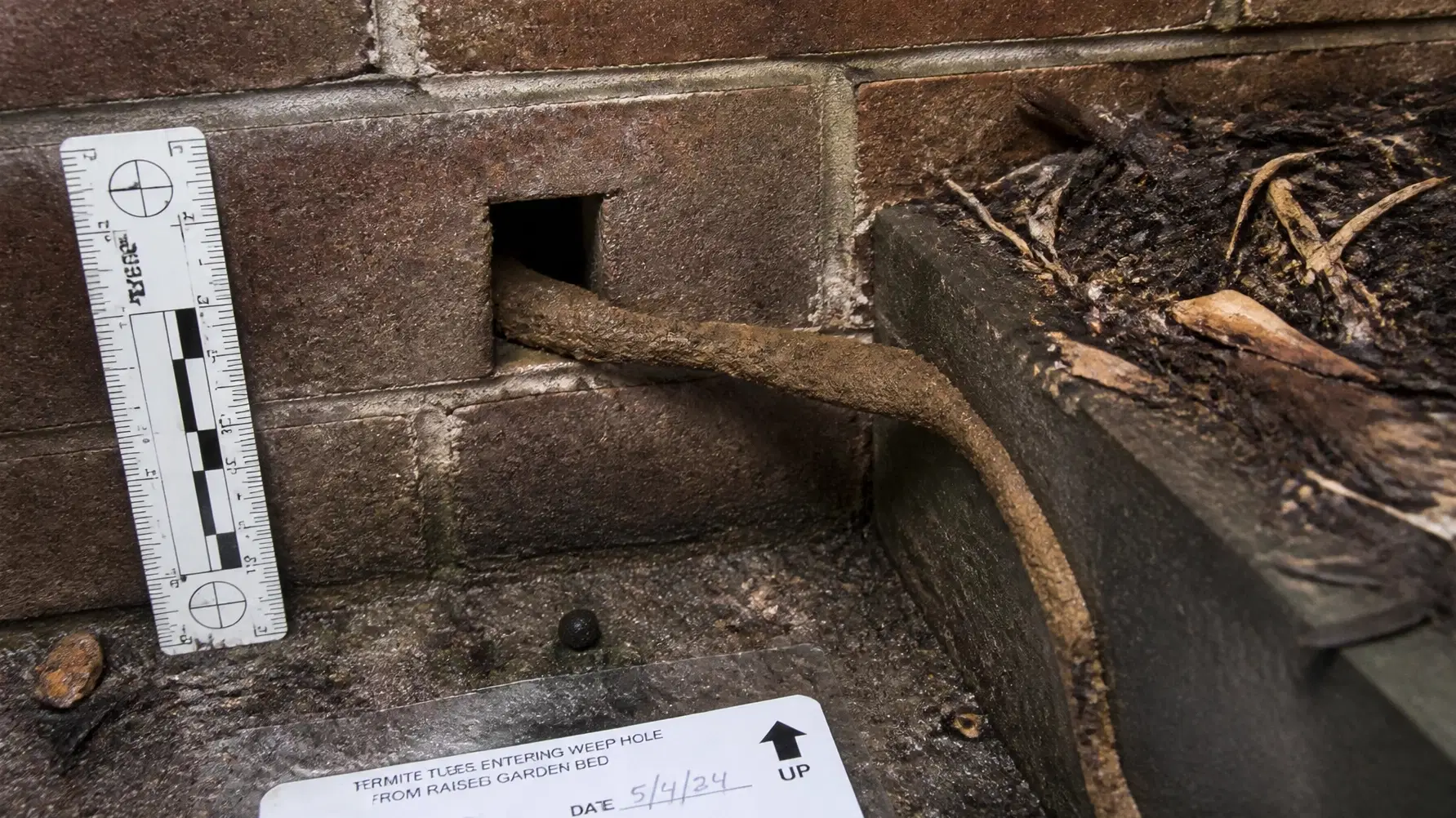
Consider a common failure we see in the field: a homeowner installs a raised garden bed against the house to improve street appeal. In doing so, they cover the 75mm inspection zone required by AS 3660.1.
Within months, termites use the moisture of the garden bed to bridge the main barrier and build a mud tube directly into a weep hole. Because the garden bed was too high, the entry was completely unseen until the termites reached the roof timbers.
A termite management system is only as good as the documentation that supports it. Under AS 3660.1, there are two non-negotiable items that every builder must provide and every homeowner must keep:
Action Item: If you are in a home built after 2014, go to your meter box right now. If there isn't a durable notice there, your "Vault" is missing its manual.
The "Vault" is a living system. While AS 3660.1 handles the construction side (the building of the vault), AS 3660.2 handles the ongoing management. The standard assumes that you will have a professional termite inspection at least once every 12 months.
At Shoal Bay Projects, we specialize in ensuring that the transition from design to construction to occupancy is seamless and compliant. We help builders specify the right systems and help homeowners understand how to maintain them.
If you have questions about termite management detailing, or if you're a builder looking to tighten up your compliance workflow, reach out to us. We’re here to help you make the invisible, visible.
Contact us: shoalbayprojectshive@outlook.com
Explore the Hive: shoalbay-projectshive.com.au
Watch the Intro: Welcome to the Hive YouTube
Disclaimer: This blog post provides general advisory information regarding AS 3660.1-2014. Always consult with a licensed pest management professional and your local building surveyor for specific project requirements.