Problem
A proprietary building system can be manufactured to tight tolerances and still fail to fit the building it was specified for.
The cause is often not one dramatic error. It is a sequence of small deviations that accumulate between the original project datum and the final interface: survey control, foundation positioning, concrete edges, frame fabrication, erection, façade installation and interior finish. Each trade may satisfy its own local acceptance criteria while the completed assembly falls outside the system’s available adjustment range.
This is the tolerance cascade. It consumes clearance gradually, often without triggering a clear warning until installation. At that point, the site team may face a choice between delay, rework, an unapproved alteration or a compromised finish.
The tension is especially visible in high-end residential construction. A finish may appear visually acceptable while the underlying assembly no longer meets its specified structural, movement, weather or connection requirements. Conversely, a technically compliant component may be rejected because the visual alignment is inconsistent with the design intent. Treating these as the same issue creates avoidable disputes.
In projects across Dubai, Singapore and the UK, the details differ, but the underlying friction is consistent: contractors work with physical conditions on site; manufacturers work to product tolerances; and oversight teams assess evidence against contractual and regulatory requirements. Without agreed datums, measurement points and acceptance stages, these groups may reach different conclusions about the same installation.
Forensic Analysis
A tolerance budget is the allowance available for variation across a defined chain of dimensions. A simple worst-case check adds the absolute values of the individual deviations:
Tworst case = |T₁| + |T₂| + … + |Tₙ|
This is a conservative way to test whether an assembly can fit under the least favourable combination of deviations. A root-sum-square calculation may estimate likely combined variation when deviations are independent and the data supports statistical treatment:
TRSS = √(T₁² + T₂² + … + Tₙ²)
Do not use a statistical model to conceal systematic drift. If several dimensions are measured from a displaced datum, their errors may be correlated. Treating them as independent can understate the total risk.
The practical question is not whether every component meets its own tolerance. It is whether the complete installed assembly fits within the functional envelope, including the clearance needed for connection, movement, sealing, adjustment and finish.
A proprietary system’s stated manufacturing tolerance is only one part of that chain. It does not automatically include transport and handling, site setting-out, substrate variation, bracket adjustment, module-to-module alignment or the finished junction. Procurement should therefore require a tolerance matrix that identifies each contribution, its measurement basis, responsible party and acceptance stage.
A frequent failure point is the use of competing datums. One contractor sets out from a survey grid; another measures from a local wall; a supplier fabricates from nominal drawings; the installer works from the as-built slab. Each reference may be internally consistent, yet the dimensions do not reconcile at the interface.
Another failure occurs when a visual adjustment is mistaken for a technical solution. Forcing a panel into alignment, enlarging a connection, adding unapproved packing or concealing a misfit with finish material can affect structural performance, durability or warranty conditions. Adjustment is valid only when it is within the designed range and approved for that assembly.
Audit engagement also affects the outcome. Contractor self-checks can identify issues early, but only if responsibilities, measurement methods and records are defined. Periodic independent inspections provide separation from production pressures but can arrive too late if critical work is already concealed. Hold-point reviews can prevent that, provided the evidence required for release is explicit. Ambiguous scope or late findings can turn a correctable set-out variance into a commercial dispute.
A construction consultant or residential building consultant can help bridge these pressures: align the field measurement, technical requirement and contract evidence before the issue escalates. That is the role of structured building consultancy services, construction compliance review and construction risk management services, not to replace the designer, contractor or authority, but to clarify the decision path between them.
For a homeowner, developer or builder, the essential distinction is between local tolerance and system fit. A component can pass a local check while the interface fails. A home renovation consultant, custom home build consultant Australia, or Client Side Project Management adviser should therefore review the geometry of the complete interface, not merely the appearance of the finished surface. Search terms such as “construction advisory australia” may be geographically framed, but this tolerance problem is global.
Standard Reference
International standards provide useful frameworks for measurement, dimensional coordination and control. They do not, by themselves, create one universal tolerance schedule for every building element. Confirm the applicable editions, contractual requirements and local legal obligations for each project.
- ISO 4463-1 addresses planning, organization and acceptance criteria for setting-out and measurement.
- ISO 7077 sets out general principles and procedures for verifying dimensional compliance.
- ISO 7976-1 and ISO 7976-2 cover measurement methods, instruments and measurement-point selection for buildings and building products.
- ISO 3443-3 provides procedures for selecting target sizes and predicting fit.
- ISO 3443-8 addresses dimensional inspection and control of construction work.
- ISO 3443-6 and ISO 3443-7 address conformity criteria and statistical control.
Use these references to design a measurement and coordination process, not as substitutes for project-specific acceptance values. Product standards may govern individual materials or components, while the contract documents must define how those requirements connect across the installed assembly.
Actionable Fix
Control the tolerance chain before fabrication or installation:
- Establish one project datum strategy. Define the survey control, building grid, benchmarks and how each reference is transferred. Prohibit unapproved local datums for dependent work.
- Map critical interfaces. List the dimensions that control structural connections, façade alignment, glazing, waterproofing, penetrations and high-visibility finishes.
- Build a tolerance matrix. Record nominal dimensions, permitted deviations, source of requirement, responsible party, measurement method and acceptance stage.
- Test the full stack-up. Check a conservative worst-case combination. Use statistical analysis only when the data and independence assumptions are defensible.
- Reserve adjustment capacity. Specify where adjustment is permitted, how much is available and who can approve its use. Do not spend the whole allowance upstream.
- Survey before dependent work is released. Verify foundations, anchors, embeds, openings and bearing surfaces against the agreed datum. Give suppliers the verified as-built information they need.
- Set inspection and hold points. Check critical dimensions at setting-out, manufacture, first installation and before concealment. Define the records needed for acceptance.
- Escalate variances with evidence. Document measurement conditions, instrument, location and result. Obtain an approved technical disposition before altering a connection or masking a misfit.
When drift is detected, stop the affected dependent work, preserve the evidence and establish whether the cause is a datum shift, component variation, installation sequence or measurement uncertainty. Then assess the remaining tolerance budget at the full assembly. This turns a potential building dispute into a traceable technical decision.
Shoal Bay Projects provides construction advisory, residential project management and building consultancy support to help builders, homeowners and project teams resolve these interface risks before they become legal or financial problems. The approach is forensic: define the requirement, verify the as-built condition, identify responsibility and document the compliant path forward.
Further connection
Explore The Hive and visit the Shoal Bay Projects YouTube channel.
Claim Your Foundation Membership
The Vault. The App. The Community. We're opening the doors to a select group of Foundation Members. Free, for a limited time. Foundation Membership includes full access to The Vault (our forensic intelligence archive) and early access to the Hive app.
Once the charter window closes, this tier is gone permanently. Foundation Members retain access for life. This is not a trial: it's a permanent invitation to the founding cohort.
Claim Your Foundation Membership →
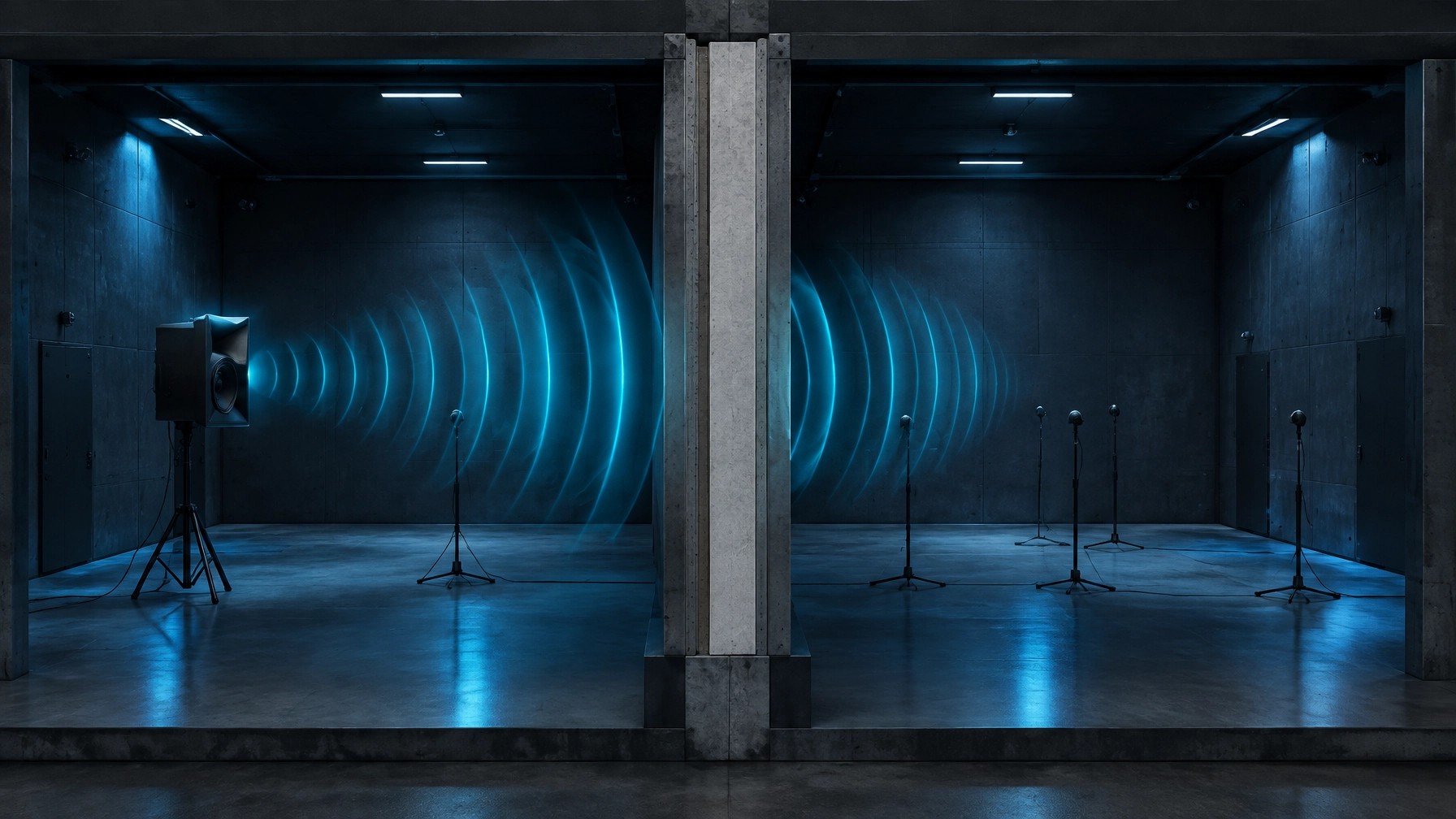
⚠️ The image in this post is used for illustration purposes only, designed to encourage thoughtful discussion. It is not intended to represent a prescriptive detail of any installation or construction method.
Circle-Ready Pack
Community intro: Small deviations rarely stay small when they travel through a high-end residential build. This post looks at how setting-out drift can consume a proprietary system’s adjustment range, and what to verify before the mismatch reaches installation.
Title: The Tolerance Cascade: Why Cumulative Setting-Out Drift Consumes Proprietary System Tolerances in High-End Residential Construction
Full article link: The published article URL was not supplied at drafting. Add the live Webflow article URL before posting.
Related Hive page: The Hive
Key forensic takeaways:
- A component passing its own tolerance check does not prove the complete installed assembly will fit.
- Statistical tolerance analysis cannot safely absorb systematic drift from shared or competing datums.
- Survey critical interfaces early, define adjustment limits and document hold points before dependent work proceeds.
Image asset: 3D forensic tolerance cascade illustration
Hive YouTube: Shoal Bay Projects on YouTube
Claim Your Foundation Membership
The Vault. The App. The Community. We're opening the doors to a select group of Foundation Members. Free, for a limited time. Foundation Membership includes full access to The Vault (our forensic intelligence archive) and early access to the Hive app.
Once the charter window closes, this tier is gone permanently. Foundation Members retain access for life. This is not a trial: it's a permanent invitation to the founding cohort.
Claim Your Foundation Membership →