A finished surface can appear acceptable while the structure, documentation, or compliance pathway beneath it remains unresolved.
That distinction is becoming more important across residential construction markets in London, Dubai, Singapore, and other global centres. Project teams are under pressure to deliver visually refined homes, meet programme commitments, control cost, and satisfy increasingly detailed regulatory and contractual requirements. Yet many disputes emerge because the project was inspected as a sequence of visible finishes rather than investigated as a system of evidence.
Modern construction advisory must therefore make a forensic pivot: move beyond surface inspection and examine the causal chain behind design decisions, material selection, workmanship, sequencing, testing, approvals, and records.
Problem: Surface Acceptance Is Not Compliance
The conventional inspection model often asks a narrow question:
Does the work look complete?
A forensic advisory model asks a more useful series of questions:
- Does the installed work reflect the approved design intent?
- Can the contractor demonstrate that critical materials and processes were controlled?
- Were inspections conducted at the correct hold points?
- Do test results relate to the actual installed work?
- Were changes properly reviewed, approved, and recorded?
- Can the project team prove what was known, when it was known, and how the risk was addressed?
These questions expose the gap between physical execution and compliance assurance.
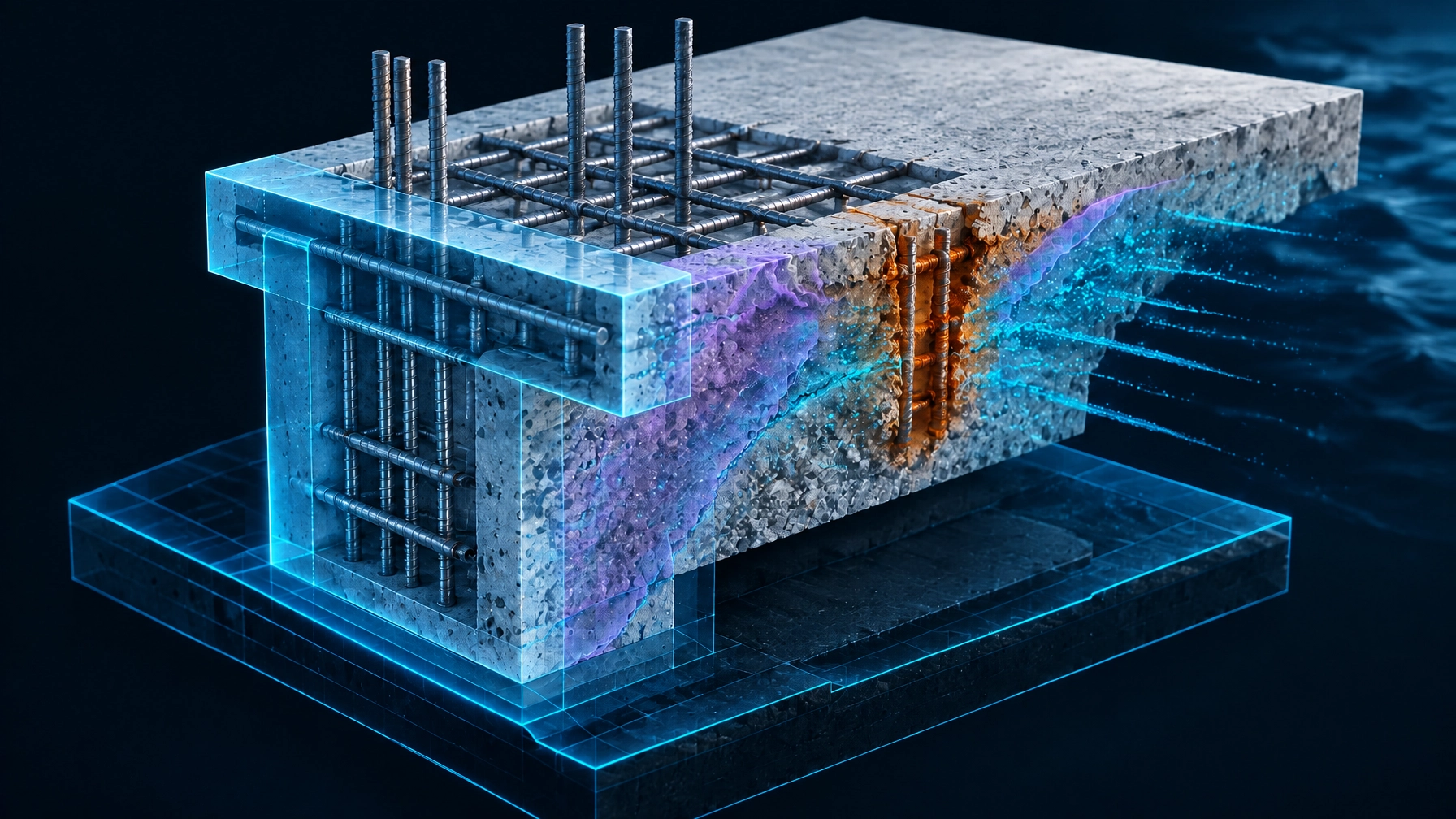
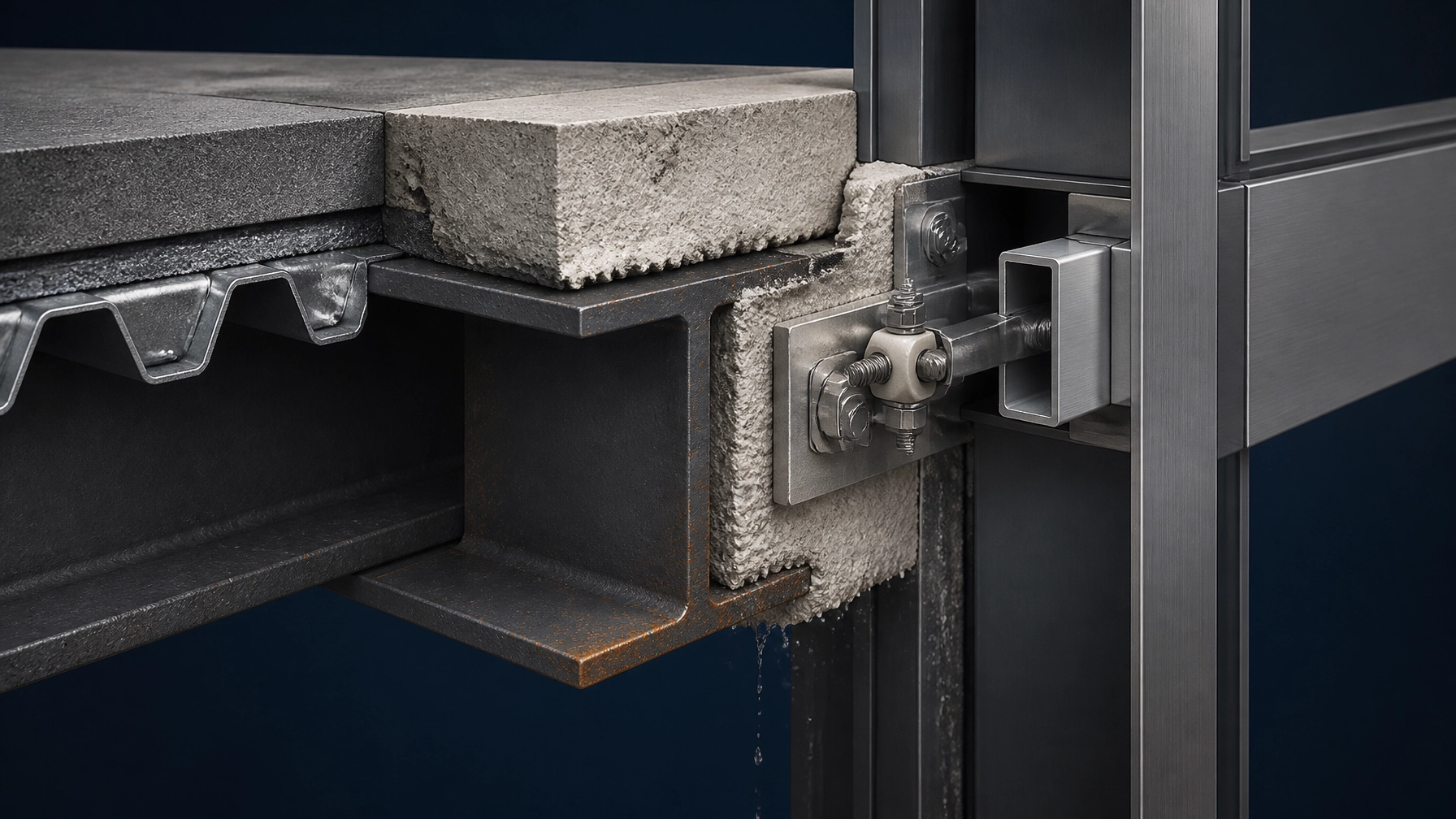
A wall may be straight, painted, and visually acceptable while concealed moisture management remains incomplete. A concrete element may present a clean finish while reinforcement placement, cover, strength, or curing records remain uncertain. A renovation may be handed over with an attractive result while undocumented variations have created an unresolved contractual or performance risk.
This is where friction develops between contractors, owners, certifiers, inspectors, engineers, and oversight bodies.
The contractor may regard the work as practically complete. The oversight body may identify incomplete evidence. The owner may focus on quality of finish. The engineer may focus on structural performance. The dispute consultant may later discover that the records needed to resolve causation were never created.
The result is predictable: delay, rework, withheld payments, insurance exposure, formal claims, and avoidable legal escalation.
Forensic Analysis: Investigate the Causal Chain
A clinical investigation does not begin with an opinion. It begins with evidence control.
1. Separate appearance from performance
Visual inspection remains useful, but it is only one layer of assessment. It can identify cracking, distortion, staining, incomplete finishes, surface irregularities, and signs of water entry. It cannot, by itself, establish the cause or significance of those conditions.
Forensic analysis links the visible symptom to the concealed mechanism.
That may require:
- Reviewing design documents and approved revisions
- Mapping defects against construction sequence
- Comparing specifications with procurement records
- Examining inspection and testing plans
- Verifying material certificates and laboratory results
- Conducting targeted non-destructive or destructive testing
- Reviewing photographic, email, programme, and meeting records
- Testing alternative explanations rather than selecting the first plausible cause
Treat every conclusion as a hypothesis until the evidence supports it.
2. Examine the audit engagement model
The timing and independence of an audit materially affect its value.
An event-driven investigation begins after a defect, failure, claim, or dispute. It may be necessary, but evidence could already have been disturbed, concealed, repaired, or removed.
A milestone-based compliance review occurs during design or construction. It provides earlier intervention, but its effectiveness depends on whether the review includes the right documents, the right inspection points, and sufficient technical depth.
An embedded advisory model operates throughout the project. It supports decision-making before risk becomes a defect and before a defect becomes a dispute.
The most serious weakness is often not a lack of inspection. It is a mismatch between the engagement model and the project risk.
A late visual inspection may identify a problem but provide no reliable answer to causation. A periodic checklist may record that an area was inspected without confirming whether the inspection was technically competent, independent, or adequately documented. A contractor-led quality process may be operationally efficient but insufficiently independent for a high-value dispute.
Define the audit purpose before defining the audit frequency.
3. Investigate the contractor–oversight interface
Construction projects fail at interfaces. The most important interface is often the point where practical site knowledge meets formal compliance evidence.
Contractors work through sequencing, trade coordination, access, weather, labour, procurement, and programme pressure. Oversight bodies work through approved documents, inspection points, test results, competency requirements, and formal acceptance criteria.
Neither perspective is sufficient alone.
A contractor may correctly explain why a field adjustment was made, but the adjustment may not have been assessed against the design basis. An inspector may correctly identify a deviation, but the finding may not distinguish between a cosmetic issue, a durability risk, and a structural deficiency.
A forensic construction consultant translates both perspectives into a defensible technical position.
That position must identify:
- What was specified
- What was installed
- What was tested
- What was documented
- What changed
- What performance requirement applies
- What risk remains
- What corrective action is proportionate
This approach prevents “quality of finish” from being confused with structural or regulatory compliance.

4. Preserve digital and physical evidence
Modern project evidence is distributed across cloud platforms, messaging systems, inspection applications, photographic records, laboratory portals, drawing registers, and commercial correspondence.
Do not treat digital records as informal background material. Establish:
- Source and ownership
- Date and time
- Revision status
- Chain of custody
- Metadata where relevant
- Relationship to the physical condition
- Any gaps, deletions, or contradictions
A photograph without location, date, orientation, or reference scale may have limited evidentiary value. A laboratory result without sample identification or traceable methodology may not prove the condition of the installed element.
Document the evidence before remediation changes the facts.
Standard Reference: Build a Defensible Framework
International standards provide a common technical language, but they do not replace professional judgment or jurisdiction-specific legal requirements. Use them as structured benchmarks and verify the applicable adoption pathway for each project.
ASTM forensic engineering guidance
ASTM E2713, Standard Guide to Forensic Engineering, provides a framework for professional forensic engineering practice, including investigation planning, qualifications, evidence handling, and technical analysis.
ASTM E3176, Standard Guide for Forensic Engineering Expert Reports, supports disciplined reporting. A defensible report should clearly state the background, questions addressed, materials examined, inspections performed, tests undertaken, findings, alternative explanations, conclusions, and limitations.
Do not bury assumptions. State them.
ISO quality, inspection, and laboratory principles
ISO 9001 provides a quality management framework for controlling processes and demonstrating consistent service delivery.
ISO/IEC 17020 addresses the competence, impartiality, and consistency of inspection bodies.
ISO/IEC 17025 establishes internationally recognised requirements for competent testing and calibration laboratories.
Together, these references reinforce three requirements essential to construction compliance:
- Control the process
- Maintain impartial inspection
- Produce technically reliable results
Use ISO conformity assessment principles to distinguish inspection, testing, certification, and accreditation. These functions are related but not interchangeable.
Structural performance references
For reinforced concrete investigations, ACI 318 provides a widely used reference for structural concrete materials, design, detailing, construction, inspection, and evaluation.
For projects using the Eurocode framework, Eurocode 2 provides performance criteria relating to resistance, serviceability, durability, robustness, and fire resistance.
Use the edition and adoption pathway applicable to the project. Do not assess an older structure using an unexamined current benchmark without explaining the basis for comparison.
Actionable Fix: Install the Forensic Pivot Before the Dispute
Adopt a four-stage advisory protocol.
Stage 1: Define the risk questions
Before inspection, identify the decisions the investigation must support.
Examples include:
- Is the defect cosmetic, functional, durable, or structural?
- Does the installed work match the approved design?
- Is the issue isolated or systemic?
- Is remediation technically possible without destroying evidence?
- Does the available record support a contractual or expert opinion?
A clear question prevents unfocused inspection.
Stage 2: Establish an evidence register
Create a controlled register for drawings, specifications, revisions, photographs, test results, inspection records, correspondence, variations, and site observations.
Assign each item a source, date, status, and relevance. Record missing documents as findings, not administrative inconveniences.
Stage 3: Use risk-based inspection and testing
Prioritise concealed, irreversible, safety-critical, high-cost, and high-consequence work.
Select testing that answers the defined question. Use qualified personnel and technically competent laboratories where laboratory evidence is required. Correlate test locations with drawings, site records, and observed defects.
Do not test simply to produce more data. Test to reduce uncertainty.
Stage 4: Convert findings into controlled action
Issue findings in a format that distinguishes:
- Confirmed non-conformance
- Probable cause
- Possible cause requiring further investigation
- Performance risk
- Contractual or documentation risk
- Immediate containment
- Permanent corrective action
- Verification requirement
This is the role of a forensic advisory bridge.
Whether engaged as a construction consultant, residential building consultant, home renovation consultant, building dispute consultant, or provider of construction risk management services, Shoal Bay Projects applies structured building consultancy services to connect site reality with technical and contractual requirements.
The same discipline supports residential project management, Client Side Project Management, high-value custom homes, major renovations, and developer-led residential work. Search terms may vary between markets: construction advisory Australia, custom home build consultant Australia, or building consultancy services in London, Dubai, or Singapore: but the underlying requirement is universal: make project decisions traceable, proportionate, and defensible.
Explore Shoal Bay Projects for a strategic advisory approach focused on construction planning, compliance interpretation, quality expectations, and risk control. Additional visual briefings are available through the Shoal Bay Projects YouTube channel.
⚠️ The image in this post is used for illustration purposes only, designed to encourage thoughtful discussion. It is not intended to represent a prescriptive detail of any installation or construction method.
Claim Your Foundation Membership
The Vault. The App. The Community. We're opening the doors to a select group of Foundation Members : free, for a limited time. Foundation Membership includes full access to The Vault (our forensic intelligence archive) and early access to the Hive app.
Once the charter window closes, this tier is gone permanently. Foundation Members retain access for life. This is not a trial : it's a permanent invitation to the founding cohort.
Claim Your Foundation Membership →
Circle-Ready Pack
Community Introduction
Surface inspection tells you what is visible. Forensic advisory investigates what the visible condition means, how it developed, and whether the project can prove compliance.
This week’s analysis examines why modern residential construction requires a clinical investigation model: particularly where finish quality, structural performance, documentation, and oversight expectations collide.
Title
The Forensic Pivot: Why Modern Construction Advisory and Compliance Demand Clinical Investigation Over Surface Inspection
Full Article
Read the article on Shoal Bay Projects
Key Forensic Takeaways
- A visually acceptable finish does not prove structural performance, regulatory compliance, or contractual completion.
- Audit timing and independence determine whether evidence can be preserved and whether causation can be established.
- ASTM, ISO, ACI, and Eurocode references provide a defensible framework for investigation, testing, reporting, and corrective action.
Image Assets
⚠️ The image in this post is used for illustration purposes only, designed to encourage thoughtful discussion. It is not intended to represent a prescriptive detail of any installation or construction method.
Foundation Member Opportunity
Claim Your Foundation Membership →