Construction
Sep 7, 2026
The Evidence Vacuum: Why Unphotographed Critical-Stage Inspections Become Liability
The Evidence Vacuum: Why Unphotographed Critical-Stage Inspections Become Liability

The Evidence Vacuum: Why Unphotographed Critical-Stage Inspections Become Liability
A critical-stage inspection is not complete merely because someone attended site.
It is complete when the project record can demonstrate, years later, what was inspected, where it was inspected, what was observed, what standard or design requirement applied, and what decision followed.
That distinction is becoming increasingly important across residential construction markets in Dubai, Singapore, the UK and other jurisdictions where project disputes often emerge long after work has been concealed.
According to a published account of a regulator’s review of 728 residential project files, fewer than half of the critical-stage inspection records contained photographic evidence of what the inspector saw on the day. The finding is reported here.
The issue is not simply poor administration. It is an evidence failure.
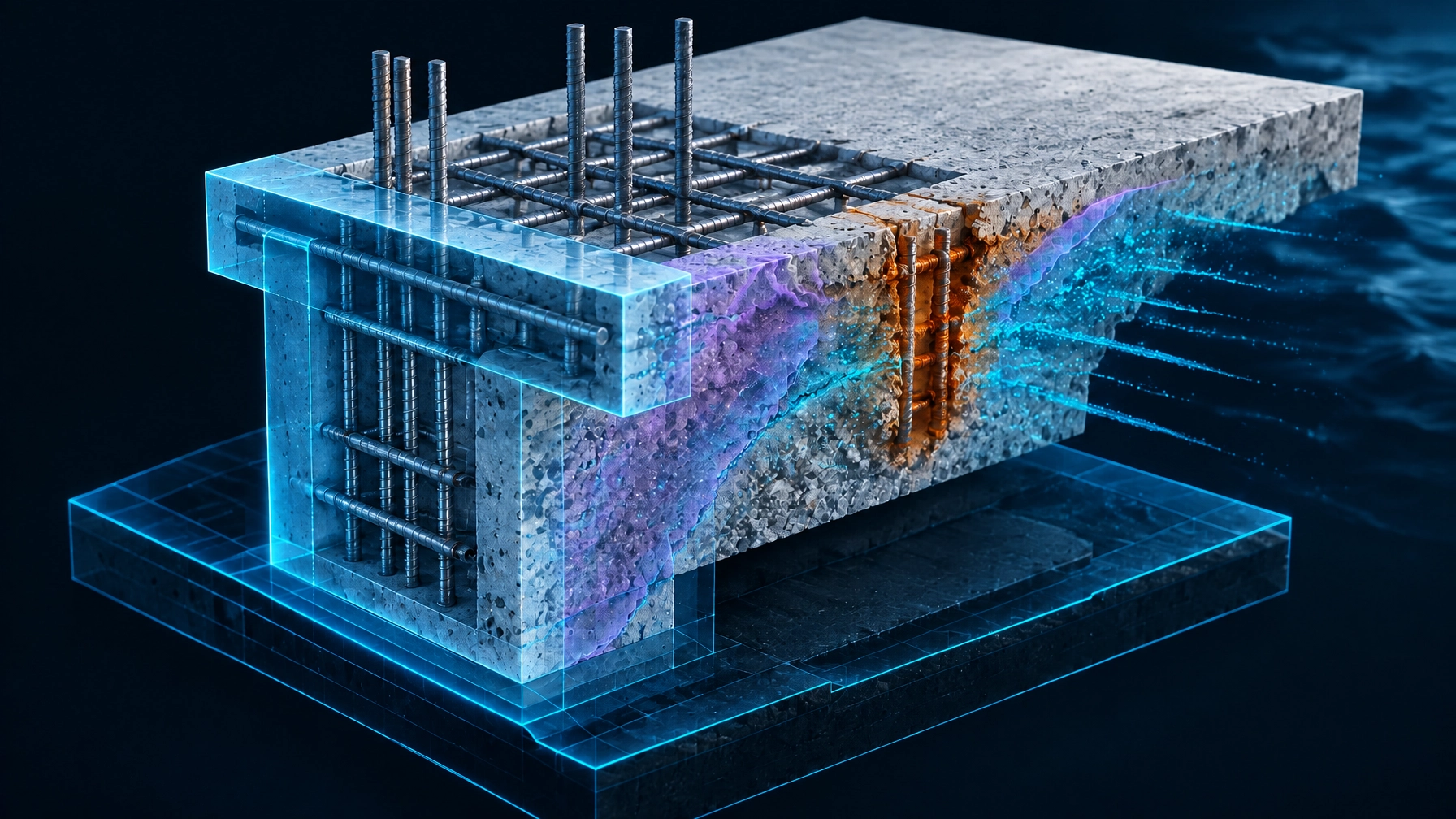
When structural work, waterproofing, reinforcement, services or junction details are concealed, the physical evidence disappears.
The project may continue to completion. Finishes may be applied. Certificates may be issued. Occupants may move in. Then a defect appears:
At that point, a written inspection note stating “work satisfactory” may provide very little forensic value.
It may not identify:
The absence of photographic evidence does not automatically prove that the work was defective. It creates something more difficult: an inability to establish the condition of the work when verification was possible.
That is the evidence vacuum.
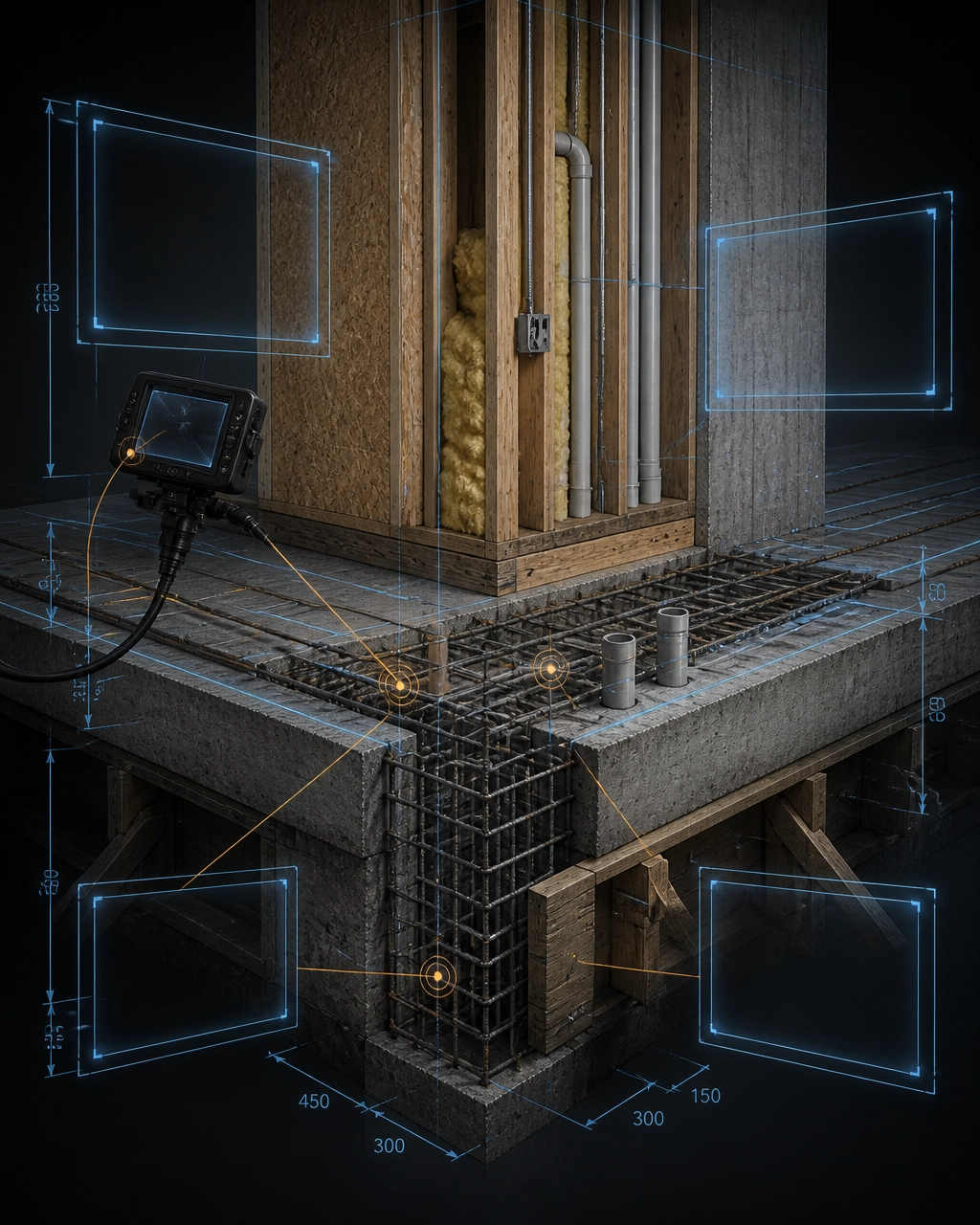
A photograph is not a substitute for technical judgment. It is a time-specific record that supports technical judgment.
A useful critical-stage photograph should connect five conditions:
Without that connection, a photograph can become little more than an unverified image library.
The strongest records combine the photograph with a controlled inspection entry, a marked-up drawing, a measurement, an observation and a decision. They allow a later reviewer to distinguish between:
This matters because construction liability is rarely determined by a single defect in isolation. It is assessed through a chain of responsibility.
The contractor may say the work was completed in accordance with the design. The inspector may say the inspection was limited to visible conditions. The designer may say the installation departed from the documented detail. The owner may say the defect was latent and could not have been detected. A dispute consultant may then attempt to reconstruct events from incomplete records.
If the critical-stage record contains no images, the parties are forced to rely on recollection, generic forms, later destructive testing and assumptions about standard practice.
Those assumptions are vulnerable.
A common failure occurs when visual finish is confused with technical compliance.
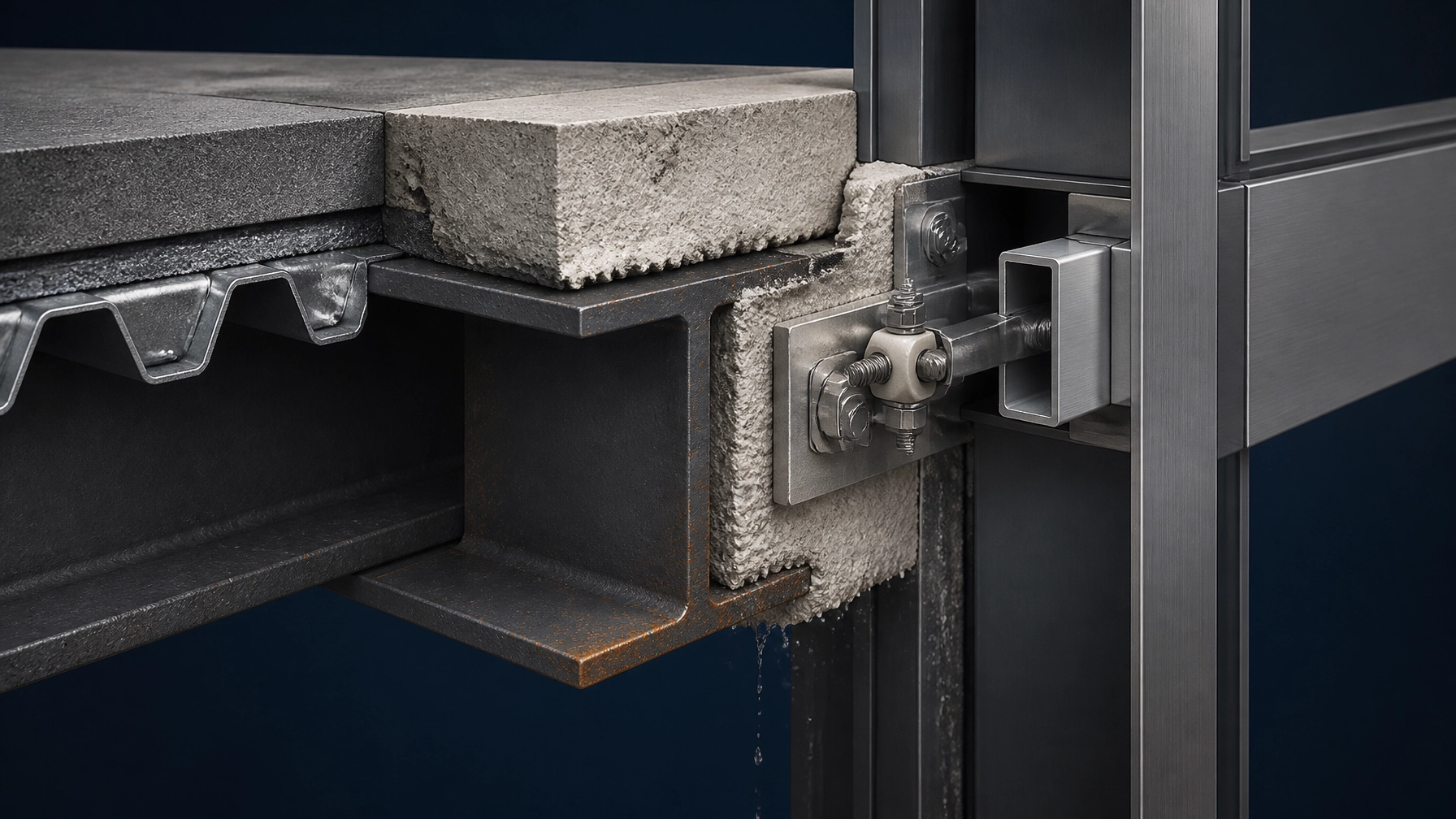
A completed surface may appear clean, level and professionally finished while concealing:
The finished appearance may satisfy a customer’s quality expectation while the concealed work fails a structural, durability or performance requirement.
Conversely, a rough-looking construction-stage condition may be temporary and technically acceptable.
A critical-stage inspection must therefore record the condition that matters, not merely the appearance that is easiest to assess.
Different inspection models create different evidence risks.
A reactive inspection occurs after a complaint or failure. It may provide detailed analysis, but the original condition has often been concealed, altered or damaged.
A periodic site inspection provides useful oversight but may not align with the precise moments when work becomes inaccessible.
A certifier-only inspection may satisfy a defined statutory or contractual role while leaving gaps in the contractor’s internal quality record.
An independent forensic review may be highly detailed but is usually conducted after the dispute has crystallised.
The strongest model is an integrated evidence protocol: define critical stages in advance, assign inspection responsibility, record limitations, capture controlled images and close every nonconformity before concealment.

ISO 19011 treats audit evidence as records, statements of fact or other information that are relevant to audit criteria and verifiable.
That principle is directly applicable to construction inspection records.
A statement such as “reinforcement checked” is difficult to verify without supporting information. A controlled image showing the relevant zone, accompanied by a location reference, measurement and inspection outcome, is materially stronger evidence.
Review the ISO 19011 standard information when developing an evidence-based audit process.
ISO 9001 requires organisations to control documented information, including its creation, updating, access, protection, retention and disposition.
For a construction project, this means inspection photographs should not be treated as informal phone-camera content. They should be managed as project records.
A defensible system should establish:
See the ISO 9001 standard information for the broader documented-information framework.
ACI 318 includes requirements for inspection records associated with concrete construction. Its inspection provisions address project progress, concrete placement information, testing and other records necessary to demonstrate controlled execution.
Photographs do not replace these written records. They strengthen them.
For example, a concrete inspection record may identify the placement location, mix information and test results. A corresponding image can show the reinforcement, formwork, embedments and access conditions that existed immediately before placement.
The ACI 318-19 publication information provides the relevant structural concrete reference point.
Where testing is required, link the inspection record to the applicable ASTM test method and result. Depending on the material and test regime, this may include ASTM C31, ASTM C39, ASTM C138, ASTM C173 or ASTM C231.
The objective is not to create more paperwork. It is to create a verifiable chain from design intent to physical execution.
Implement the following controls on every project where concealed work may later become disputed.
List the stages that will become inaccessible or materially more difficult to verify.
Examples include:
Do not rely on the inspector to define these stages retrospectively.
Specify the minimum image set for each stage.
Require:
Capture enough context to prove where the image belongs.
Assign each image a unique identifier and connect it to:
Store the record in a controlled project platform rather than relying on private devices, messaging applications or unstructured camera rolls.

If an area was inaccessible, wet, obstructed, incomplete or outside the agreed scope, state that fact.
A limitation properly recorded is defensible. An unexplained acceptance statement is not.
Do not treat a defect photograph as closure.
Record:
Keep the original and corrective records together.
Sample completed project files before handover.
Ask:
If the answer is no, the project has an evidence risk even if the physical construction appears sound.
Shoal Bay Projects operates at this advisory interface between site execution, compliance interpretation and forensic risk. The objective is not to create adversarial paperwork. It is to prevent ordinary construction uncertainty from escalating into legal, financial or reputational exposure.
The inspection record should make the project easier to defend, not harder to understand.
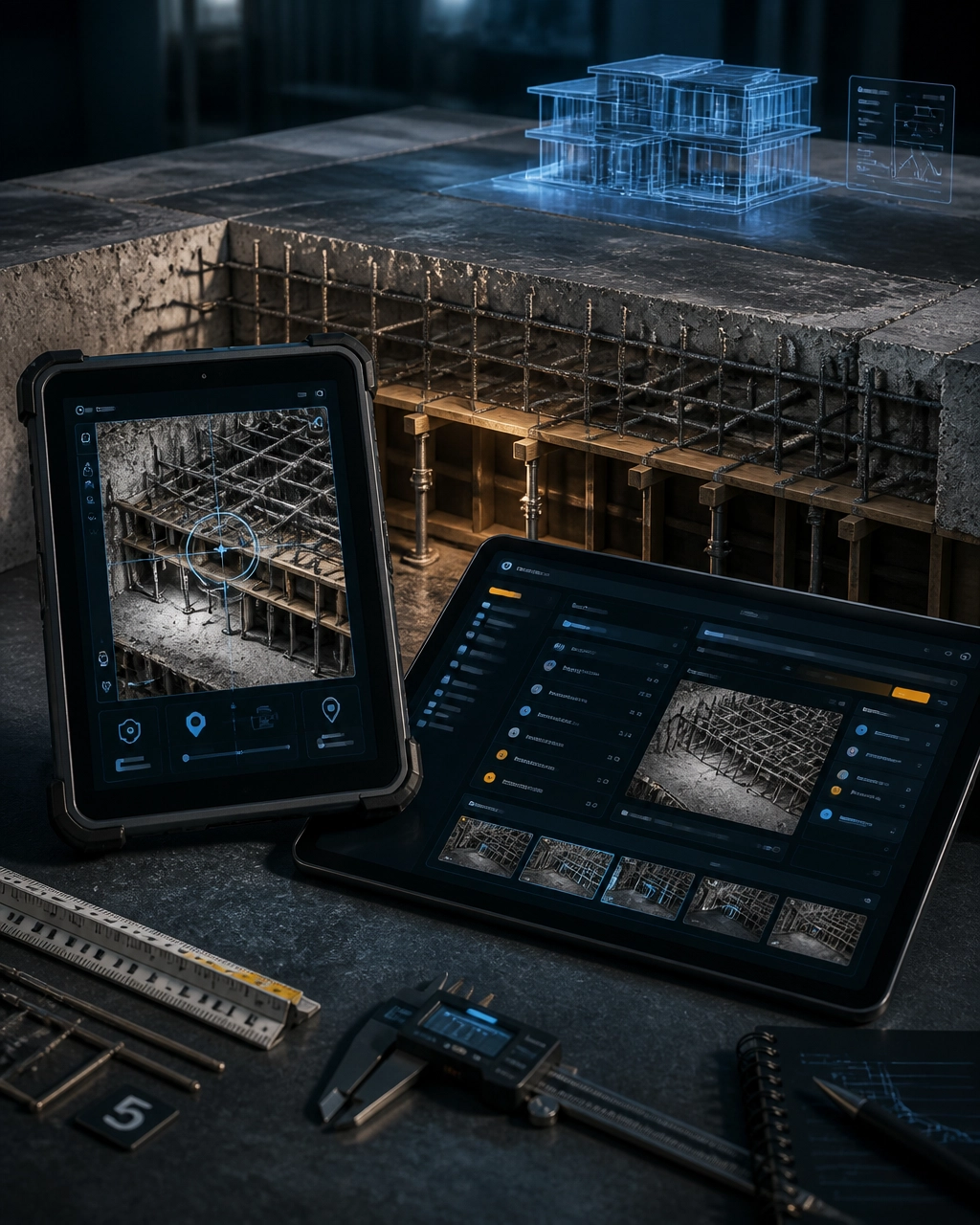
⚠️ The image in this post is used for illustration purposes only, designed to encourage thoughtful discussion. It is not intended to represent a prescriptive detail of any installation or construction method.
For further construction advisory insights, visit the Shoal Bay Projects website and subscribe to the Hive YouTube channel.
The Vault. The App. The Community. We're opening the doors to a select group of Foundation Members : free, for a limited time. Foundation Membership includes full access to The Vault (our forensic intelligence archive) and early access to the Hive app.
Once the charter window closes, this tier is gone permanently. Foundation Members retain access for life. This is not a trial : it's a permanent invitation to the founding cohort.
Claim Your Foundation Membership →
Conversation starter
A regulator audit of 728 residential project files found that fewer than half of critical-stage inspection records included photographic evidence. That finding raises a wider question for every builder, homeowner and consultant: if concealed work is later disputed, can the project record prove what was actually visible and verified?
Read the full article on the Shoal Bay Projects website:
The Evidence Vacuum: Why Unphotographed Critical-Stage Inspections Become Liability
⚠️ The image in this post is used for illustration purposes only, designed to encourage thoughtful discussion. It is not intended to represent a prescriptive detail of any installation or construction method.
The Vault. The App. The Community. We're opening the doors to a select group of Foundation Members : free, for a limited time. Foundation Membership includes full access to The Vault (our forensic intelligence archive) and early access to the Hive app.
Once the charter window closes, this tier is gone permanently. Foundation Members retain access for life. This is not a trial ; it's a permanent invitation to the founding cohort.