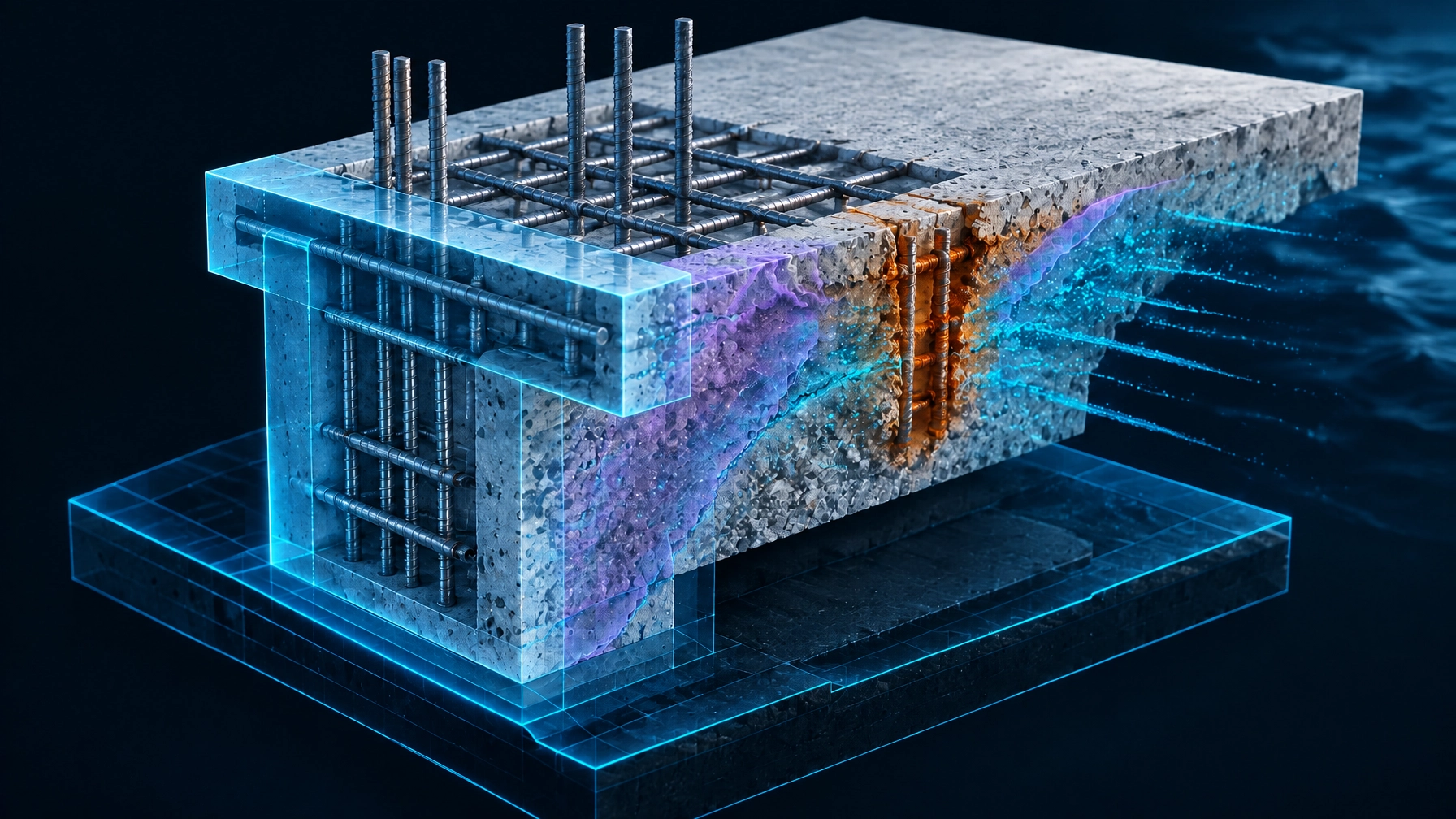
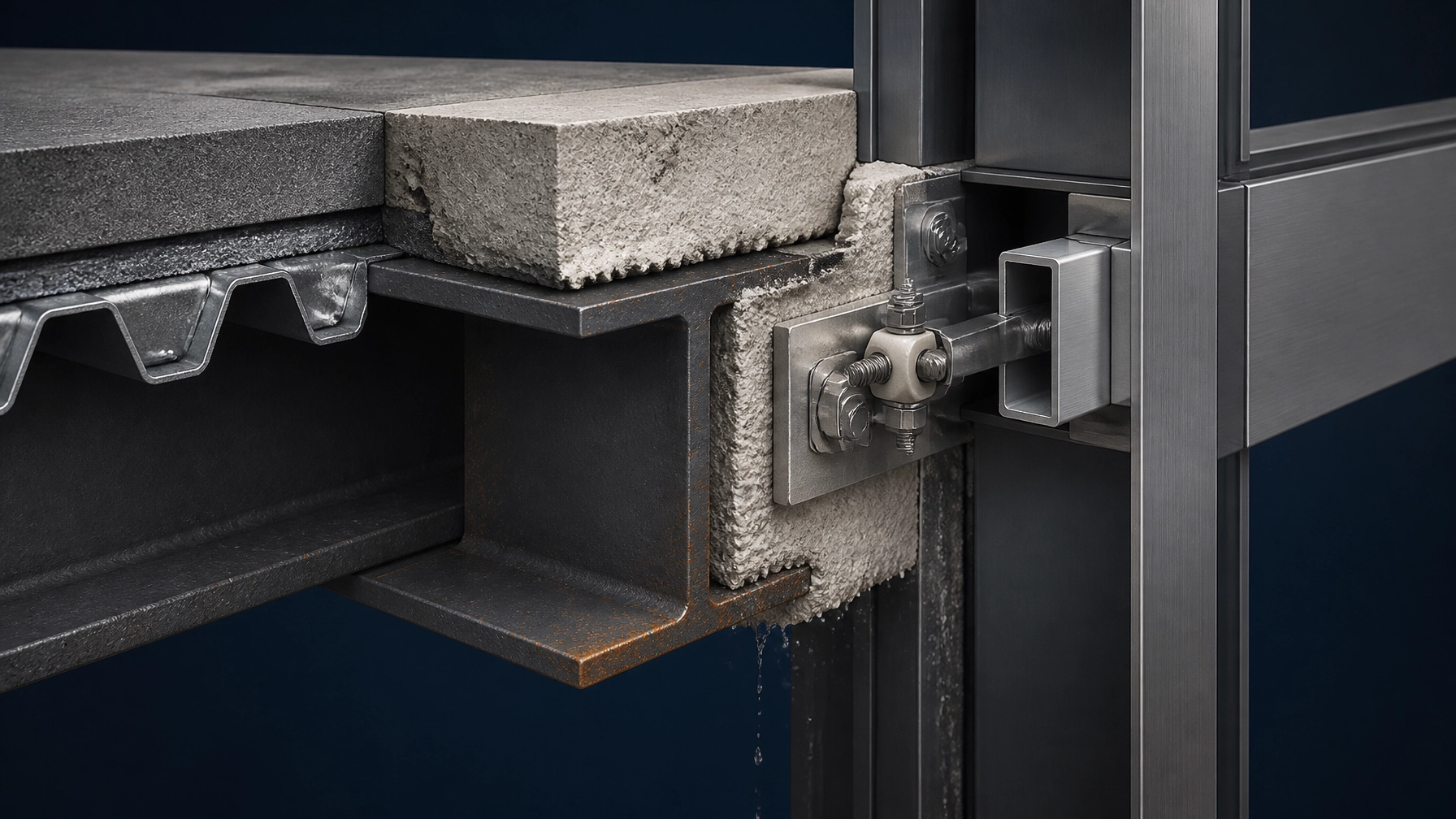
⚠️ The image in this post is used for illustration purposes only, designed to encourage thoughtful discussion. It is not intended to represent a prescriptive detail of any installation or construction method.
A manufacturer’s pull-out certificate can look definitive. It may show a high ultimate load, a controlled test arrangement and a product reference that appears directly applicable to the project.
That conclusion is often premature.
A static test certificate demonstrates how a particular anchor system performed under a defined test programme. It does not, by itself, prove how an installed fixing will perform in a cracked slab, near a concrete edge, within a congested reinforcement zone, at reduced embedment or after years of moisture and corrosion exposure.
This is the anchorage illusion: the mistaken belief that a laboratory number is automatically an in-service capacity.
For high-end residential construction in Dubai, Singapore, the UK and other technically demanding markets, this distinction is critical. The issue is not whether the manufacturer’s certificate is genuine. The issue is whether the certificate has been correctly translated into the physical conditions, load demands and quality controls present on the project.
Problem
The certificate is treated as proof instead of evidence
Anchor failures rarely begin with an obviously defective product. They begin with a gap between:
- The tested configuration.
- The specified design condition.
- The installed condition.
- The condition that exists when the fixing is actually loaded.
A contractor may present a static pull-out certificate to demonstrate compliance. An oversight body may focus on the presence of that document rather than the assumptions behind it. A project team may then accept the fixing without confirming effective embedment, concrete condition, edge distance, anchor spacing or installation records.
This creates friction between physical site execution and regulatory compliance.
The contractor may argue that the specified product was installed. The reviewer may argue that the installation does not match the tested or designed condition. Both positions can appear credible until the failure mechanism is reconstructed.
The same conflict appears when a project prioritises the quality of finish over structural evidence. A concealed fixing may be visually perfect, with a clean plate, accurate alignment and no visible surface damage. That finish does not prove that the anchor has developed its intended capacity.
A visually complete installation can still contain:
- A shallow or obstructed hole.
- Inadequate hole cleaning.
- Adhesive voids.
- Concrete cracking.
- Insufficient edge distance.
- Overlapping failure cones.
- Unrecorded changes to anchor type or location.
- Corrosion that has reduced the effective steel section.
Treat the certificate as one item in the evidence chain: not as the conclusion.
Forensic Analysis
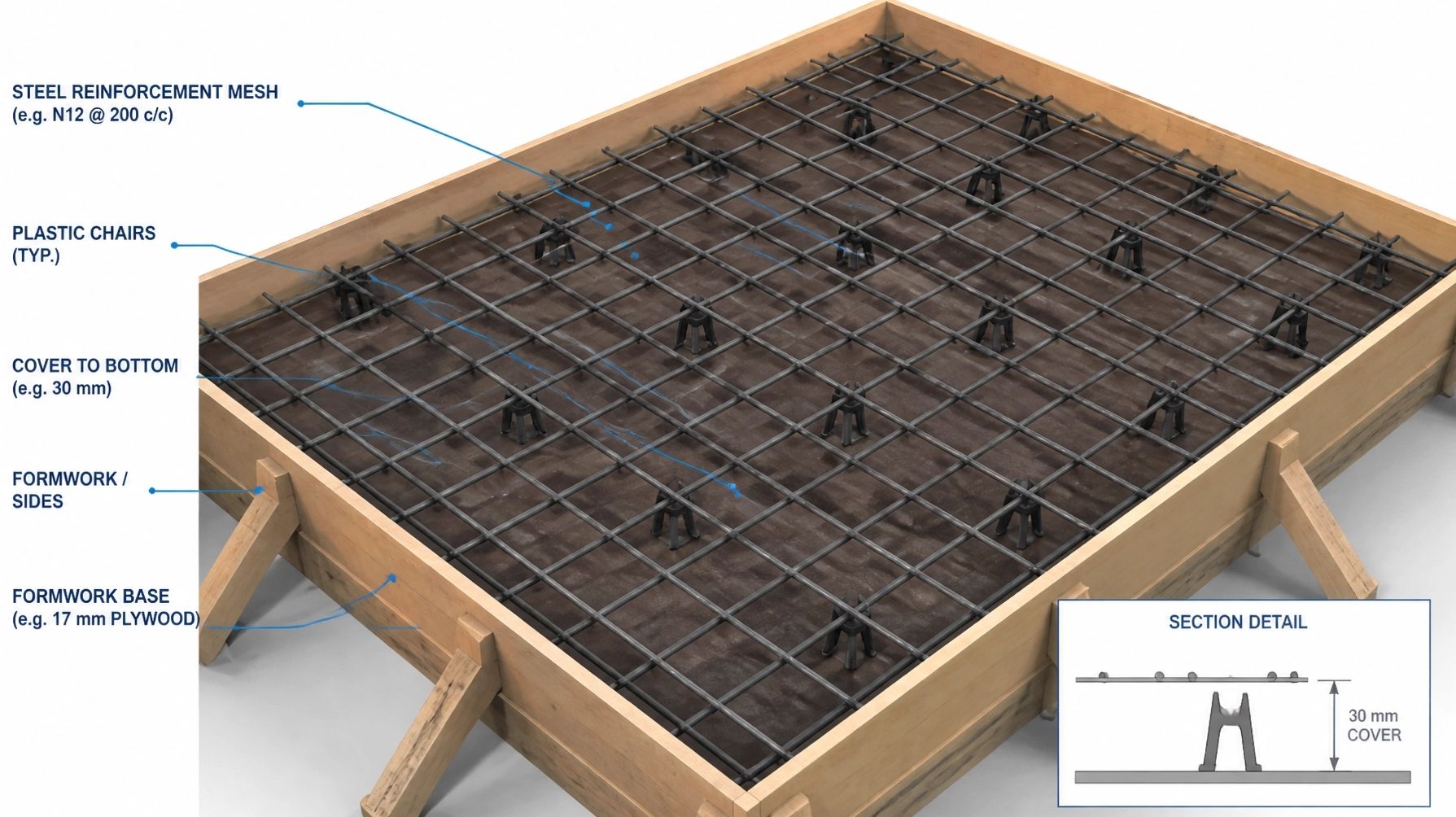
1. Concrete condition controls the failure mode
A controlled test specimen is normally more uniform than an existing residential structure. In-service concrete may contain construction joints, local voids, curing variability, microcracking, honeycombing, repair zones or damage caused by drilling.
The anchor does not fail in isolation. It interacts with the surrounding concrete.
Depending on the condition, the governing failure may involve:
- Steel fracture.
- Pull-out or bond failure.
- Concrete cone breakout.
- Splitting.
- Side-face blowout.
- Shear breakout.
- Pryout.
- Progressive crack propagation.
A certificate that reports a single ultimate tension value cannot communicate the full effect of these competing failure modes. Confirm whether the test applies to cracked and uncracked concrete, the concrete strength range, the member geometry and the failure mode used to establish the reported resistance.
2. Edge distance changes the available concrete volume
An isolated anchor placed in a large test block has room to develop a complete failure cone. A fixing installed close to an edge does not.
As edge distance reduces, the available concrete breakout surface becomes truncated. The failure mode can change from a deep concrete cone to a local edge failure or side-face blowout.
This is especially important in:
- Thin slabs.
- Beam edges.
- Balcony perimeters.
- Stair landings.
- Narrow transfer zones.
- Concrete members containing dense reinforcement.
Measure the actual distance from the anchor centreline to the nearest free edge. Do not rely on a drawing dimension that was never verified on site.
3. Spacing creates group effects
Two anchors are not necessarily twice as strong as one anchor.
When anchors are installed close together, their potential breakout cones may overlap. The concrete between them cannot always mobilise independently. The group may therefore develop a lower resistance per anchor than the isolated test result suggests.
Examine:
- Centre-to-centre spacing.
- Load direction.
- Base-plate stiffness.
- Anchor group geometry.
- Nearby edges and corners.
- The possibility of simultaneous loading.
A certificate for a single anchor cannot automatically validate a group arrangement.
4. Nominal embedment is not effective embedment
The specified hole depth is not the same as the effective embedment achieved.
Check for:
- Drilling short of the required depth.
- Debris remaining at the hole base.
- Incorrect drill diameter.
- Damage to the hole wall.
- Adhesive interruption or voiding.
- Misalignment of the anchor.
- Reinforcement obstruction causing relocation.
- Incomplete engagement of the mechanical mechanism.
For adhesive systems, installation temperature, resin age, mixing, curing and hole preparation can materially affect performance. For mechanical systems, hole geometry, installation sequence and applied torque can be equally important.
Document the installed condition before concealment. A photograph of the completed plate is not an installation record.
5. Static loading does not represent every service demand
Many certificates are built around monotonic static testing. Residential fixings may experience a different loading history:
- Repeated wind-induced movement.
- Vibration from plant or equipment.
- Impact.
- Sustained tension.
- Load reversal.
- Thermal movement.
- Seismic demand where relevant.
Repeated loading may alter stiffness, displacement and crack development before ultimate failure. Sustained loading may also expose creep or long-term bond behaviour in adhesive systems.
Ask whether the qualification data address the actual load regime. Do not use a static pull-out number as a substitute for a complete design assessment.
6. Corrosion is a service-life issue, not a certificate issue
A new anchor in a clean test specimen is not equivalent to an anchor exposed to moisture, chlorides, carbonation or chemical contamination over its service life.
Corrosion can:
- Reduce steel cross-sectional area.
- Increase cracking around the fixing.
- Degrade the interface between anchor and concrete.
- Expand the surrounding concrete.
- Reduce ductility.
- Make later inspection more difficult.
Specify the environmental exposure, material grade, protective system and inspection interval. Consider the complete durability environment rather than selecting a product solely from its initial static capacity.
7. Audit engagement can produce false assurance
The audit model matters.
A design-stage review can identify inappropriate anchor selection, but it cannot confirm installation quality.
A construction-stage inspection can observe work in progress, but may miss earlier concealed installations.
A completion audit can verify documents and visible finishes, but may be unable to establish hole cleaning, embedment or curing conditions.
A forensic investigation after failure can identify the mechanism, but usually after cost, delay and dispute have already escalated.
Use staged verification. Define who is responsible for reviewing design assumptions, witnessing installation, checking records and approving deviations.
Position a construction consultant or residential building consultant between the design intent and site reality. That bridge is particularly valuable where the contractor, designer, client and oversight body are operating from different evidence standards.
Standard Reference
Use international standards to separate qualification evidence from design verification.
ASTM E488/E488M
ASTM E488/E488M establishes test methods for determining the strength of anchors in concrete elements under controlled tensile and shear loading.
Use it to understand how the test was conducted, what was measured and which failure mode occurred. Do not treat the resulting ultimate load as an unrestricted project capacity.
ACI CODE-355.2-24
ACI CODE-355.2 addresses qualification requirements for post-installed mechanical anchors in concrete, including performance under defined service and loading conditions.
Qualification demonstrates that an anchor system has been assessed against a prescribed test programme. It does not remove the need to verify the installed geometry and concrete condition.
ACI CODE-355.4-24
ACI CODE-355.4-24 addresses qualification requirements for post-installed adhesive anchors in concrete. Its scope includes conditions such as cracked and uncracked concrete, sustained loading, temperature variation and aggressive environments.
Use the qualification data as an input to design and specification. Confirm that the selected system, substrate, installation procedure and environmental exposure correspond with the project.
ACI 318
Apply the anchorage provisions of ACI 318 to assess the design condition, including concrete cracking, effective embedment, edge distance, spacing, member thickness, load combinations and relevant failure modes.
The sequence is decisive:
- Qualify the anchor system.
- Design the anchorage for the actual geometry and loads.
- Control installation.
- Verify the installed condition.
- Retain evidence that supports the conclusion.
Do not reverse that sequence by presenting a product certificate after installation and calling the matter closed.
Actionable Fix
Build an evidence chain before the fixing is concealed
Specify a project-specific anchorage verification plan. Include:
- Anchor type, diameter, material and approved configuration.
- Design actions, including tension, shear, combined loading and sustained effects.
- Concrete strength and condition assumptions.
- Cracked or uncracked concrete classification.
- Effective embedment depth.
- Edge distance and anchor spacing.
- Member thickness and reinforcement constraints.
- Environmental exposure and durability requirements.
- Hole diameter, depth and cleaning method.
- Torque, curing and installation temperature requirements.
- Installer competency and inspection responsibility.
- Non-conformance and deviation procedures.
- Photographic and dimensional records.
- Proof testing where the engineer determines it is appropriate.
Resolve deviations before they become disputes
If reinforcement blocks the specified location, stop and obtain a documented engineering response. Do not move the anchor informally.
If the concrete is cracked, damaged or weaker than assumed, reassess the design condition. Do not rely on the original certificate.
If the fixing has already been concealed, consider targeted investigation, non-destructive examination, selective exposure or controlled proof testing as appropriate to the risk.
A building consultancy services provider should coordinate this evidence across the project team. That is the practical role of construction compliance: convert technical requirements into verifiable site actions.
For clients, this is part of residential project management and construction risk management services. For builders, it reduces rework and protects the integrity of the installation record. For lawyers and dispute professionals, it clarifies whether the issue is product qualification, design application, workmanship or maintenance.
Shoal Bay Projects provides construction advisory support for custom builds, major renovations and complex residential works. Whether the brief is framed as a home renovation consultant, custom home build consultant Australia, Client Side Project Management, building dispute consultant or construction advisory australia requirement, the forensic principle remains the same:
Prove the installed condition: not merely the existence of a certificate.
Final determination
A test certificate can establish that an anchor system achieved a result under defined conditions. It cannot prove that the same capacity exists in every slab, edge condition, anchor group, exposure environment or installation.
Check the assumptions. Inspect the geometry. Record the workmanship. Reconcile the evidence before the fixing becomes inaccessible.
That is how a construction consultant prevents a technical discrepancy from becoming a legal or financial disaster.
Continue the discussion through The Hive YouTube channel.
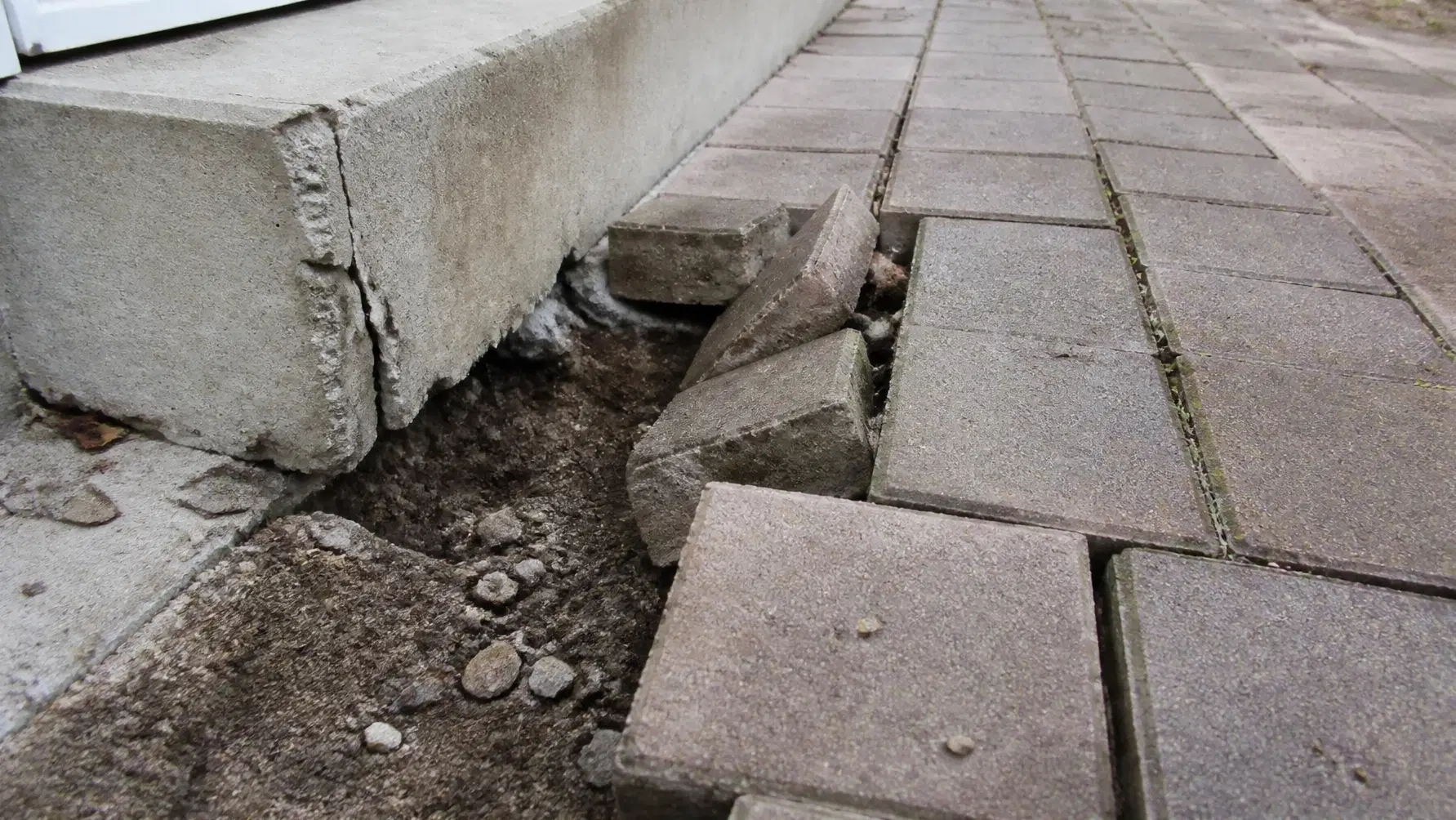
⚠️ The image in this post is used for illustration purposes only, designed to encourage thoughtful discussion. It is not intended to represent a prescriptive detail of any installation or construction method.
Claim Your Foundation Membership
The Vault. The App. The Community. We're opening the doors to a select group of Foundation Members : free, for a limited time. Foundation Membership includes full access to The Vault (our forensic intelligence archive) and early access to the Hive app.
Once the charter window closes, this tier is gone permanently. Foundation Members retain access for life. This is not a trial : it's a permanent invitation to the founding cohort.
Claim Your Foundation Membership →
Circle-Ready Pack
The certificate is not the installation. In this week’s forensic construction advisory review, we examine why static pull-out data can create false confidence when the anchor is installed in real concrete with real geometry, exposure and workmanship variability.
The Anchorage Illusion: Why Test Certificates Cannot Prove In-Service Fixing Performance in High-End Residential Construction
Read the full article on Shoal Bay Projects →
Key forensic takeaways
- A manufacturer’s static pull-out certificate demonstrates tested performance under defined conditions: not automatic in-service capacity.
- Cracking, edge distance, spacing, effective embedment, corrosion and installation quality can change both capacity and failure mode.
- Use ASTM E488/E488M, ACI CODE-355.2, ACI CODE-355.4 and ACI 318 as part of a complete qualification, design and verification process.
Image assets
⚠️ The image in this post is used for illustration purposes only, designed to encourage thoughtful discussion. It is not intended to represent a prescriptive detail of any installation or construction method.
Continue the discussion on The Hive YouTube channel.
Claim Your Foundation Membership
The Vault. The App. The Community. We're opening the doors to a select group of Foundation Members : free, for a limited time. Foundation Membership includes full access to The Vault (our forensic intelligence archive) and early access to the Hive app.
Once the charter window closes, this tier is gone permanently. Foundation Members retain access for life. This is not a trial ; it's a permanent invitation to the founding cohort.
Claim Your Foundation Membership →