Construction
Jul 20, 2026
Paint Failure Secrets: 7 Mistakes That Void Your 3-Year Warranty (AS/NZS 2311)
Paint Failure Secrets: 7 Mistakes That Void Your 3-Year Warranty (AS/NZS 2311)

Paint Failure Secrets: 7 Mistakes That Void Your 3-Year Warranty (AS/NZS 2311)
In high-end residential construction, the aesthetic finish of a property is often the primary metric by which a client judges quality. However, from a forensic compliance perspective, the paint film is merely the final layer of a complex structural assembly. When paint fails prematurely: blistering, peeling, or chalking within the first 36 months: the ensuing dispute usually centers on the "3-year warranty."
It is a common industry misconception that AS/NZS 2311:2017 (Guide to the painting of buildings) provides an explicit three-year product warranty. In reality, this timeframe is derived from the Australian National Guide to Standards and Tolerances, which establishes a 36-month minimum durability expectation for interior and exterior acrylic finishes.
When failures occur, paint manufacturers almost universally deny claims by citing "improper substrate preparation." At Shoal Bay Projects, our forensic analysis often reveals that the failure wasn't a product defect, but a direct violation of the mandatory preparation protocols outlined in AS/NZS 2311. If these standards are not met, the painter’s workmanship warranty: and the manufacturer’s product guarantee: are effectively voided.
Below are the seven forensic "death sentences" for paint warranties in the Australian residential sector.
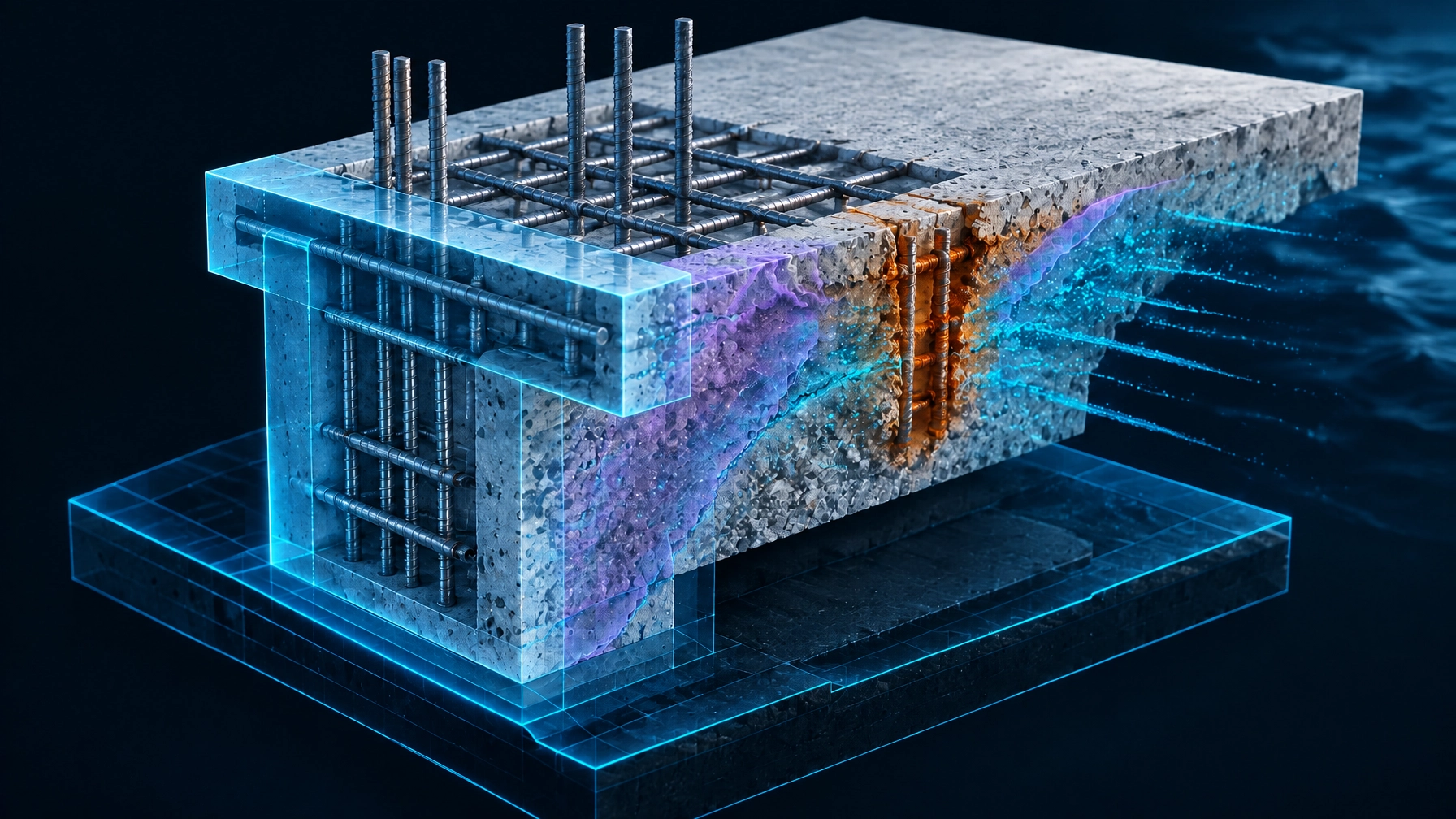
One of the most frequent causes of catastrophic adhesion failure in new builds is the premature application of coatings to green concrete or render. AS/NZS 2311 is explicit regarding the drying cycles required for cementitious surfaces.
For cement renders, the standard requires a typical minimum drying period of approximately four weeks for water-borne (latex) paints and up to six weeks for solvent-borne, alkali-resistant paints. Painting before these cycles are complete traps moisture and unreacted alkaline salts. This leads to saponification (the breakdown of the paint resin) and efflorescence, which physically pushes the paint film off the wall. If a site diary does not record these curing windows, the warranty is technically indefensible.
Clause 3.10.2 of AS/NZS 2311 mandates that moisture levels must be checked and confirmed within suitable limits before any coating is applied. In the Greater Sydney Area, high humidity and coastal conditions frequently push timber and masonry moisture levels beyond the acceptable 10–15% threshold.
Applying paint over a substrate with high moisture content: common in "fast-tracked" luxury builds: creates a vapor barrier. As the substrate eventually dries, water vapor exerts hydrostatic pressure on the paint film, causing blistering. Forensic inspectors look for moisture meter records. Without documented evidence that the substrate was tested and compliant at the time of application, any subsequent failure is classified as a workmanship defect rather than a product failure.

New masonry, render, and concrete are naturally alkaline. If the pH level of the surface exceeds 10, most standard acrylic paints will suffer from "alkali burn," leading to rapid discoloration and film degradation.
Section 3.2 of the Standard highlights the necessity of ensuring the surface is chemically stable. Builders often bypass the step of applying an alkali-resistant sealer or allowing sufficient carbonation time for the pH levels to drop. From a forensic standpoint, a simple pH strip test post-failure can determine if the substrate was chemically "hot" at the time of painting. If it was, the manufacturer is contractually shielded from any warranty obligations.
For projects within five kilometers of the coastline, salt spray (chlorides) is a primary contaminant. AS/NZS 2311 requires that surfaces contaminated by marine spray or industrial pollution must be thoroughly cleaned: typically by high-pressure water cleaning: immediately prior to painting.
If salt is trapped beneath the paint film, it acts as a hygroscopic agent, drawing moisture through the semi-permeable paint layer. This creates osmotic blistering. In forensic audits, we often find that while the site was cleaned at the "lock-up" stage, it was not re-cleaned immediately before the final coats were applied weeks later. This lapse in the sequence of works voids the durability expectations of even the highest-grade marine coatings.
High-end specifications often call for specific high-build primers or vapor-permeable sealers designed to work as a "system." To save on margin, subcontractors occasionally substitute these for "all-in-one" products or cheaper alternatives.
AS/NZS 2311 emphasizes the importance of the primer-to-substrate bond. If a failure occurs and a laboratory analysis reveals that the applied primer does not match the manufacturer’s specified system for that substrate, the warranty is void. The primer is the "anchor" of the entire coating system; if the anchor fails due to non-compliant substitution, the entire liability shifts back to the builder and painter.

In major renovations of older residential properties, painting over existing coatings is a high-risk activity. The Standard requires that previous coatings be tested for adhesion and "soundness."
If the new paint is applied over an old coating that is chalking, flaking, or has lost its internal cohesion, the tension of the new paint drying will often "pull" the old paint off the substrate. This is not a failure of the new product, but a failure to identify an unsound substrate. Documenting a "cross-hatch" adhesion test (as per AS 1580.408.4) prior to overcoating is the only forensic way to protect a warranty claim in these scenarios.
The most advanced paint system in the world will fail if the underlying design allows for rising damp or lateral water penetration. AS/NZS 2311 notes that direct contact of the painted substrate with soil or ponding water must be avoided.
If a painter applies a finish to a boundary wall that lacks a compliant damp-proof course (DPC) or has failed waterproofing on the "negative" side, the paint will inevitably peel. Manufacturers specifically exclude failures caused by "hydrostatic pressure" or "structural movement." At Shoal Bay Projects, we often identify these "boundary risks" during the advisory phase, preventing builders from investing in expensive finishes that are destined to fail due to pre-existing structural non-compliance.

The gap between a "standard" paint job and a "compliant" paint system is often the difference between a 10-year lifespan and a 2-year disaster. For builders and developers, the risk is not just the cost of rectification, but the reputational damage and the legal exposure associated with Australian Consumer Law and the NCC.
Shoal Bay Projects provides the forensic oversight necessary to ensure that "Quality of Finish" is backed by "Compliance of Process." We translate the technical rigors of AS/NZS 2311 into actionable site protocols, ensuring your warranties remain intact and your projects remain defect-free.
Explore the intersection of construction intelligence and project excellence. Welcome to the Hive: our community hub for industry leaders seeking to elevate their compliance standards and mitigate project risk.