Construction
Jul 2, 2026
Non-Delegable Duties: The Lead Contractor's Legal and Professional Weight
Non-Delegable Duties: The Lead Contractor's Legal and Professional Weight

Non-Delegable Duties: The Lead Contractor's Legal and Professional Weight
In the high-stakes world of Australian residential construction, there’s a persistent myth that once you sign a subcontract, you’ve successfully offloaded the risk. You think, "I’ve hired a 'competent' plumber; if the pipes burst, that’s on him."
Wrong.
The professional weight of the Lead Contractor is heavy, and it’s bolted to your head. In legal terms, we call this the Non-Delegable Duty. It means that while you can delegate the performance of a task, you can never delegate the responsibility for its outcome. Whether you’re building a boutique custom home or contributing to Australia’s national 1.2M homes target, the buck doesn't just stop with you: it lives with you.
At Shoal Bay Projects, we see the fallout when builders treat subcontracting as a "set and forget" exercise. This post is a forensic look at why your legal and professional weight cannot be shifted, and how systemic oversight: not micro-management: is your only true shield.
Australian law is remarkably clear on this: if you have special control over a site and others are vulnerable to your decisions, you owe a non-delegable duty of care.
The High Court has historically reinforced this in cases like Kondis v State Transport Authority and Burnie Port Authority v General Jones. The takeaway for builders is simple: engaging an independent contractor does not absolve you of the duty to ensure reasonable care is taken.
Under the national Work Health and Safety (WHS) framework, your primary duty as a Person Conducting a Business or Undertaking (PCBU) is non-transferable. You can't contract out of it. If a staircase isn't built to AS 1684 (Residential timber-framed construction) and someone gets hurt, or if the waterproofing fails to meet AS 3740 (Waterproofing of domestic wet areas), saying "the subbie did it" won't save your registration or your balance sheet.

There is a sharp distinction between being a supervisor and being a nuisance. Most Lead Contractors fail because they oscillate between the two, rather than landing on Systemic Oversight.
Industry Bulletin 153 (Management and Supervision) is quite explicit here. It reminds builders that you must have arrangements in place to ensure building services are managed in a "proficient manner." Proficient doesn't mean you’re on the tools; it means you’ve built a system that ensures compliance with the National Construction Code (NCC) and the approved plans.
Check your current workflow. Are you recording supervision activities? Are you using comprehensive checklists for critical work processes? If you aren't documenting the "how" of your compliance, the law assumes the "how" didn't happen.
Governance sounds like a corporate buzzword until you’re sitting in a dispute tribunal. In construction, governance is the forensic trail of your professional diligence.
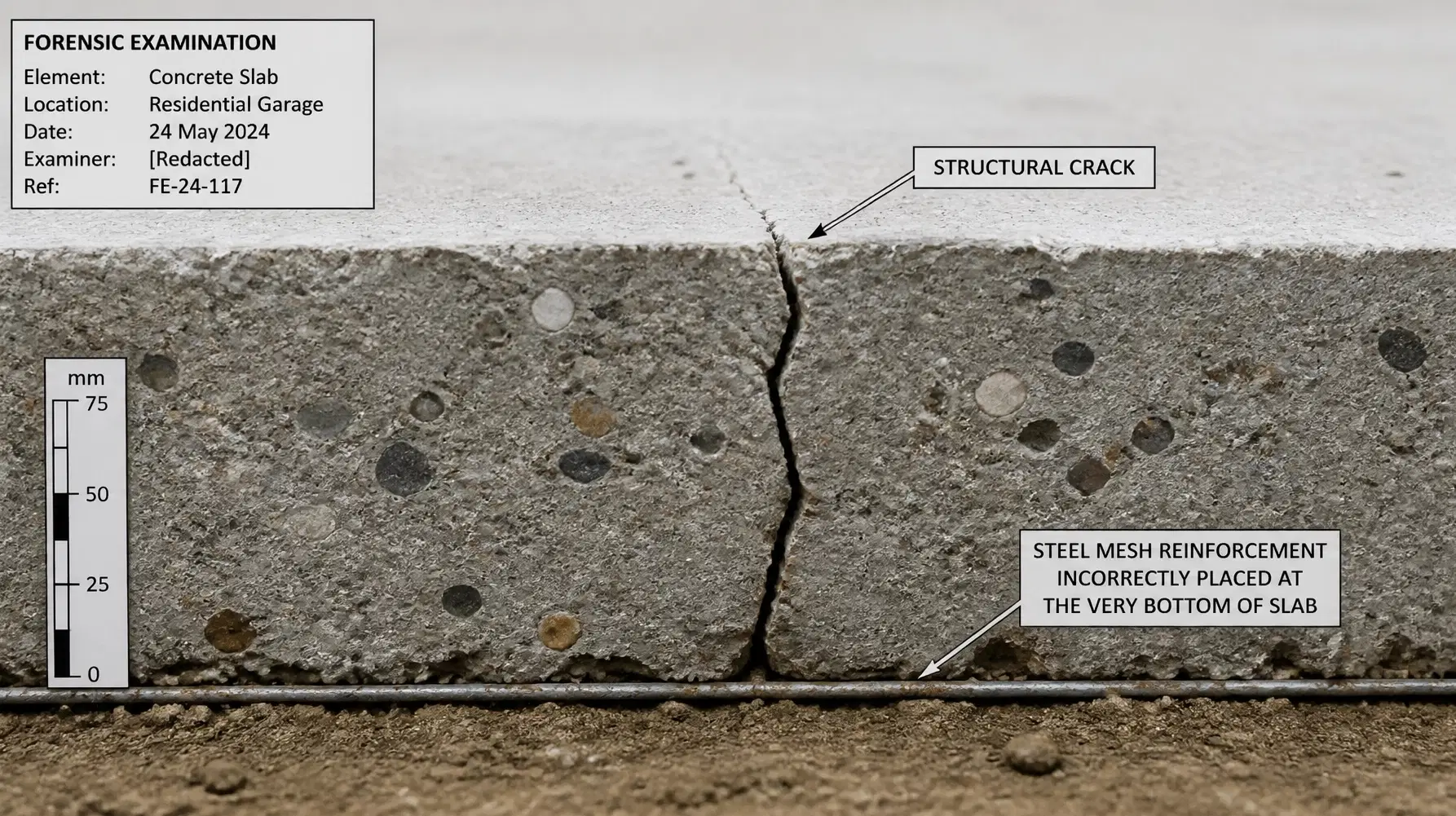
If a concrete slab core sample reveals that the steel mesh was incorrectly positioned at the bottom of the slab (a classic failure of AS 2870), the first question won't be "Why did the subbie do that?" It will be "Where is the Lead Contractor’s inspection record from the pre-pour?"
Effective governance includes:
When you treat governance as a tool rather than a chore, you move from being a "firefighter" to being an "architect of outcomes."
This is where we come in. Shoal Bay Projects doesn't just "check work": we provide the Advisory Control that builders need to manage their non-delegable duties.
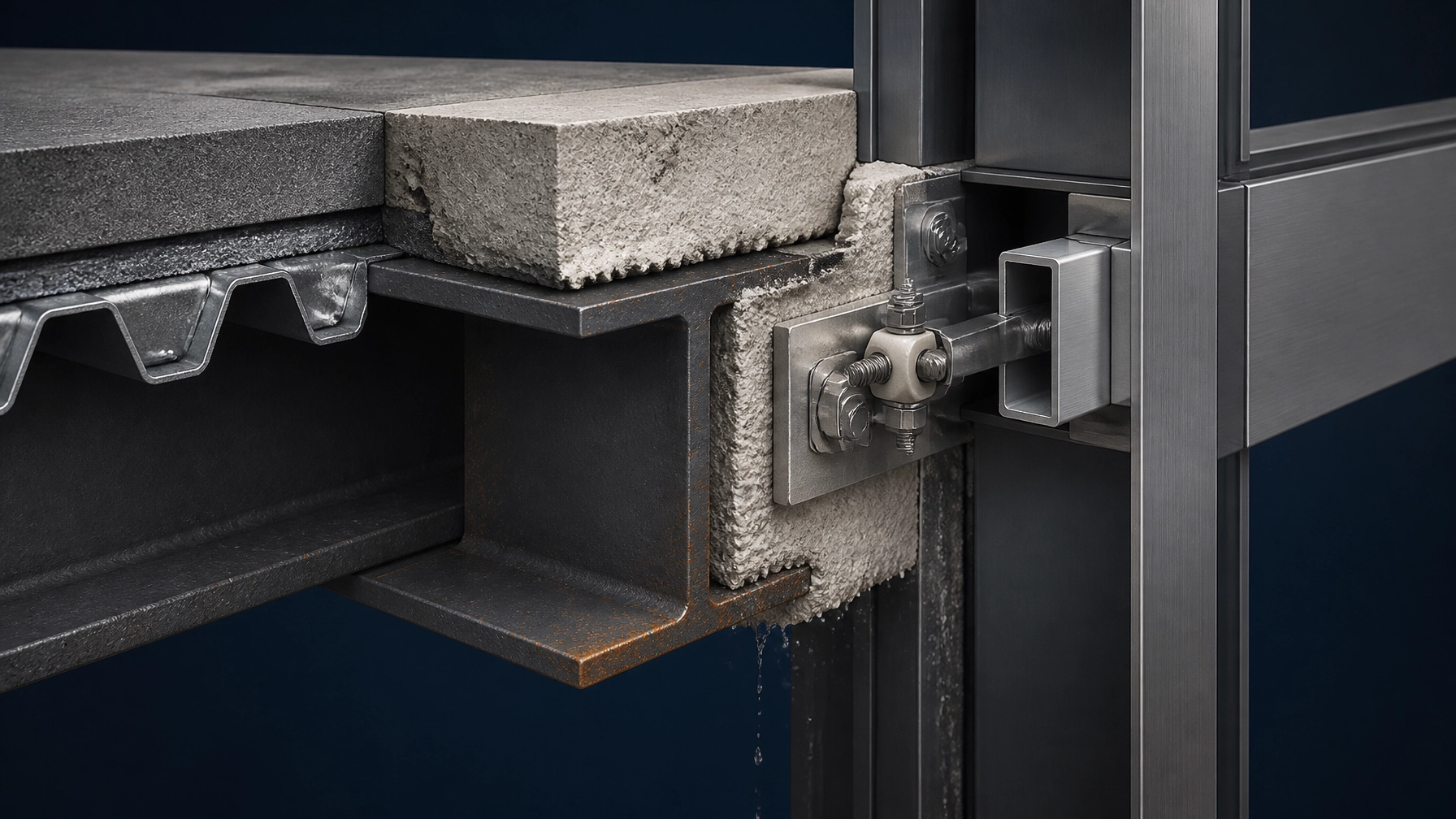
We operate at the strategic level. We look at your project planning, your compliance interpretation, and your risk management frameworks. We act as the forensic set of eyes that identifies the diagonal crack in the external render before it becomes a structural nightmare.
By partnering with an external consultancy, you demonstrate a higher level of professional oversight. You aren't just saying you care about quality; you’re investing in a system that guarantees it. We help you align your projects with contractual and performance requirements, protecting both your reputational integrity and your financial performance.

The construction industry is evolving. With increasing scrutiny on building quality and a national push for higher density and faster delivery, the Lead Contractor who tries to "wing it" is a liability.
Specify your expectations. Document your inspections. Enforce your standards.
Remember, the goal isn't just to finish the build; it’s to finish the build with your license intact and your professional weight properly supported. You hold the legal responsibility: now it’s time to hold the systemic control.
Building alone is a recipe for burnout and breach. If you're looking for a community that values technical accuracy, forensic detail, and shared advisory expertise, you belong in The Hive.
It’s our community hub where builders and owners get the real-world advice needed to navigate the complexities of modern construction. No fluff, just the structured, compliance-focused support you need to protect your projects.
Welcome to the Hive – Watch the Invitation
Explore the Hive, dive into the Vault, and start managing your non-delegable duties with the authority they deserve.