Construction
Jul 7, 2026
Lead-Free Plumbing 101: A Beginner's Guide to Mastering the May 2026 Mandate
Lead-Free Plumbing 101: A Beginner's Guide to Mastering the May 2026 Mandate

Lead-Free Plumbing 101: A Beginner's Guide to Mastering the May 2026 Mandate
For construction directors and senior engineers, the transition to "lead-free" plumbing is not merely a material change; it is a systemic regulatory shift that necessitates a forensic re-evaluation of procurement, site verification, and compliance management. While the industry has operated within a generous transition period, the impending mandatory deadlines: specifically the 1 May 2026 cliff in Victoria and the national certification sunset: demand immediate action.
This guide provides a clinical breakdown of the National Construction Code (NCC) 2022 requirements, the technical thresholds of "Lead Free" materials, and the forensic risks associated with non-compliance in high-end residential and commercial projects.
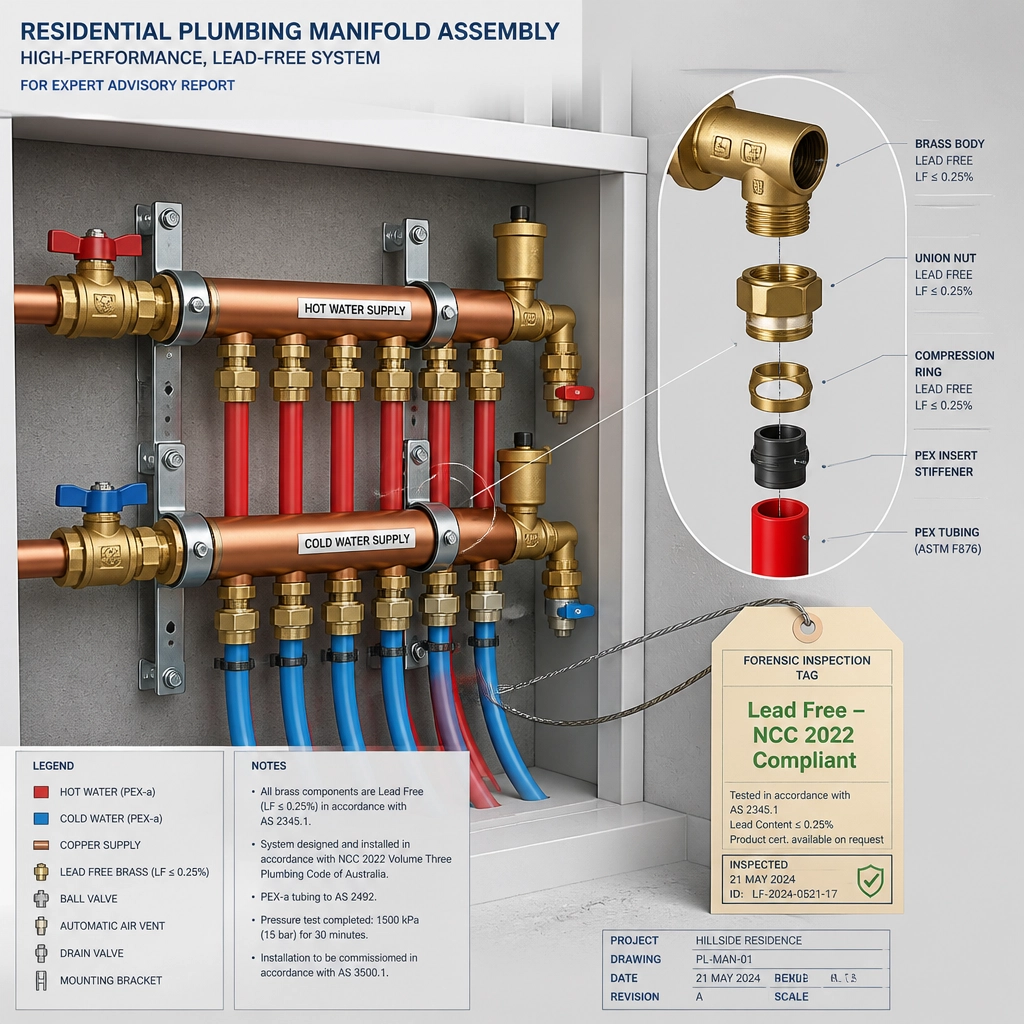
The Plumbing Code of Australia (PCA), contained within NCC 2022 Volume Three, has introduced stringent limits on the lead content of plumbing products in contact with drinking water. Under Clause A5G4, any product used in a system conveying drinking water must meet the defined "Lead Free" threshold.
From a forensic perspective, "Lead Free" does not equate to 0% lead. The NCC defines it as a weighted average lead content of not more than 0.25%. This technical threshold was established to align with international standards while acknowledging the metallurgical realities of copper alloy manufacturing.
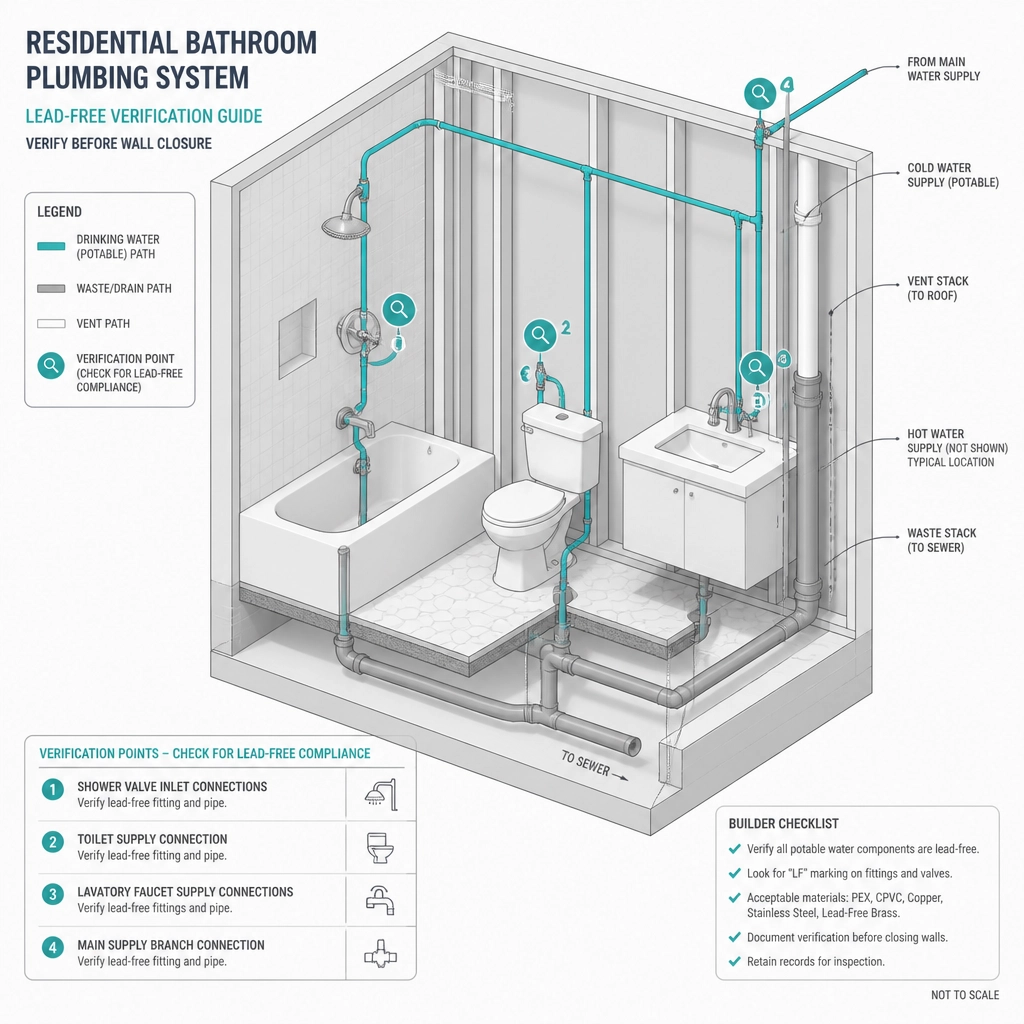
The mandate specifically targets copper alloys (primarily brass) used in:
The transition period has been a source of significant friction between builders and regulators. While the national mandatory installation date has been extended by the ABCB to 1 May 2028 in many jurisdictions, the 1 May 2026 date remains the critical pivot point for two reasons:
For projects with long lead times or multi-year build cycles, procurement decisions made today are already subject to the 2026 certification status.
The primary installation standard, AS/NZS 3500, works in tandem with the PCA. While AS/NZS 3500 dictates how the system is installed, the NCC and the WaterMark Scheme dictate what can be installed.
To verify compliance during a forensic audit or a site inspection, professionals must look for:
A recurring conflict in high-end residential construction occurs between the 'quality of finish' expected by the client and the 'regulatory compliance' required by the certifier.
In many bespoke builds, architects or clients may specify exotic, imported, or boutique tapware. If these fixtures lack the Australian WaterMark "Lead Free" certification, they cannot be installed: regardless of their aesthetic appeal or international pedigree. The forensic risk here is high: installing non-compliant fixtures can void building insurance, prevent the issuance of an Occupation Certificate (OC), and lead to costly retroactive replacements.
The failure to manage the lead-free transition introduces several layers of risk that construction directors must mitigate:
The cost of replacing a non-compliant valve or tap at the fit-out stage is significant. However, the cost of replacing internal valves or manifolds after wall closure and tiling is catastrophic. A forensic analysis of recent dispute cases shows that material non-compliance is one of the fastest ways to trigger a "breach of statutory warranty" claim under various state-based building acts.
Most professional indemnity and contract works insurance policies require strict adherence to the NCC. Installing non-compliant, non-WaterMarked plumbing components provides insurers with a clear pathway to deny claims related to water damage or health-related litigation.
Plumbing certifiers and licensed practitioners face disciplinary action, including fines and license suspension, if they sign off on installations that do not meet the NCC 2022 lead-free mandate. As a senior professional, your oversight of the supply chain is your primary defense.

To master the May 2026 mandate, senior construction personnel should adopt an imperative-driven management approach:
At Shoal Bay Projects, we operate as the bridge between site execution and regulatory compliance. The lead-free mandate is a prime example of where a "close enough" approach fails the forensic test. Our advisory services focus on identifying these friction points before they escalate into legal or financial liabilities.
Navigating the complexities of the NCC 2022 requires more than just a passing knowledge of the code; it requires a clinical understanding of how material science, regulatory law, and site practice intersect.
Staying ahead of mandates like the lead-free transition requires continuous intelligence and peer-to-peer insight. We invite you to explore these topics deeper within our community.
Join the discussion and gain access to the strategic consultation needed to ensure your projects are aligned with the latest national performance requirements.
⚠️ The image in this post is used for illustration purposes only, designed to encourage thoughtful discussion. It is not intended to represent a prescriptive detail of any installation or construction method.