Construction
Jul 8, 2026
How Concrete Fails: Forensic Investigation Tools and Techniques
How Concrete Fails: Forensic Investigation Tools and Techniques

How Concrete Fails: Forensic Investigation Tools and Techniques
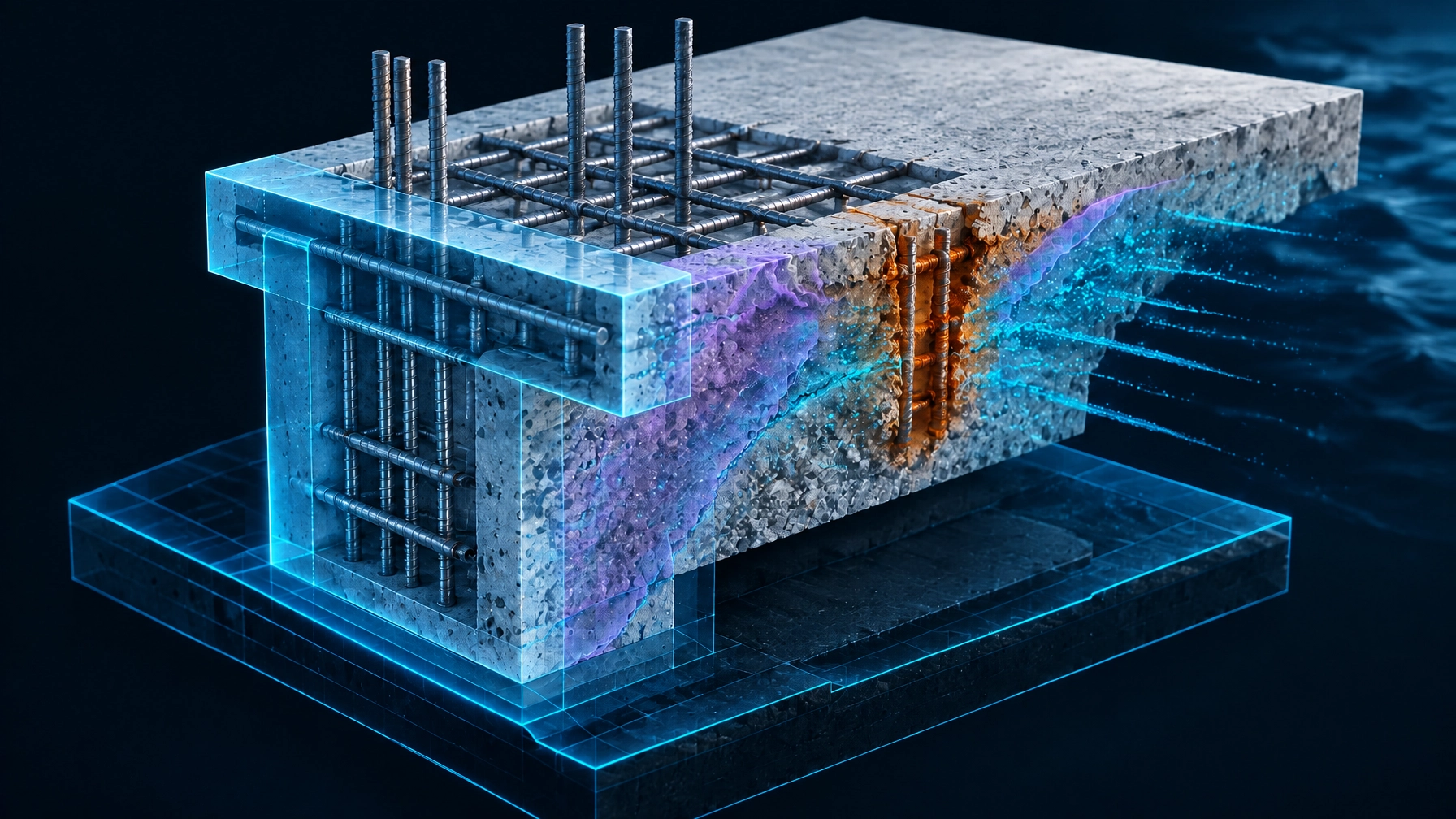
In the aggressive coastal environments of Perth and Western Australia, concrete is not a "set and forget" material. The combination of high salinity, fluctuating humidity, and UV exposure creates a high-risk profile for reinforcement corrosion, commonly termed "concrete cancer." For builders and property managers, identifying failure is not about spotting a crack; it is about quantifying the invisible decay occurring behind the substrate.
To move beyond the visual limitations of AS 4349.1, forensic investigations must employ a suite of non-destructive testing (NDT) and intrusive sampling. These tools allow us to benchmark existing structures against the durability requirements of AS 3600, providing the data necessary to scope remedial works before structural integrity is compromised.
The primary protection for steel reinforcement is the alkaline environment provided by the concrete cover. In coastal zones, AS 3600 mandates significant cover depths to delay the onset of chloride-induced corrosion.
Perform cover meter surveys to map reinforcement layout and measure actual cover depths. This NDT method uses electromagnetic induction to locate bars without damaging the surface. When cover is found to be below the design specification, the structure is effectively "pre-disposed" to early failure. Document these findings to identify zones of high vulnerability where carbonation or chloride ingress will reach the steel prematurely.
Visual inspections only reveal corrosion after the internal pressure of expanding rust has already fractured the concrete. Utilize Half-Cell Potential Mapping to identify active corrosion before spalling occurs.
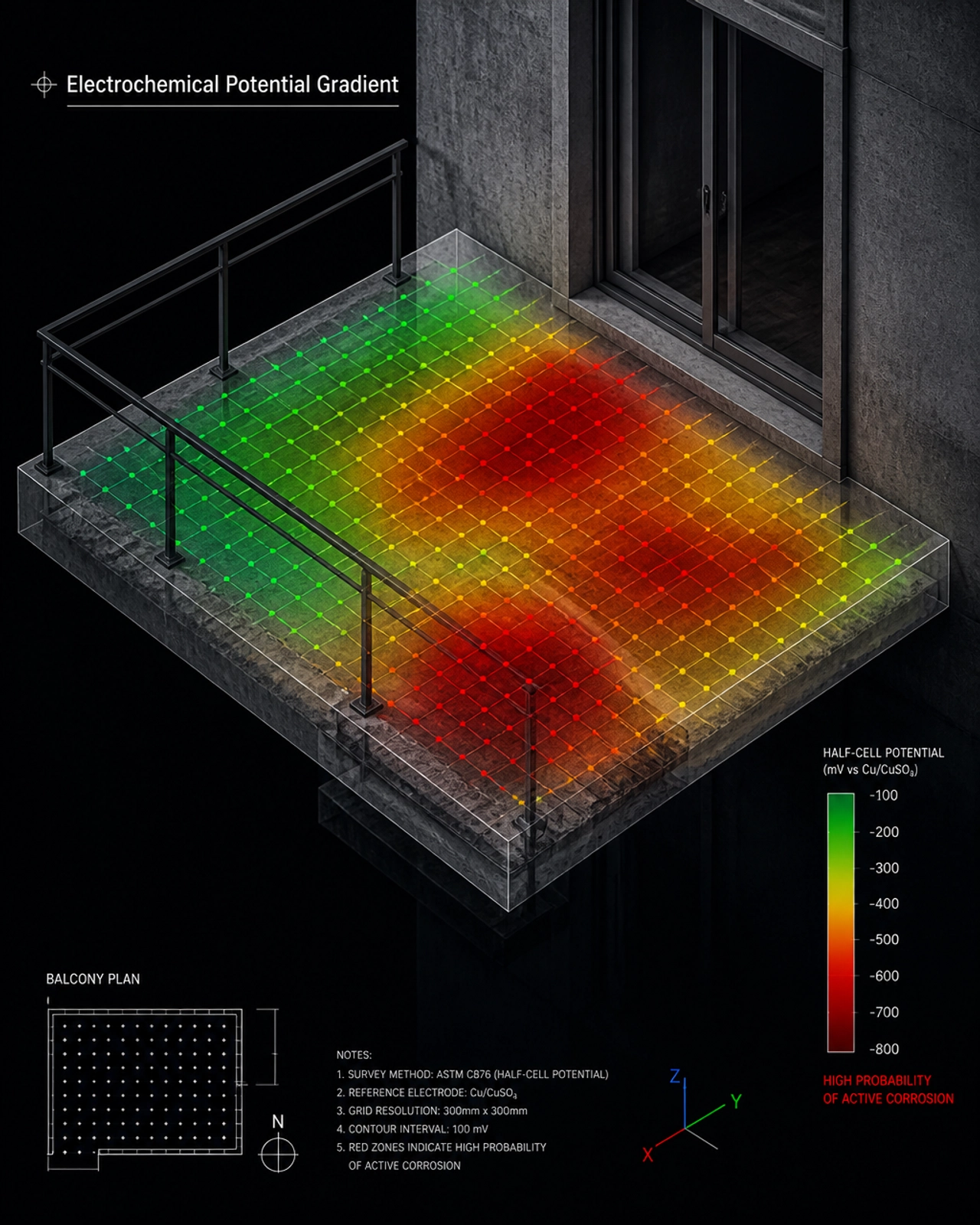
By measuring the electrochemical potential between the reinforcement and a reference electrode on the concrete surface, we can generate a "probability map." This forensic tool identifies "hotspots" where the probability of active corrosion exceeds 90%. For a property manager, this data is critical; it distinguishes between a cosmetic surface blemish and a systemic electrochemical failure.
Concrete failure in WA is often driven by two distinct chemical processes: carbonation and chloride ingress.
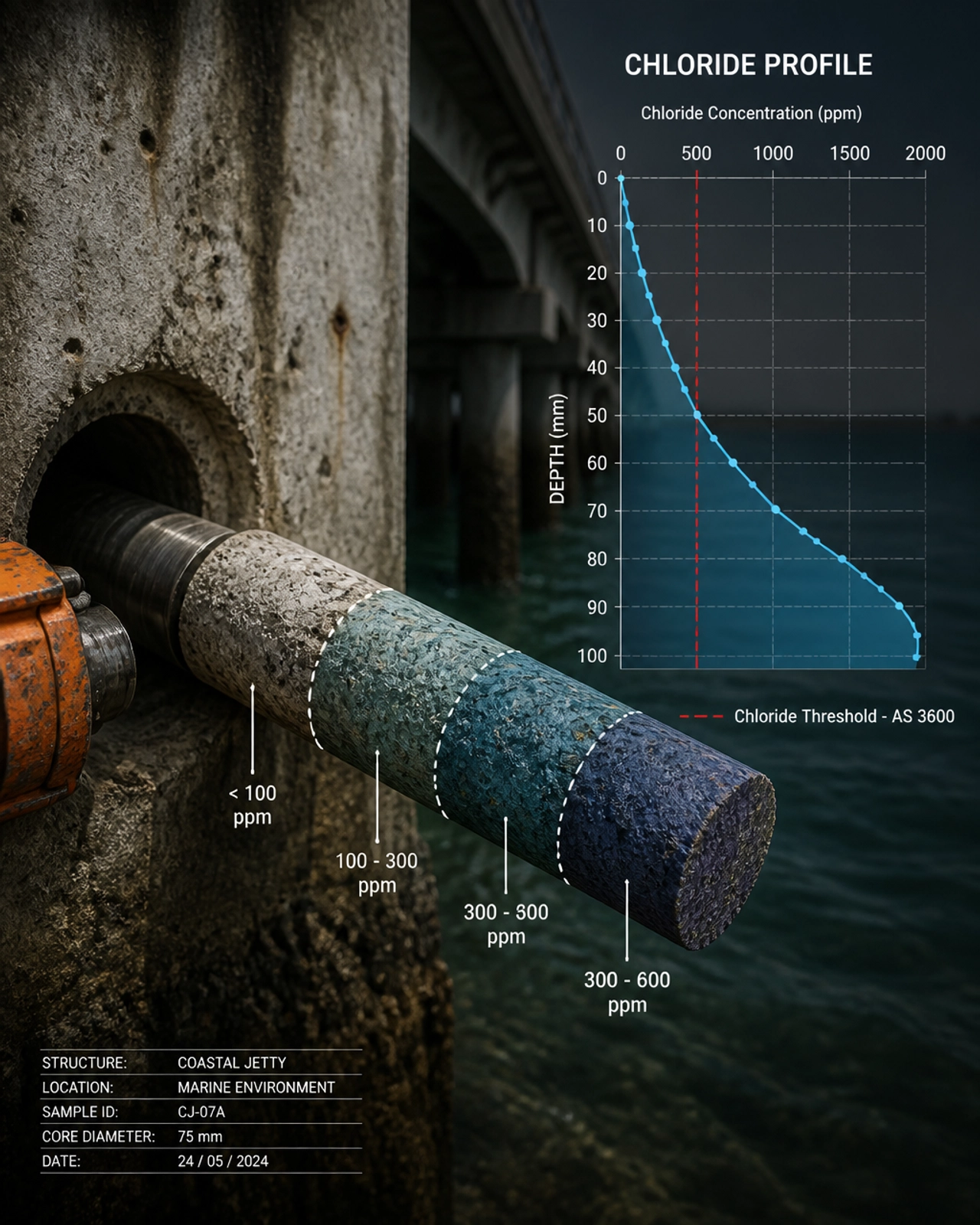
Analyze these samples in a lab to determine if chloride levels have exceeded the "threshold" (typically 0.6% by weight of cement) at the reinforcement depth. This allows for a forensic calculation of the structure's remaining service life.
While NDT provides breadth, core sampling provides depth. Extract 50mm to 100mm diameter cores to obtain a vertical cross-section of the concrete's history.
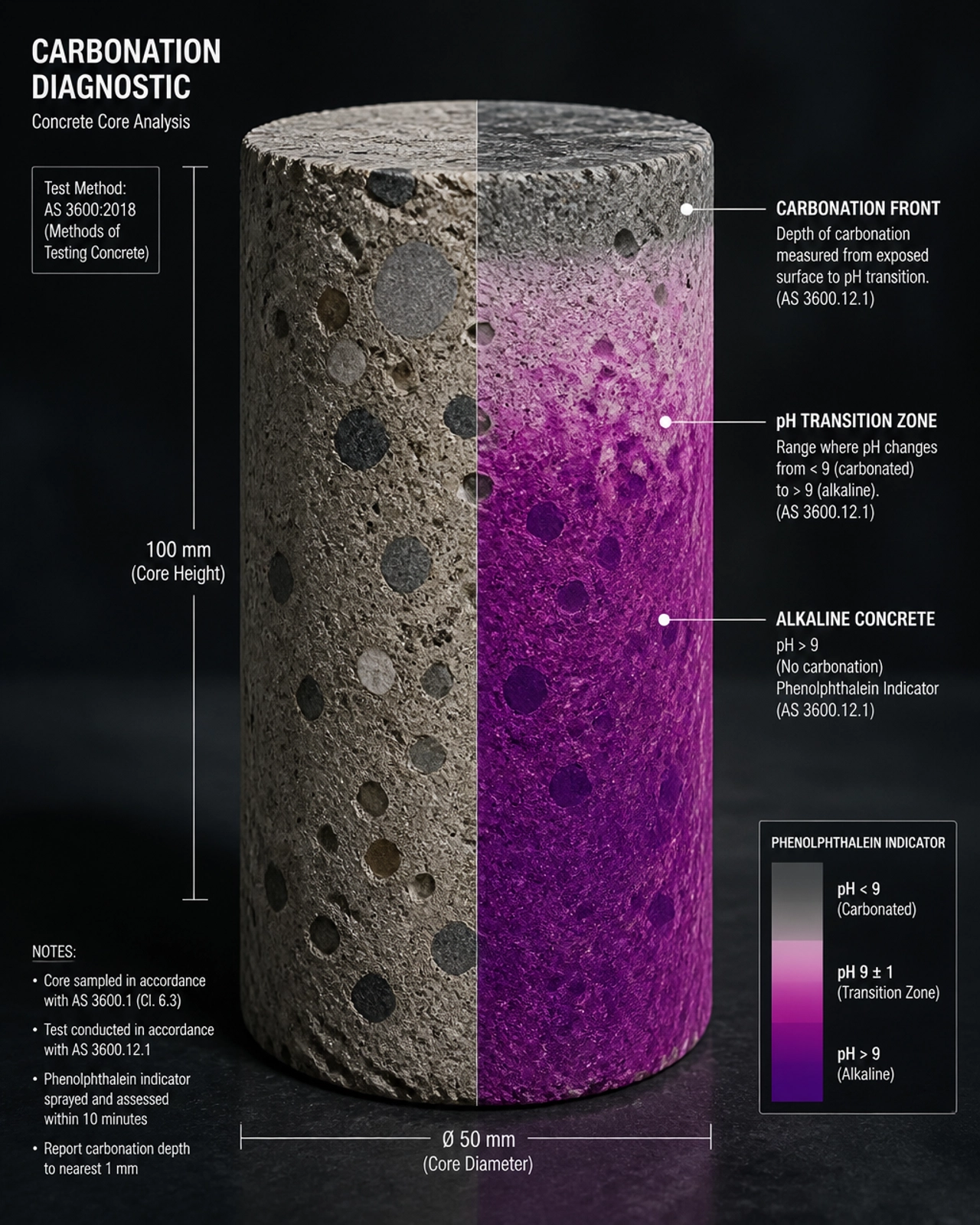
Core samples allow for precise laboratory testing of:
For large-scale assessments, such as parking soffits or multi-story facades, implement systematic hammer sounding. This remains one of the most effective ways to map subsurface delamination.
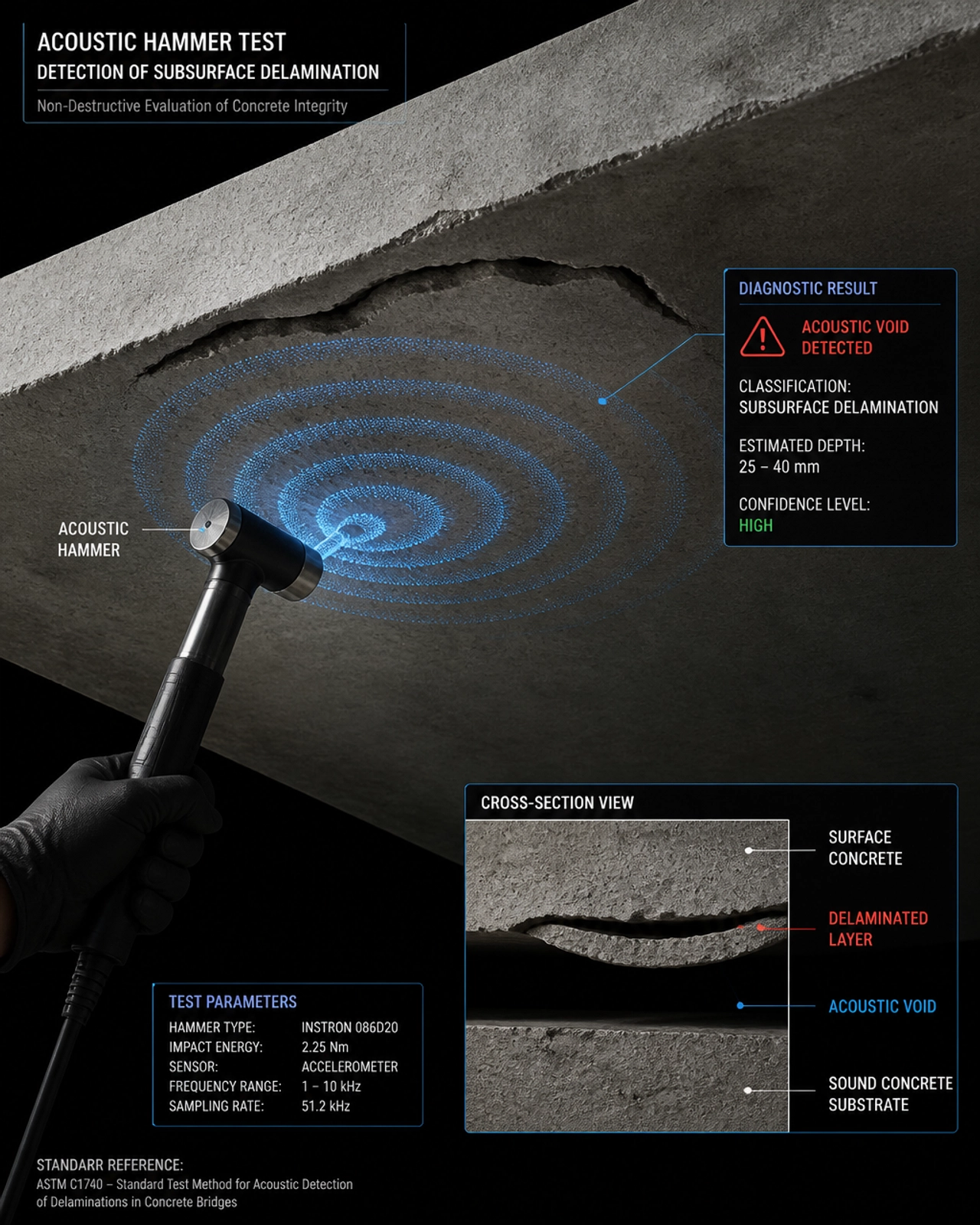
A "hollow" or "drummy" sound indicates that the concrete has already detached from the reinforcement but is still held in place by friction or minor adhesion. Mapping these zones allows for accurate quantity take-offs for patch repairs, ensuring that tenders for remedial works are based on forensic reality rather than guesswork.
The friction between builders and certifiers often stems from a lack of objective data. By engaging in a forensic investigation, you move from opinion to evidence. For any structure within 5km of the WA coastline, these tests are not optional extras; they are the foundation of risk management.
Document everything. Use the data from cover meters, half-cells, and chloride profiles to create a "digital twin" of the structure's health. This forensic bridge prevents minor maintenance from escalating into a catastrophic structural liability.
Are you ready to dive deeper into construction compliance and forensic intelligence? Welcome to the Hive: our community hub for senior professionals who demand precision over platitudes.
⚠️ The image in this post is used for illustration purposes only, designed to encourage thoughtful discussion. It is not intended to represent a prescriptive detail of any installation or construction method.