Construction
May 25, 2026
Forensic Truth #5: Paperwork vs. Performance – The Compliance Illusion
Forensic Truth #5: Paperwork vs. Performance – The Compliance Illusion

Forensic Truth #5: Paperwork vs. Performance – The Compliance Illusion
In the world of high-end residential construction, there is a comforting, yet dangerous, fallacy: that a thick folder of certificates, stamped drawings, and signed approvals is a guarantee of a sound building. We call this The Compliance Illusion.
A Certificate of Design Compliance (CDC) or a Building Permit is a regulatory "green light." It confirms that the intent of the design meets the National Construction Code (NCC). However, the paperwork trail often ends where the reality of the site begins. For a project to succeed, compliance must transition from the page to the performance of the physical structure.
At Shoal Bay Projects, we see the fallout when this transition fails. If the paperwork is perfect but the performance is lacking, the result isn't just a compliance breach: it is a structural, financial, and reputational catastrophe.
One of the most vivid examples of the "Compliance Illusion" occurs when site-level decisions override engineering intent. Consider the guidance found in Industry Bulletin 154 (IB 154), which highlights a common but critical error: building to anything other than the approved plans.
During recent global timber shortages, many builders faced the challenge of sourcing specified framing materials. In one notable case, a builder substituted roof framing materials with an "equivalent" alternative to keep the project moving. On paper, the project looked like it was progressing on schedule.
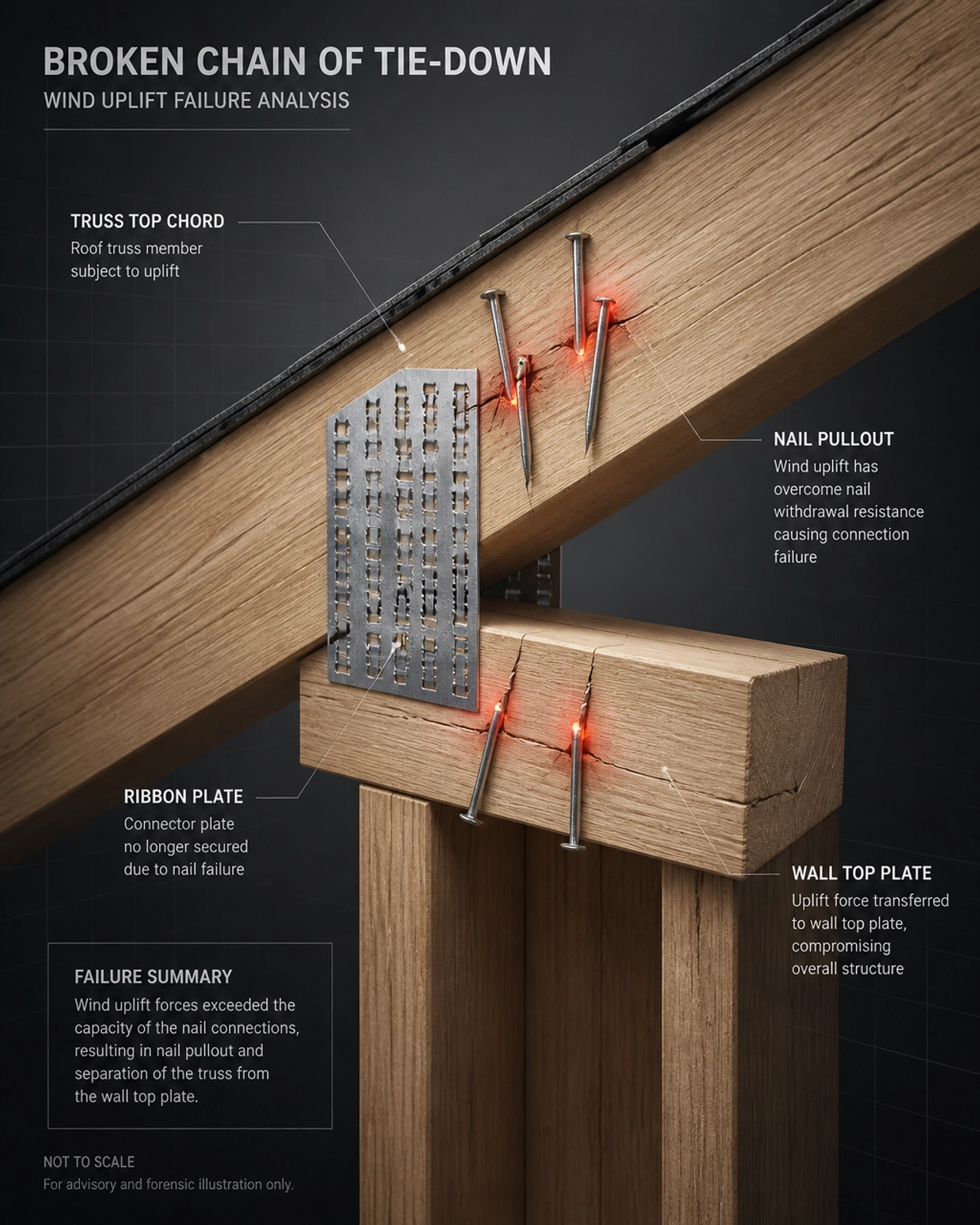
However, the substitution was made without verifying the new material's performance against the original engineering specifications or consulting the Building Surveyor. When a standard storm hit, the roof failed. The substituted material lacked the specific engineering verification required to handle the wind uplift loads prescribed by AS 1170.2 (Structural design actions – Wind actions).
The builder had the "paperwork" (the original permit), but they lacked the "performance" (the structural integrity). This gap led to a total loss of the roof structure: a failure that was entirely preventable through forensic oversight.
Compliance is often treated as a checklist, but in forensic reality, it is a chain. If any link in that chain is missing, the entire system fails.
Take roof tie-downs, for example. Industry Bulletin 121 (IB 121) identifies a recurring deficiency in the "chain of tie-down" for timber-framed homes. A set of plans might correctly specify the tie-down requirements as per AS 1684.2, but if the site execution fails to carry those loads through the ribbon plates and into the wall frames, the paperwork is essentially worthless.
A Building Surveyor’s role is primarily to assess the design for compliance and perform mandatory inspections at specific milestones. They are looking for a snapshot of compliance. They are not, however, on-site daily to ensure that every nail, bolt, and flashing is installed to the manufacturer’s specification or the Australian Standards.
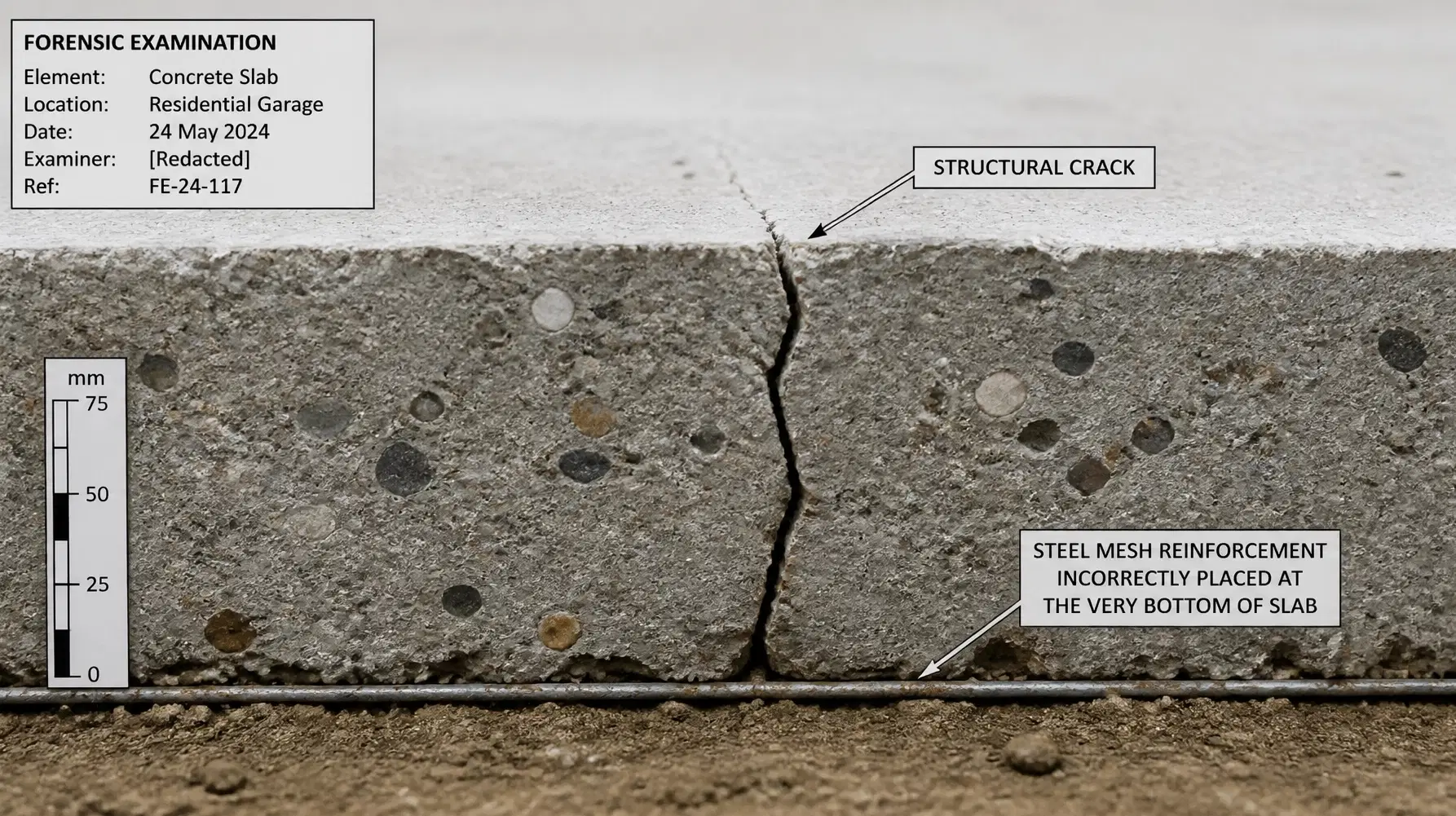
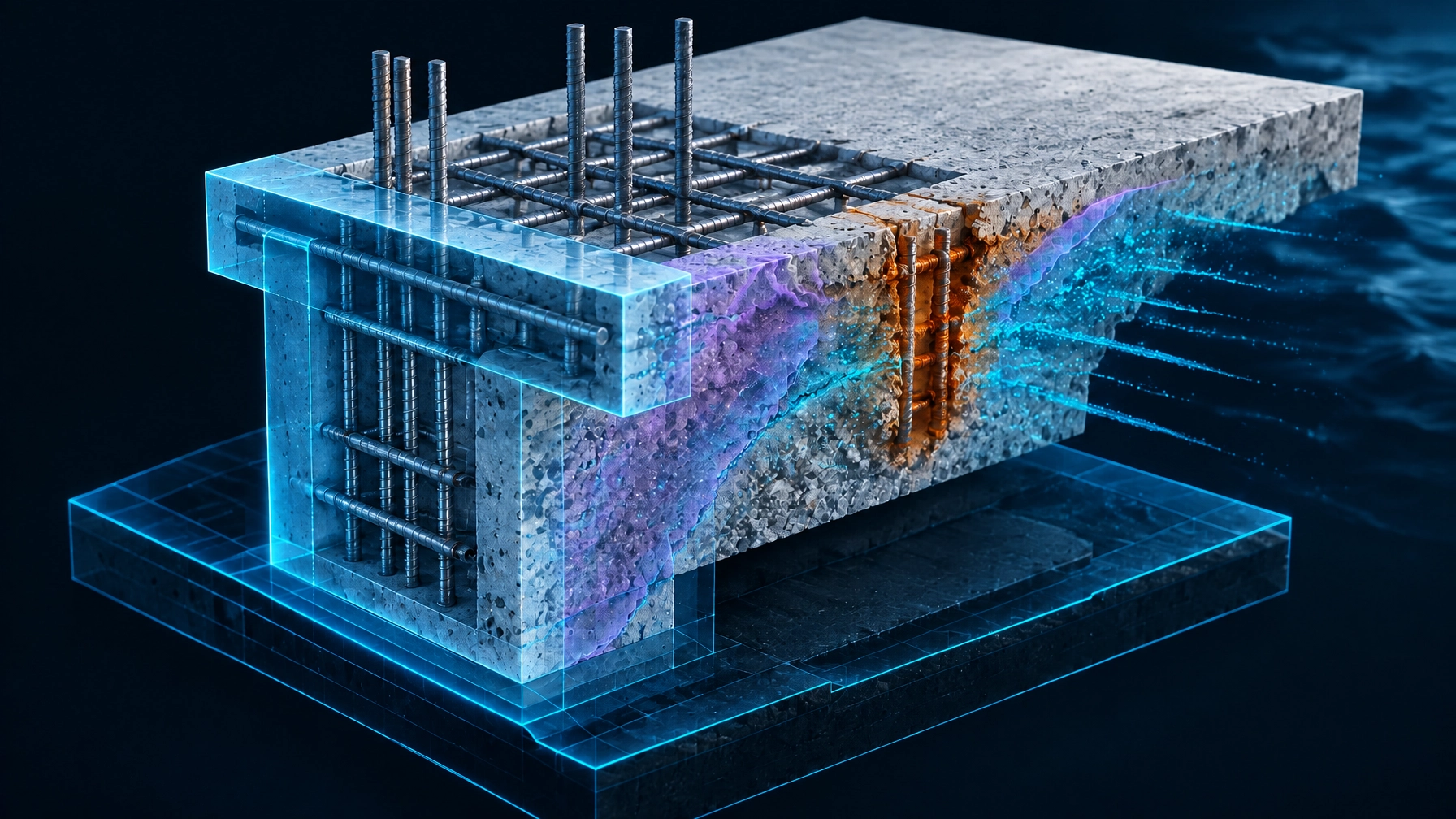
As seen in the forensic core sample above, a slab may have a certificate of compliance, yet the actual performance is compromised because the steel mesh was allowed to sink to the bottom of the pour. This is a failure of Site Performance, and no amount of paperwork can retrospectively fix the structural crack that follows.
It is vital to understand the distinction between a regulatory check and a forensic audit.
To move beyond the Compliance Illusion, builders and homeowners must adopt a more rigorous approach to oversight:
The NCC is increasingly moving toward a Performance-Based code. This means that while there are "Deemed-to-Satisfy" (DTS) pathways (the standard checklists), the overarching goal is always to meet the Performance Requirements.
A building that leaks, even if it was built following a DTS checklist, has failed its Performance Requirement for weatherproofing. A building that sustains structural damage in a sub-cyclonic wind event has failed its Performance Requirement for structural adequacy.
In the eyes of a tribunal or a court, "I followed the checklist" is a weak defense when the building fails to perform.
The goal of Shoal Bay Projects is to help our clients close the gap between the folder and the frame. By implementing forensic site audits as the "Gold Standard" for risk management, we ensure that your project isn't just compliant on paper, but high-performing in reality.
Don't let your project fall victim to the Compliance Illusion. Whether you are a builder looking to mitigate risk or a homeowner ensuring your investment is sound, forensic oversight is the only way to ensure the truth of your build.
If you’re looking to deepen your understanding of construction compliance and join a community of industry professionals committed to better building outcomes, we invite you to explore our community hub.
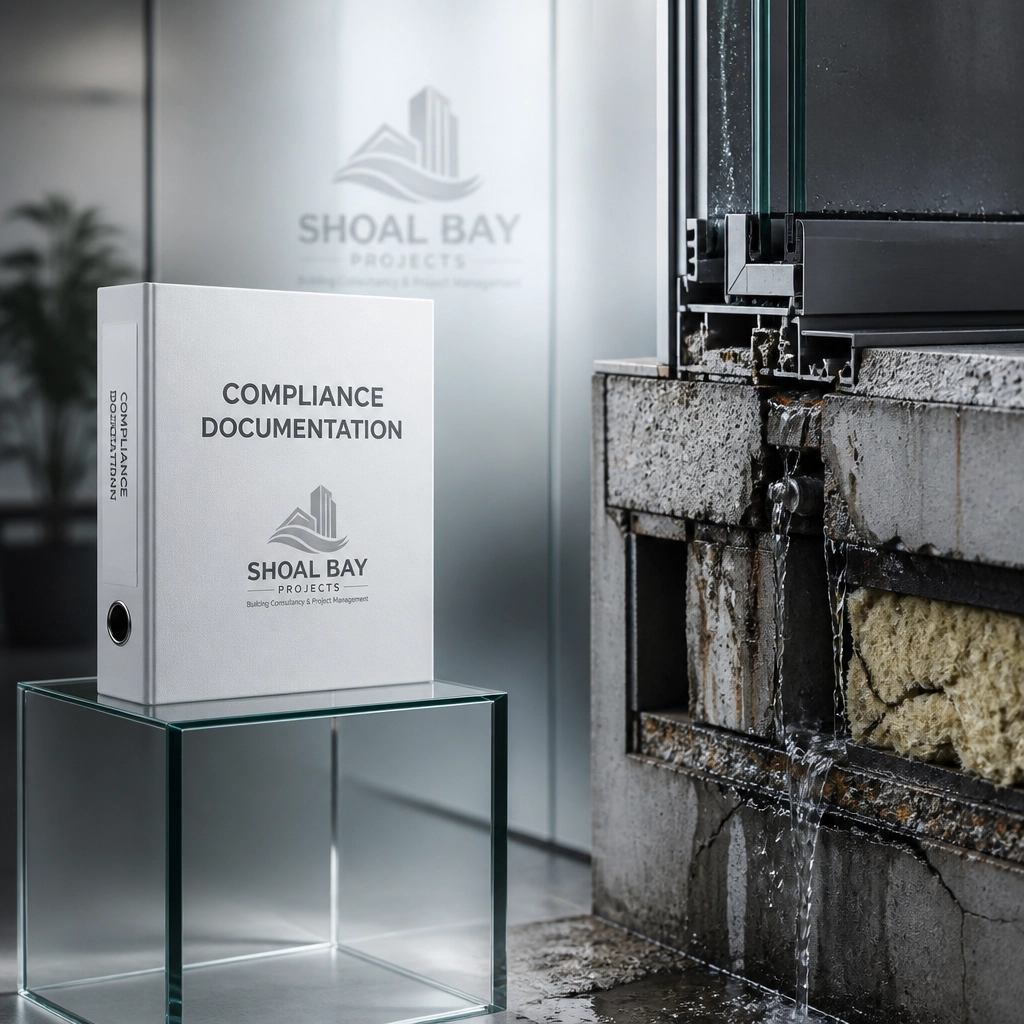
Ready to move beyond checklists to forensic oversight? Let's ensure your project performs as well as it looks on paper.
Contact Shoal Bay Projects today for a strategic consultation.