Construction
Jul 2, 2026
Digital Forensic Lab: 7-Star Energy Ratings – Beyond the NatHERS Certificate
Digital Forensic Lab: 7-Star Energy Ratings – Beyond the NatHERS Certificate

Digital Forensic Lab: 7-Star Energy Ratings – Beyond the NatHERS Certificate
If you’ve been in the residential game for more than a minute, you know the goalposts didn’t just move with NCC 2022: they were uprooted and replanted in a different stadium. We’ve graduated from the relatively comfortable 6-star era into a high-stakes environment where a 7-star NatHERS rating is the mandatory floor, not the ceiling.
But here’s the problem we’re seeing at Shoal Bay Projects: there is a massive delta between what a NatHERS certificate says on paper and how that building actually performs: or survives: in the real world. Welcome to the Digital Forensic Lab, where we look past the certificate to the forensic reality of high-performance construction.
The jump from 6 to 7 stars represents roughly a 20–25% improvement in thermal performance. On paper, that looks like a few more batts in the ceiling and maybe an upgrade to double glazing. In reality, it changes the physics of the entire building envelope.
Under the updated National Construction Code (NCC 2022), the "Whole-of-Home" requirement means we aren't just looking at the shell; we’re looking at the efficiency of fixed appliances, solar PV offsets, and the complex interaction between heating and cooling loads. For builders and homeowners, this means the margin for error has effectively vanished.
The most significant technical shift in the 7-star mandate is the explicit requirement to account for conductive thermal bridging. This is where the Digital Forensic Lab gets busy.
In previous iterations of the code, we could often get away with ignoring the "bridge" created by the frame itself. No more. Metal frames are heat highways. If you’re building with steel, the NCC now mandates that the thermal properties of framed elements must explicitly include the bridging effect.
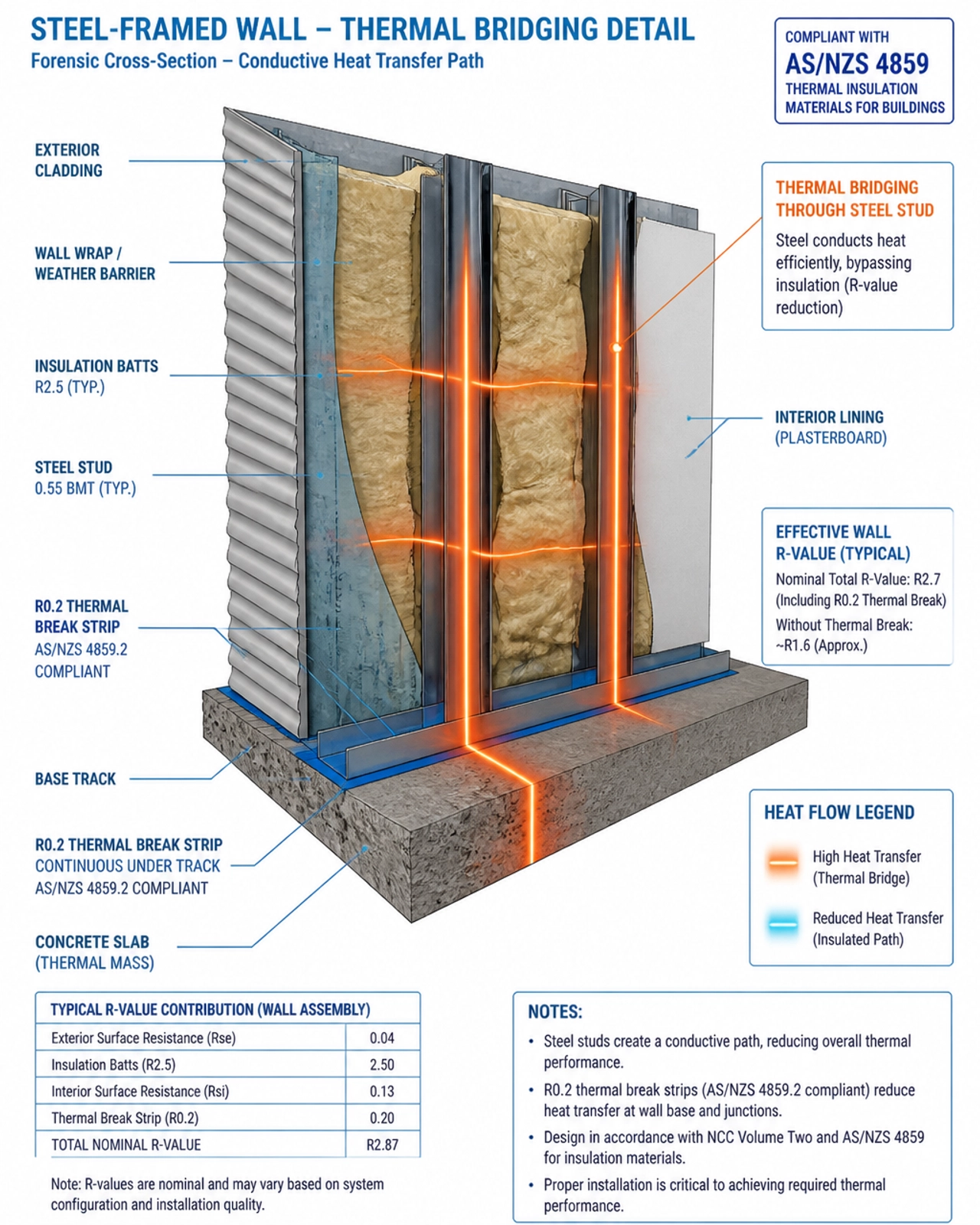
Check your specs: Under AS/NZS 4859, the "Effective R-value" is what matters, not the "Nominal R-value" printed on the insulation bag. If you have a steel stud (0.55mm to 1.2mm) with a high-performance R2.5 batt inside it, the thermal bridging through that steel can pull the effective R-value of the entire wall down to as low as R1.4.
To combat this, the NCC requires an R0.2 thermal break where cladding and lining are fixed to the same metal member. This usually takes the form of a high-density XPS strip or an insulated sarking. At Shoal Bay Projects, we’re seeing certificates that claim 7 stars but fail to detail how these thermal breaks are maintained at junctions, corners, and internal wall intersections.
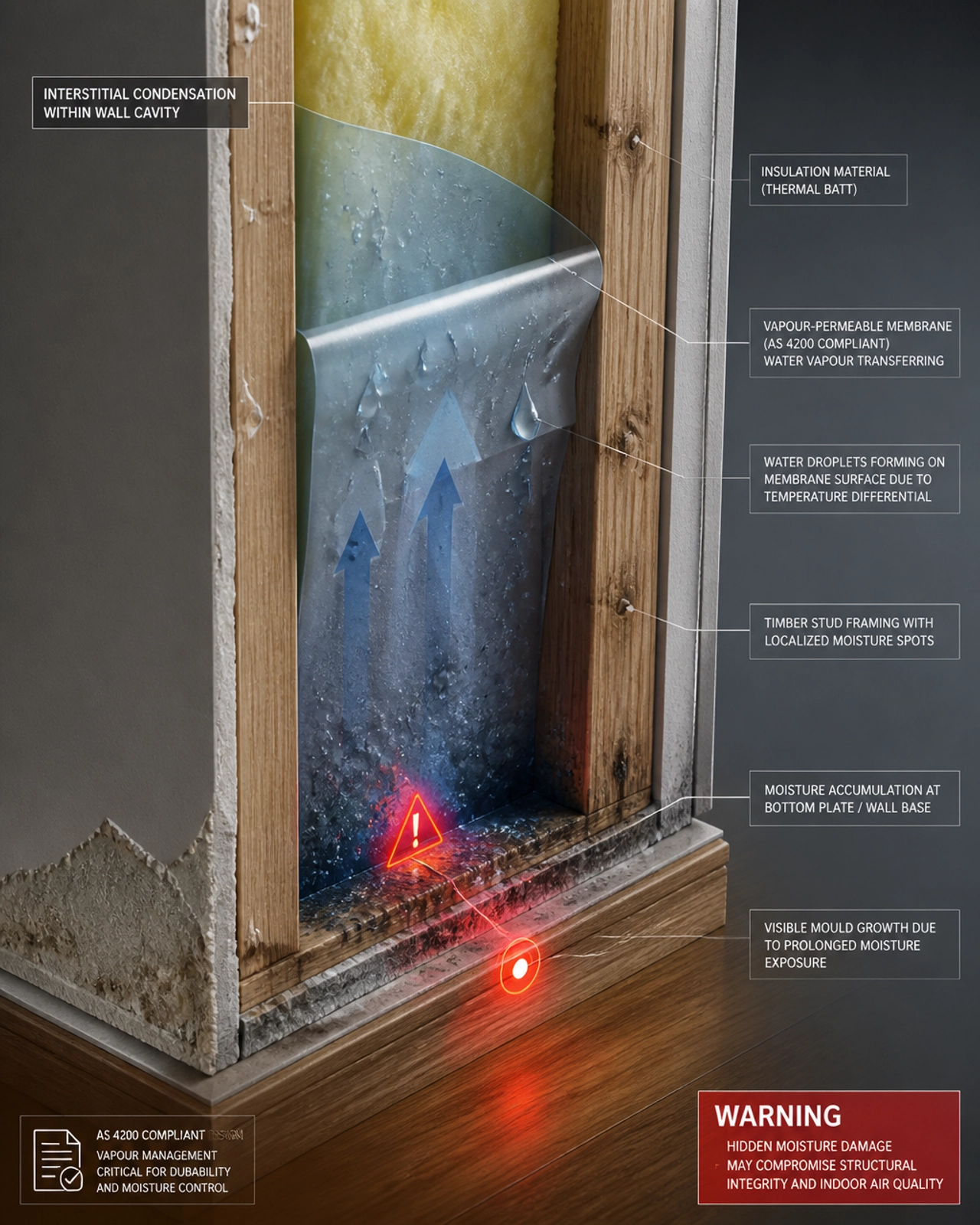
When we wrap a house tighter and pack it with more insulation to hit that 7-star target, we create a new risk: Interstitial Condensation.
As the temperature differential between the inside and outside of the wall increases, the "dew point": the temperature at which water vapour turns back into liquid: moves inside the wall cavity. If your vapour management strategy isn't forensically planned, you aren't just building a 7-star home; you’re building a high-performance mold incubator.
Specify with Precision:
We’ve seen it dozens of times: a builder receives a NatHERS certificate that technically passes at 7.0 stars. But when we run our forensic audit, we find "default" values used for window frames or "standard" slab edge assumptions that don't match the actual architectural drawings.

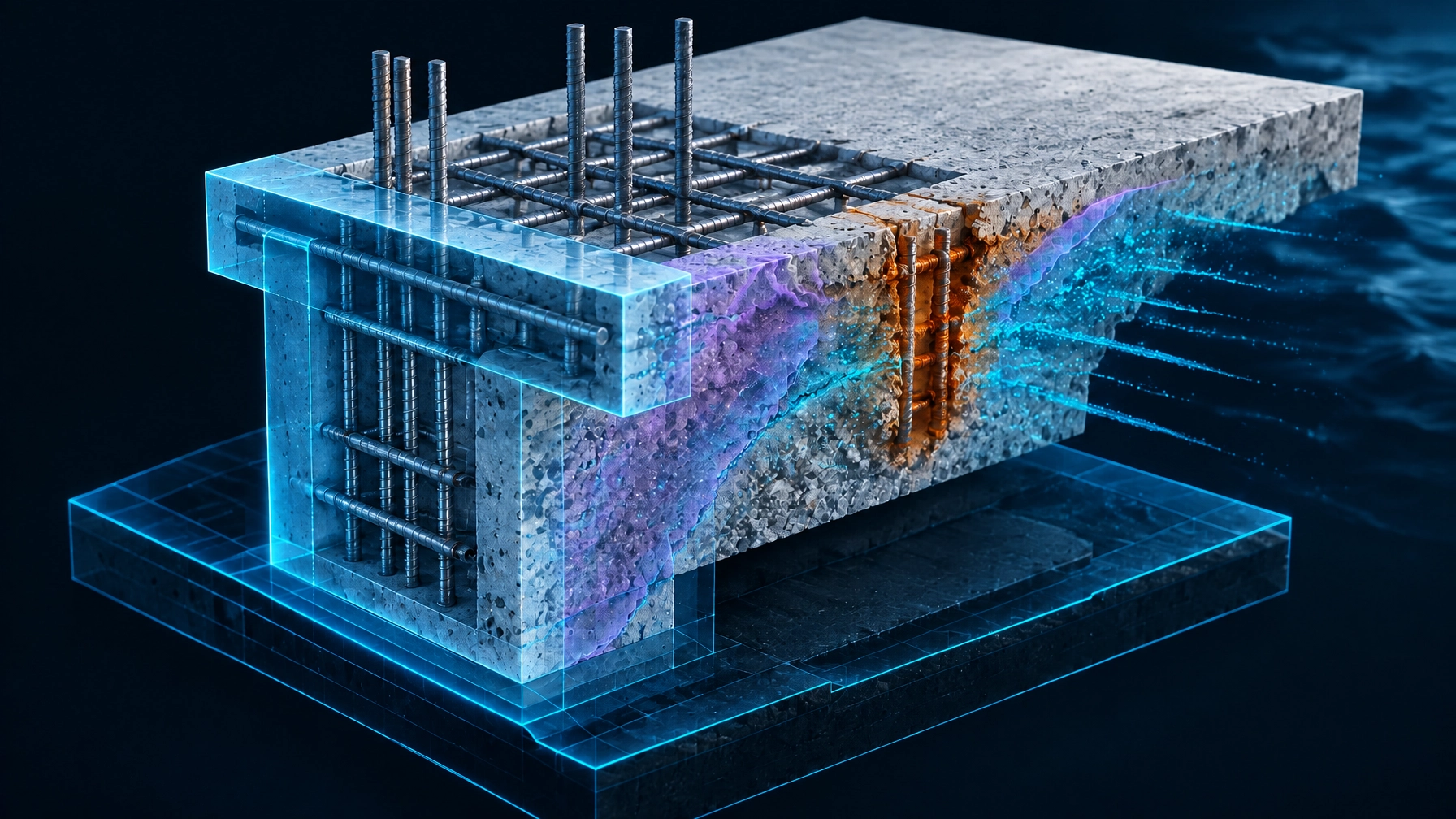
In the image above, you can see the difference. On the left, the certificate assumes a standard insulated slab. On the right, our 3D forensic model highlights massive heat loss at the slab edge because the waffle pod system wasn't detailed to include perimeter edge insulation: a common requirement to hit 7 stars in southern latitudes.
If the model is wrong, the house is wrong. And if the house is wrong, the compliance risk sits squarely on the shoulders of the builder.
To ensure your project actually hits the mark without compromising structural integrity, follow these imperative steps:
Navigating the transition to NCC 2022/2025 requires more than just reading a manual: it requires a community of professionals who are committed to doing it right the first time. We call this the Hive Vanguard.
The Hive Vanguard is an elite tier of builders, consultants, and homeowners who demand technical accuracy and forensic-level detail in their projects. By joining, you gain access to the collective intelligence of the Shoal Bay Projects network and stay ahead of the regulatory curve.
Whether you are looking for deep-dive technical advice or a community of like-minded construction professionals, we invite you to explore our hub.
Explore the Vault and Join the Hive
At Shoal Bay Projects, we don't just look at the drawings; we look at the physics. If you want to ensure your next 7-star project is built to last, let’s talk.